
Contributor spotlight interviews:
Dr Kim Lopez: https://youtu.be/vEF71NM_jQc
Dr Jocelyn Scott: https://youtu.be/qfjcbgExEJ0
Dr Brian Kumm: https://www.youtube.com/watch?v=kchW0MDfw44&t=158s,
Dr Luc Cousineau: https://youtu.be/IjRvRw3WjgY
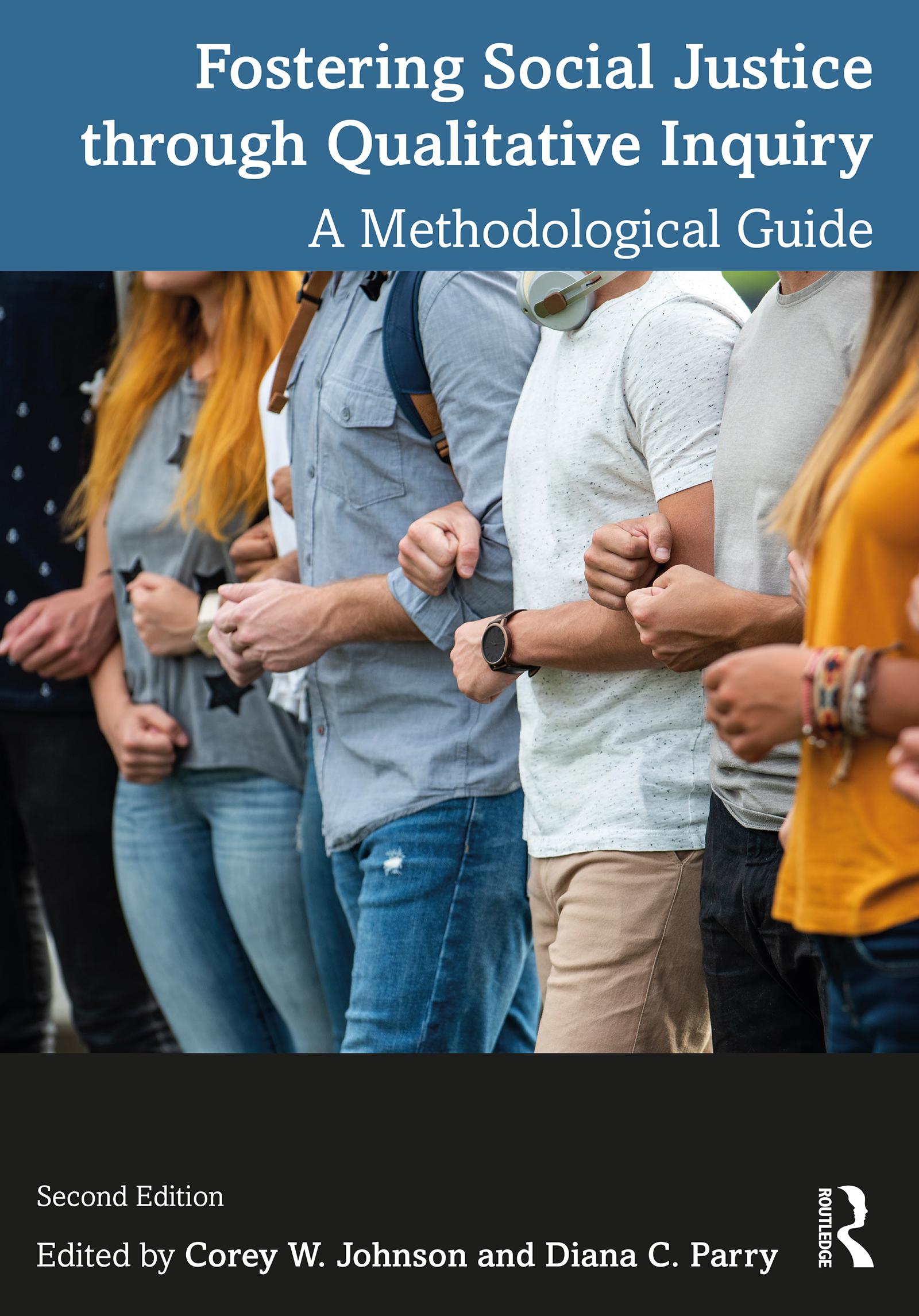
Now in its second edition, Fostering Social Justice through Qualitative Inquiry, addresses the methods of conducting qualitative research using a social justice paradigm. Qualitative researchers increasingly flock to social justice research to move beyond academic discourse and aid marginalized, oppressed, or less-powerful communities and groups.
The book addresses the differences that a social justice stance requires from the researcher, then discusses how major theories and qualitative methodologies are employed to create social justice in both the process and products of qualitative research. Snapshot theory chapters introduce the foundations of theories like feminism, critical race theory, queer theory, and many more. Robust methodological chapters cover grounded theory, phenomenology, ethnography, participatory action research, and other key qualitative designs. Chapters are written by experts in the specific theory or methodology, and exemplars of the authors work illustrate this style of research in action.
New to this edition:
• Expanded attention to the theories most commonly associated with social justice research by authors who have put it to use
• Methodological chapters on autoethnography, collective memory work, digital methods and postqualitative inquiry
• Chapter Reflection Questions to help students and their supervisors/instructors apply what they’ve learned
• Recommended readings from each author with annotations to encourage additional exploration
This established textbook will be suitable for graduate students and scholars in qualitative inquiry in a range of disciplines, including Education and Gender and Sexuality, Communication, Leisure Studies, and across the social sciences.
Pay easily by card, Klarna, Apple Pay or Google Pay. Not happy? You always have a 14-day money-back guarantee. Read more in our terms. If you have any questions, email us at hello@memmo.org.
Memmo makes studying easier – wherever you are in the world. We bring your course books and smart study tools together in one place: summaries, quizzes, podcasts and flashcards. Plus Ted, your study buddy who answers anything you wonder. Over 50,000 students already study here – built to help you learn faster and stress less.