
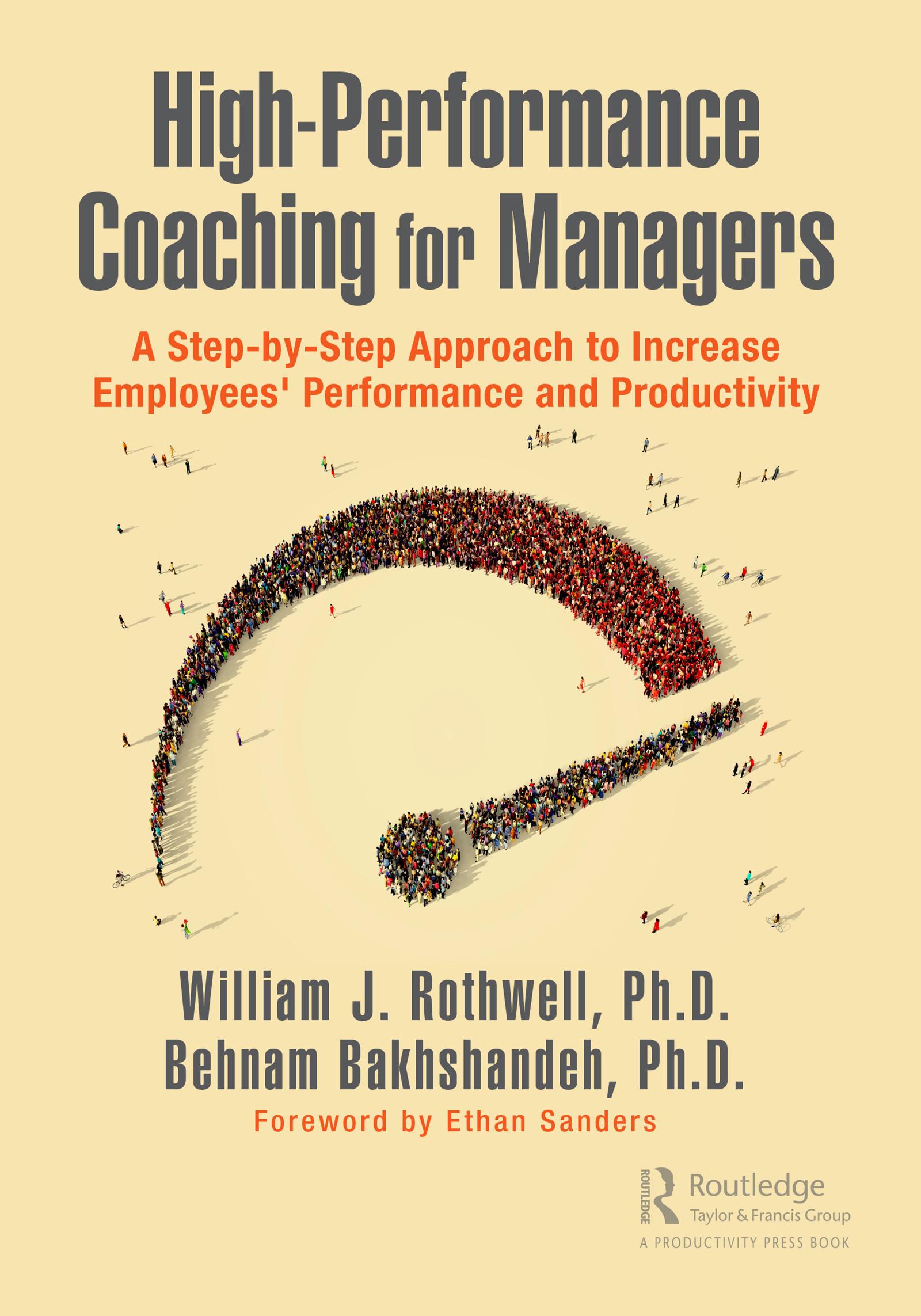
Coaching is a necessary skill for managers. It is important as a fundamental part of an organization's talent efforts—including talent acquisition, development and retention strategies. For a coaching program to succeed in an organization, it should be recognized as a useful approach throughout the organization and become part of the fabric of the corporate culture. Performance Coaching for Managers provides an important tool for organizations to use to train their managers on coaching.
This book differs significantly from other books in the coaching market. Many books on coaching cast coaches as facilitators who question their clients (the coachees), helping them to articulate their own problems, formulate their own solutions, develop their own action plans to solve problems, and measure the success of efforts to implement those plans. That is called a nondirective approach.
But this book adopts a directive approach by casting the coach as a manager who diagnoses the problems with worker job performance and offers specific advice on how to solve those problems. While there is nothing wrong with a nondirective approach, it does not always work well in job performance reviews in which the manager must inform the worker about gaps between what is needed (the desired) and what is performed (the actual). The significant difference between what is currently available in the market and what is offered in this book is the authors' collective experience of over 70 combined years of hands-on research and delivery experiences in the Human Resources Development field.
According to the Harvard Business Review (2015), workers generally expect their immediate supervisors to give them honest feedback on how well they do their jobs—and specific advice on what to do if they are not performing in alignment with organizational expectations. When workers do not receive advice—but instead are questioned about their own views—they regard their managers as either incompetent or disingenuous.
Effective managers should be able to offer direction to their employees. After all, managers are responsible for ensuring that their organizational units deliver the results needed by the organization. If they fail to do that, the organization does not achieve its strategic goals. This book gives managers direction in how to offer directive coaching to their workers.
Pay easily by card, Klarna, Apple Pay or Google Pay. Not happy? You always have a 14-day money-back guarantee. Read more in our terms. If you have any questions, email us at hello@memmo.org.
Memmo makes studying easier – wherever you are in the world. We bring your course books and smart study tools together in one place: summaries, quizzes, podcasts and flashcards. Plus Ted, your study buddy who answers anything you wonder. Over 50,000 students already study here – built to help you learn faster and stress less.