
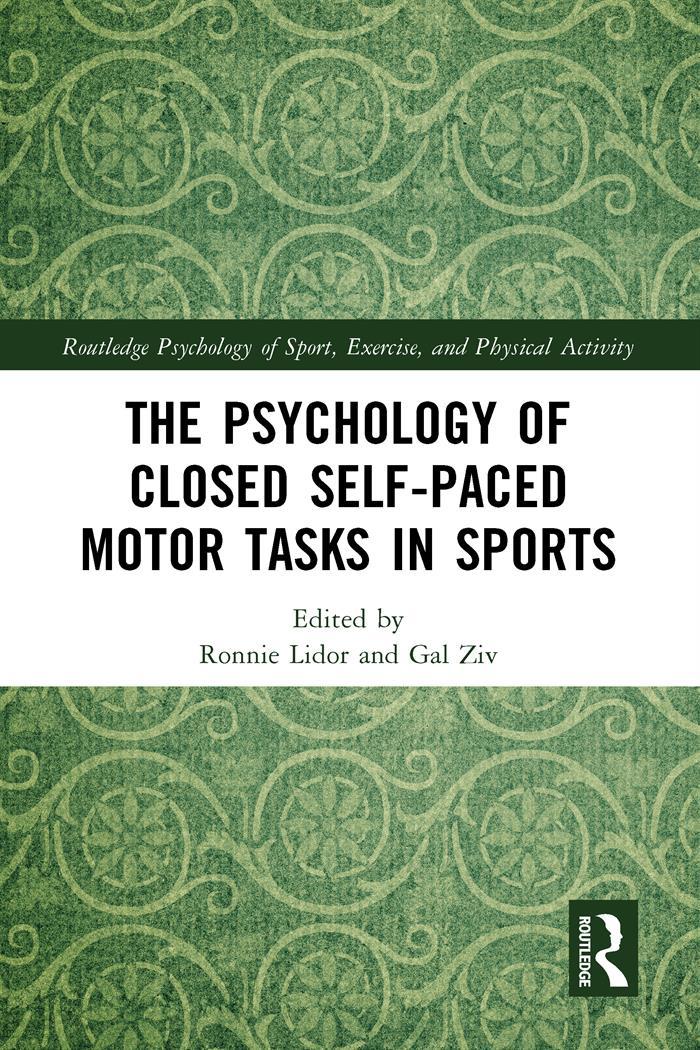
In practice settings, competitions, and games, athletes are often required to perform an arsenal of motor tasks in dynamic and challenged sporting environments, where they have to respond without having enough time to prepare themselves for the act. However, in many sport activities athletes also perform closed self-paced motor tasks – tasks that take place in a relatively stable and predictable environment, where there is adequate time to prepare for their execution. Among these tasks are free-throw shots in basketball, putting in golf, serving in tennis, and bowling.
In these tasks, performers are able to plan their actions in advance. They can activate a plan, a strategy, a protocol, or a procedure – what we term a ritual behavior. Effective rituals are usually achieved with a high degree of consistency. That is, either deliberately or subconsciously they become an integral part of the act itself. The Psychology of Closed Self-Paced Motor Tasks in Sports explores those plans, procedures, protocols, strategies, and techniques that aim at facilitating the performance and learning of closed self-paced motor tasks. Included in the instructional-psychological routines discussed in this book are pre-performance routines, focusing attention, motor imagery, enhanced expectancies, autonomy support, gaze strategies, self-talk, and periodization.
The routines discussed in the book are evidence-based. Based on updated reviews of laboratory and field inquiries on the discussed instructional-psychological routines, practical implications are given for those professionals who teach closed self-paced motor tasks, including coaches, instructors, and sport psychology consultants.
Pay easily by card, Klarna, Apple Pay or Google Pay. Not happy? You always have a 14-day money-back guarantee. Read more in our terms. If you have any questions, email us at hello@memmo.org.
Memmo makes studying easier – wherever you are in the world. We bring your course books and smart study tools together in one place: summaries, quizzes, podcasts and flashcards. Plus Ted, your study buddy who answers anything you wonder. Over 75,000 students already study here – built to help you learn faster and stress less.