
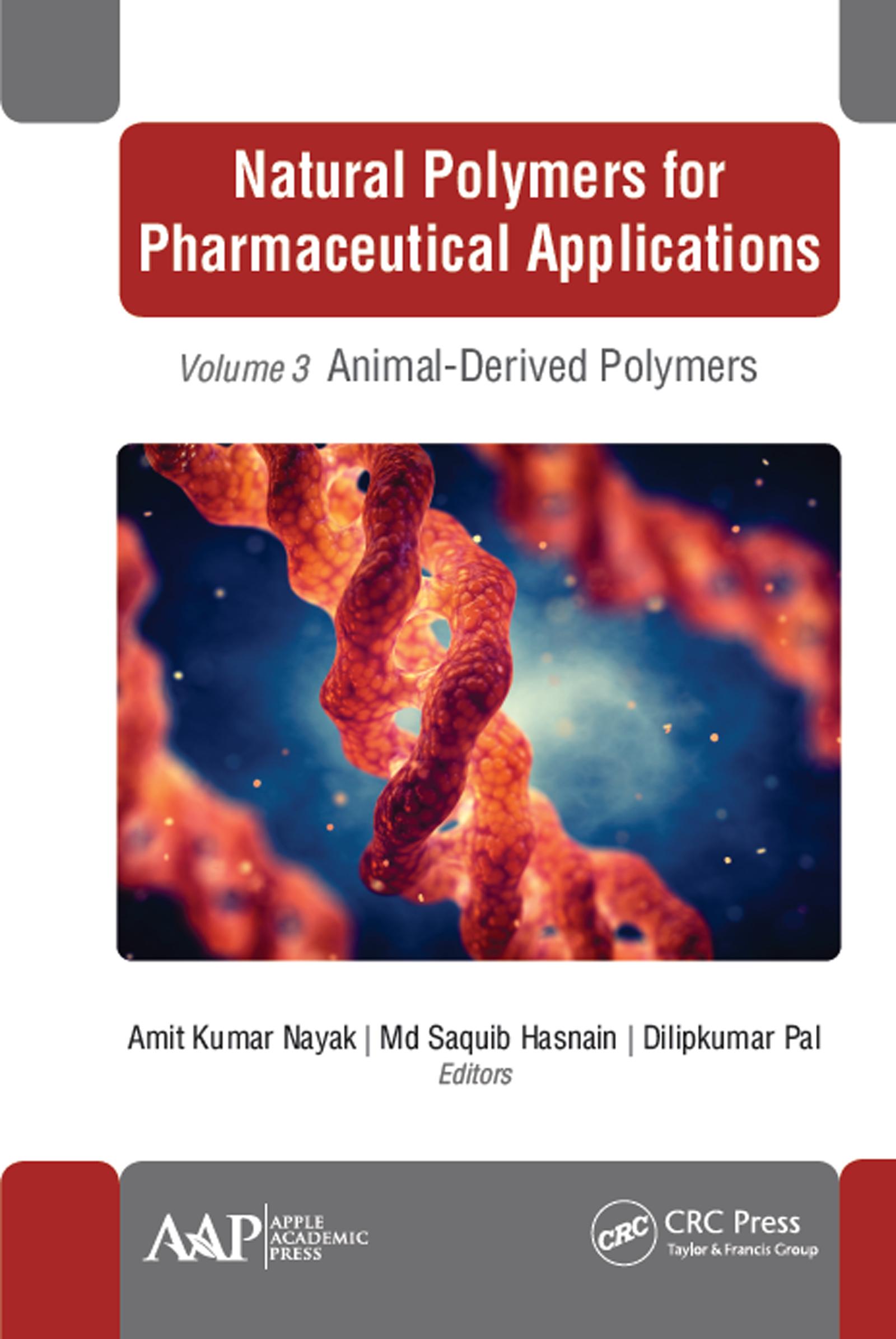
In recent years, many animal-derived polymers have emerged as an attractive category of naturally derived polymers because of their advantageous physicochemical, chemical, and biological properties. The important biological properties of these natural polymers derived from animals are biocompatibility and biodegradation. These polymers are generally composed of repeated units of amino acids. Moreover, these polymers can be modified physically and/or chemically to improve their biomaterial properties.
Natural Polymers for Pharmaceutical Applications, Volume 3: Animal-Derived Polymers looks at how these polymers can be exploited as pharmaceutical excipients in various pharmaceutical dosage forms, like microparticles, nanoparticles, ophthalmic preparations, gels, implants, etc. The commonly used animal-derived polymers used as pharmaceutical excipients are hyaluronic acid (hyaluronan), albumin, collagen, gelatin, chondroitin, etc.
Pay easily by card, Klarna, Apple Pay or Google Pay. Not happy? You always have a 14-day money-back guarantee. Read more in our terms. If you have any questions, email us at hello@memmo.org.
Memmo makes studying easier – wherever you are in the world. We bring your course books and smart study tools together in one place: summaries, quizzes, podcasts and flashcards. Plus Ted, your study buddy who answers anything you wonder. Over 75,000 students already study here – built to help you learn faster and stress less.