
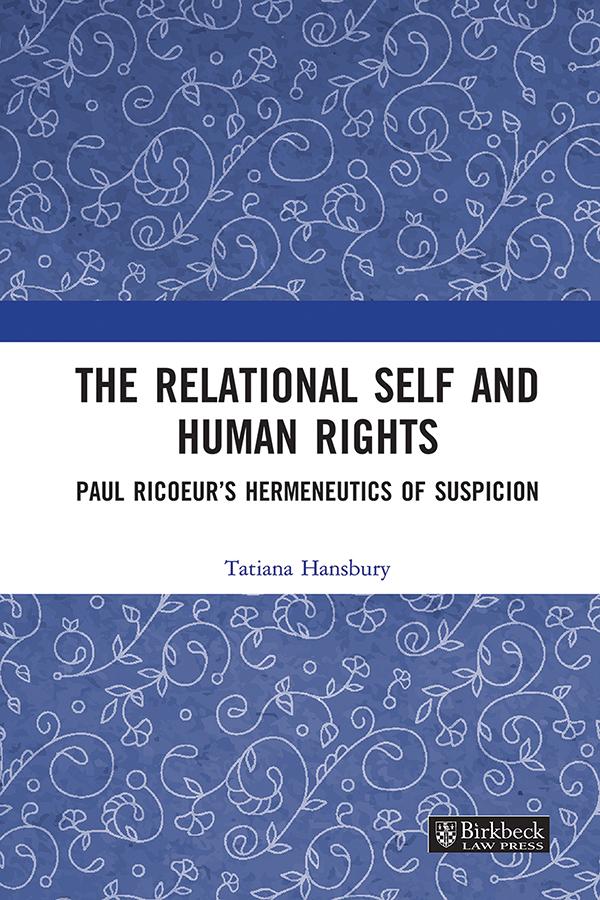
This book takes up Paul Ricoeur’s relational idea of the self in order to rethink the basis of human rights.
Many schools of critical theory argue that the idea of human rights is based on a problematic conception of the human subject and the legal person. For liberals, the human is a possessive and self-interested individual, such that others are either tools or hurdles in their projects. This book offers a novel reading of subjectivity and rights based on Paul Ricœur’s re-interpretation of human subjectivity as a relational concept. Taking up Ricoeur’s idea of recognition as a ‘reciprocal gift’, it argues that gift exchange is the relation upon which authentic, non-abstract, human subjectivity is based. Seen in this context, human rights can be understood as tokens of mutual recognition, securing a genuinely human life for all. The conception of human rights as gift effectively counters their moral individualism and possessiveness, as the philosophical anthropology of an isolated ego is replaced by that of a related, dependent and embedded self.
This original reinterpretation of human rights will appeal to scholars of legal theory, jurisprudence, politics and philosophy.
Pay easily by card, Klarna, Apple Pay or Google Pay. Not happy? You always have a 14-day money-back guarantee. Read more in our terms. If you have any questions, email us at hello@memmo.org.
Memmo makes studying easier – wherever you are in the world. We bring your course books and smart study tools together in one place: summaries, quizzes, podcasts and flashcards. Plus Ted, your study buddy who answers anything you wonder. Over 50,000 students already study here – built to help you learn faster and stress less.