
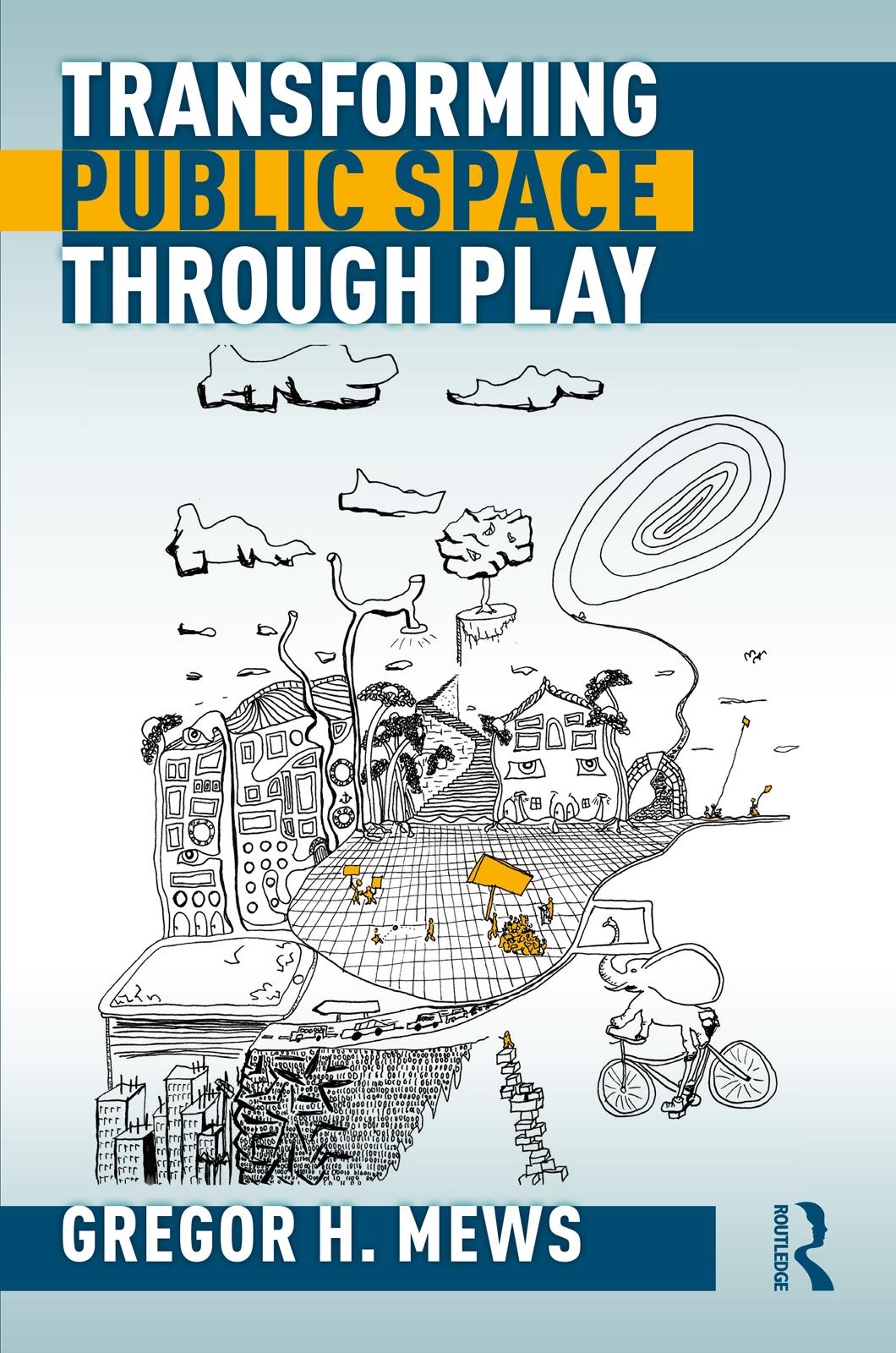
This book provides an empirical analysis of the concept of play as a form of spatial practice in urban public spaces. The introduced City–Play–Framework (CPF) is a practical urban analysis tool that allows urban designers, landscape architects and researchers to develop a shared awareness when opening up this window of possibility for adventure.
Two case studies substantiate and illustrate the development process and testing of the framework in Canberra, Australia, and Potsdam, Germany. The appropriation of public spaces that transcend boundaries can facilitate an intrinsic connection between people and their immediate environment, towards a more joyful ontological state of human existence in which imagination, co-creation and a sense of agency are key elements of the design approach. The framework presents an alternative understanding of public spaces and public life, reflecting on theory and its implications for practice in a post-pandemic world in dense urban centres.
A bridge between theory and practice, this book explores possibilities on what future design ought to be when openness and ambiguity are consciously integrated parts of practice and process. The book presents a valuable discussion on public space and play for academic audiences across a wide range of disciplines such as landscape architecture, urban design, planning, architecture and urban sociology, which is informative for future practice.
Pay easily by card, Klarna, Apple Pay or Google Pay. Not happy? You always have a 14-day money-back guarantee. Read more in our terms. If you have any questions, email us at hello@memmo.org.
Memmo makes studying easier – wherever you are in the world. We bring your course books and smart study tools together in one place: summaries, quizzes, podcasts and flashcards. Plus Ted, your study buddy who answers anything you wonder. Over 75,000 students already study here – built to help you learn faster and stress less.