
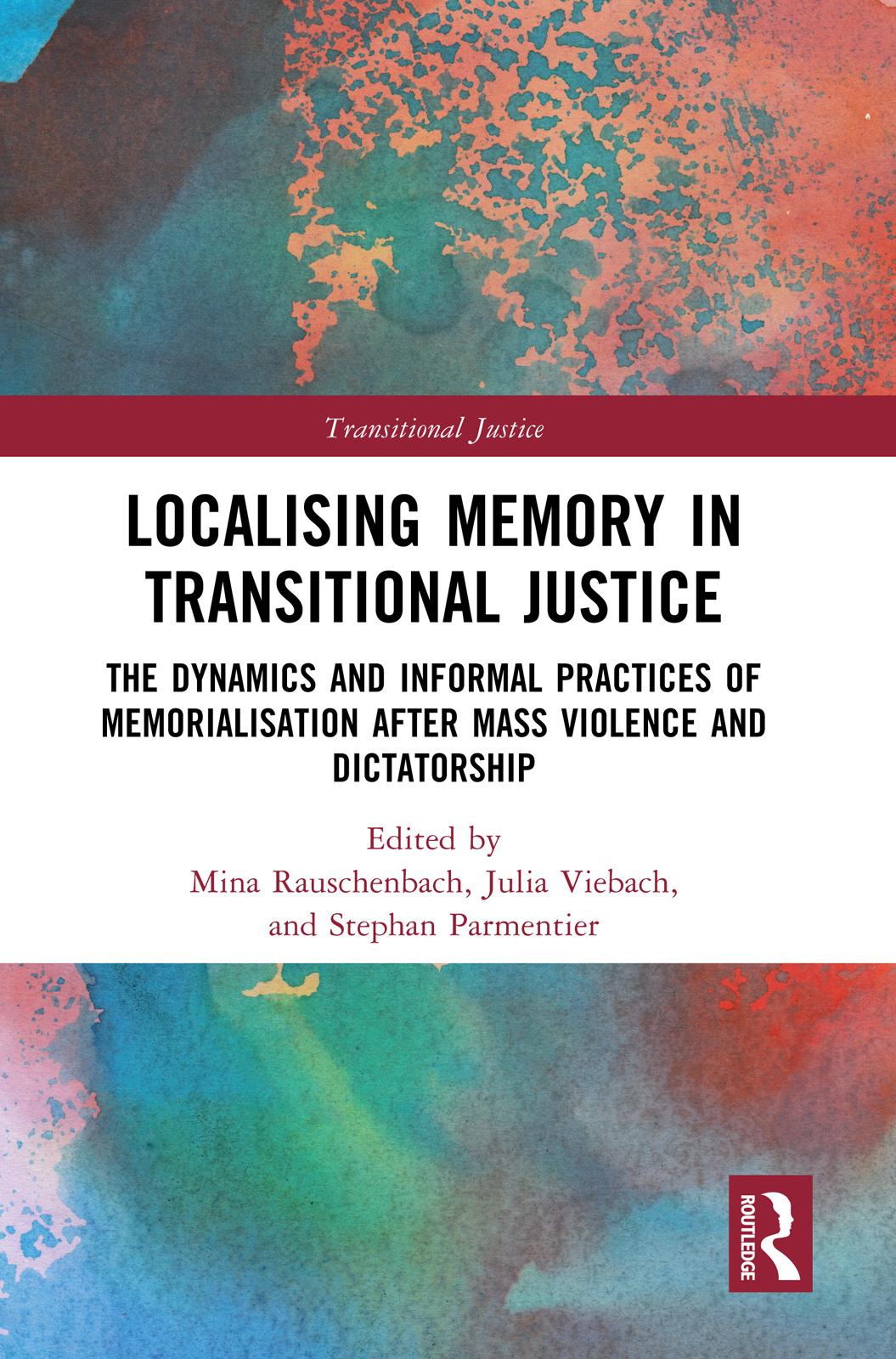
This collection adds to the critical transitional justice scholarship that calls for “transitional justice from below” and that makes visible the complex and oftentimes troubled entanglements between justice endeavours, locality, and memory-making. Broadening this perspective, it explores informal memory practices across various contexts with a focus on their individual and collective dynamics and their intersections, reaching also beyond a conceptualisation of memory as mere symbolic reparation and politics of memory.
It seeks to highlight the hidden, unwritten, and multifaceted in today’s memory boom by focusing on the memorialisation practices of communities, activists, families, and survivors. Organising its analytical focal point around the localisation of memory, it offers valuable and new insights on how and under what conditions localised memory practices may contribute to recognition and social transformation, as well as how they may at best be inclusive, or exclusive, of dynamic and diverse memories.
Drawing on inter- and multi-disciplinary approaches, this book brings an in-depth and nuanced understanding of local memory practices and the dynamics attached to these in transitional justice contexts. It will be of much interest to students and scholars of memory and genocide studies, peace and conflict studies, transitional justice, sociology, and anthropology.
Pay easily by card, Klarna, Apple Pay or Google Pay. Not happy? You always have a 14-day money-back guarantee. Read more in our terms. If you have any questions, email us at hello@memmo.org.
Memmo makes studying easier – wherever you are in the world. We bring your course books and smart study tools together in one place: summaries, quizzes, podcasts and flashcards. Plus Ted, your study buddy who answers anything you wonder. Over 50,000 students already study here – built to help you learn faster and stress less.