
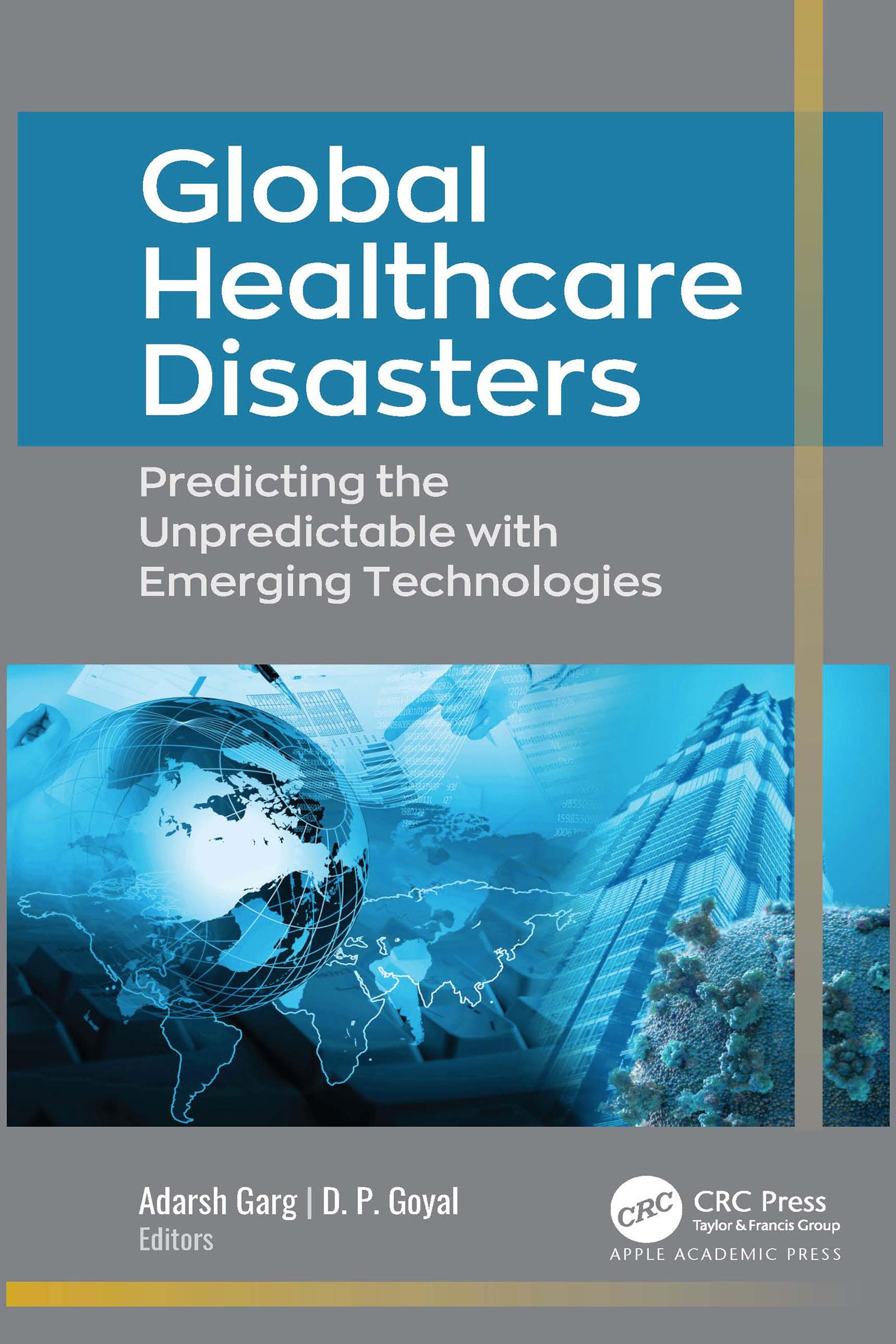
The recent COVID-19 global pandemic exemplifies the need for efficient, reliable, and real-time tools and technology for forecasting and predicting healthcare disasters as well as for helping to restrict the subsequent spread and fatality of deadly diseases. This new book discusses many of the innovative and state-of-the-art tools and technology that can help meet the challenges of predicting such disasters. The chapters offer a plethora of useful information for designing healthcare disaster management systems that can be dynamically configurable with implementation of today’s modern technology, such as cloud computing, artificial intelligence, IoT, data analytics, and machine learning. These can increase effectiveness in remote sensing technologies, data analytics, data storage, communication networks, geographic information system (GIS), and global positioning System (GPS), to name a few.
This book discusses mathematical models using graph-based approaches for analyzing dynamic, heterogeneous, and unstructured data for applications in epidemiology. The authors also address the use of mobile applications for communication efforts and remote monitoring for gauging health and the effectiveness of preventive healthcare measures. The chapters discuss influencing factors that directly or indirectly target public health infrastructure that can lead to or exacerbate global health crises, such as extreme climate changes, refugee health crises, terrorism and cyberterrorism, and technology-related incidents. The book further looks at efficient methods to analyze disasters and how to deliver healthcare in areas of conflict and crisis.
This important volume, Global Healthcare Disasters: Predicting the Unpredictable with Emerging Technologies, provides a bounty of useful information for health professionals, academicians, researchers, governmental agencies, and policymakers across the world to predict, mitigate, and manage global health disaster with emerging technologies.
Pay easily by card, Klarna, Apple Pay or Google Pay. Not happy? You always have a 14-day money-back guarantee. Read more in our terms. If you have any questions, email us at hello@memmo.org.
Memmo makes studying easier – wherever you are in the world. We bring your course books and smart study tools together in one place: summaries, quizzes, podcasts and flashcards. Plus Ted, your study buddy who answers anything you wonder. Over 75,000 students already study here – built to help you learn faster and stress less.