
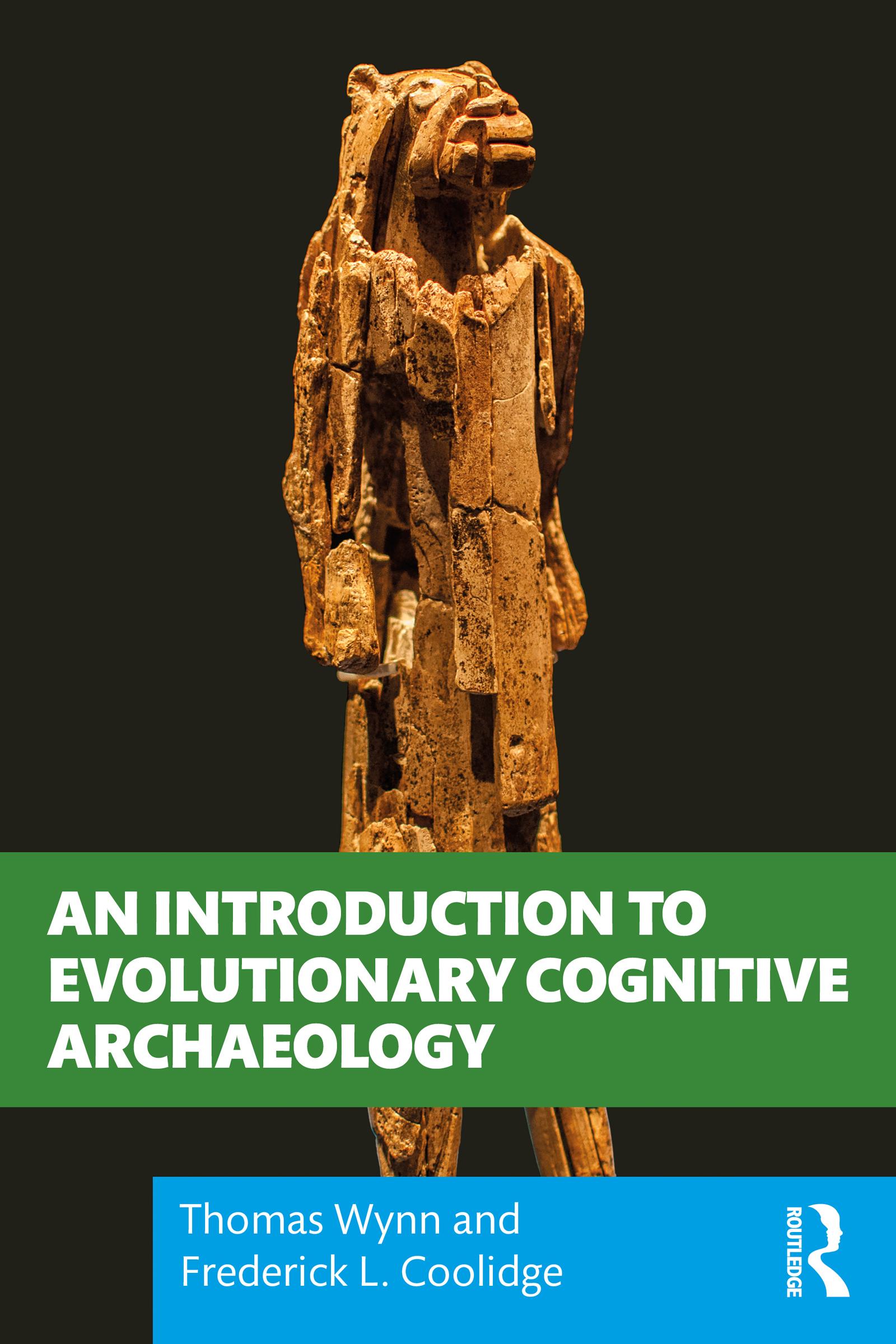
An Introduction to Evolutionary Cognitive Archaeology is the first concise introduction that lays out the epistemological foundations of evolutionary cognitive archaeology in a way that is accessible to students.
The volume is divided into three sections. The first section situates cognitive archaeology in the pantheon of archaeological approaches and distinguishes between ideational cognitive archaeology and evolutionary cognitive archaeology. This is followed by a close look at the nature of cognitive archaeological inferences and concludes with brief summaries of the major methods of evolutionary cognitive archaeology. The second section of the book introduces the reader to a variety of cognitive phenomena that are accessible using the methods of cognitive archaeology: memory, technical cognition, spatial cognition, social cognition, art and aesthetics, and symbolism and language. The third section presents a brief outline of hominin cognitive evolution from the perspective of evolutionary cognitive archaeology. The authors divide the archaeological record into three major phases: The Bipedal Apes—3.3 million-1.7 million years ago; The Axe Age—1.7 million-300,000 years ago; and The Emergence of Modern Thinking—300,000–12,000 years ago.
An Introduction to Evolutionary Cognitive Archaeology is an essential text for undergraduate students, graduate students, and scholars across the behavioral and social sciences interested in learning about cognitive archaeology, including psychologists, philosophers, anthropologists, and archaeologists.
Pay easily by card, Klarna, Apple Pay or Google Pay. Not happy? You always have a 14-day money-back guarantee. Read more in our terms. If you have any questions, email us at hello@memmo.org.
Memmo makes studying easier – wherever you are in the world. We bring your course books and smart study tools together in one place: summaries, quizzes, podcasts and flashcards. Plus Ted, your study buddy who answers anything you wonder. Over 75,000 students already study here – built to help you learn faster and stress less.