
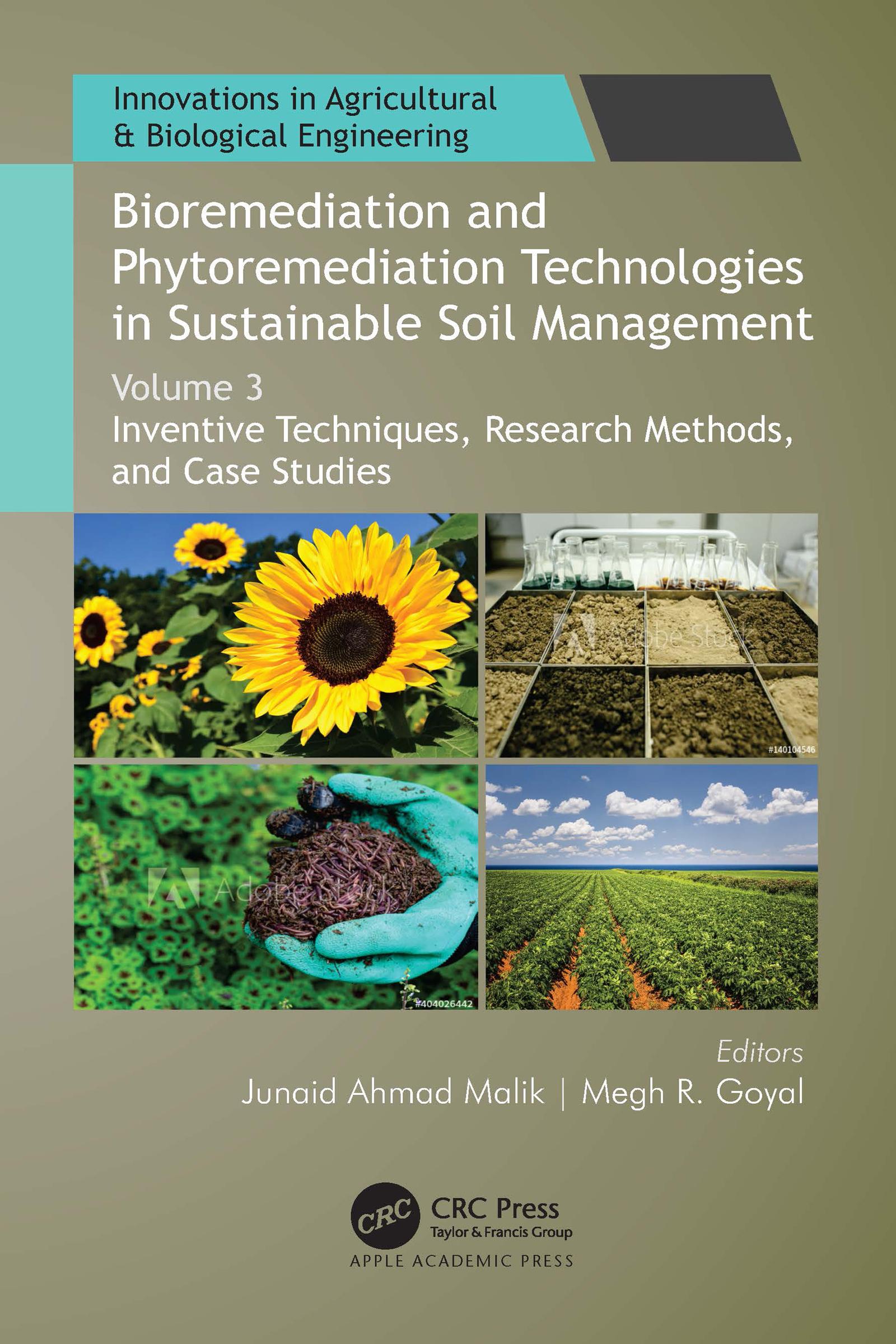
Phytoremediation has evolved into an important tool to improve the bioremediation process since it is an innovative green technology that uses a wide variety of plants to remediate radioactive metals and elements, organics, and chemicals from soil, sediment, surface water, and groundwater environmental pollutants. Together, bioremediation and phytoremediation technologies provide an effective approach to contaminant abatement.
Volume 3 of the four-volume set identifies and draws a fresh image of existing developments in theoretical and functional implementation systems from recent scientific research studies that consider different facets of bioremediation. It also discusses the latest technology and prospects of new soil bioremediation technology and analyzes their domains, along with their associated challenges and consequences.
Other volumes in the 4-volume set:
• Volume 1: Fundamental Aspects and Contaminated Sites
• Volume 2: Microbial Approaches and Recent Trends
• Volume 4: Degradation of Pesticides and Polychlorinated Biphenyls
Together, these four volumes provide in-depth coverage of the mechanisms, advantages, and disadvantages of the bioremediation and phytoremediation technologies for safe and sustainable soil management. The diverse topics help to arm biologists, agricultural engineers, environmental and soil scientists and chemists with the information and tools they need to address soil toxins that are a dangerous risk to plants, wildlife, humans and, of course, the soil itself.
Pay easily by card, Klarna, Apple Pay or Google Pay. Not happy? You always have a 14-day money-back guarantee. Read more in our terms. If you have any questions, email us at hello@memmo.org.
Memmo makes studying easier – wherever you are in the world. We bring your course books and smart study tools together in one place: summaries, quizzes, podcasts and flashcards. Plus Ted, your study buddy who answers anything you wonder. Over 50,000 students already study here – built to help you learn faster and stress less.