
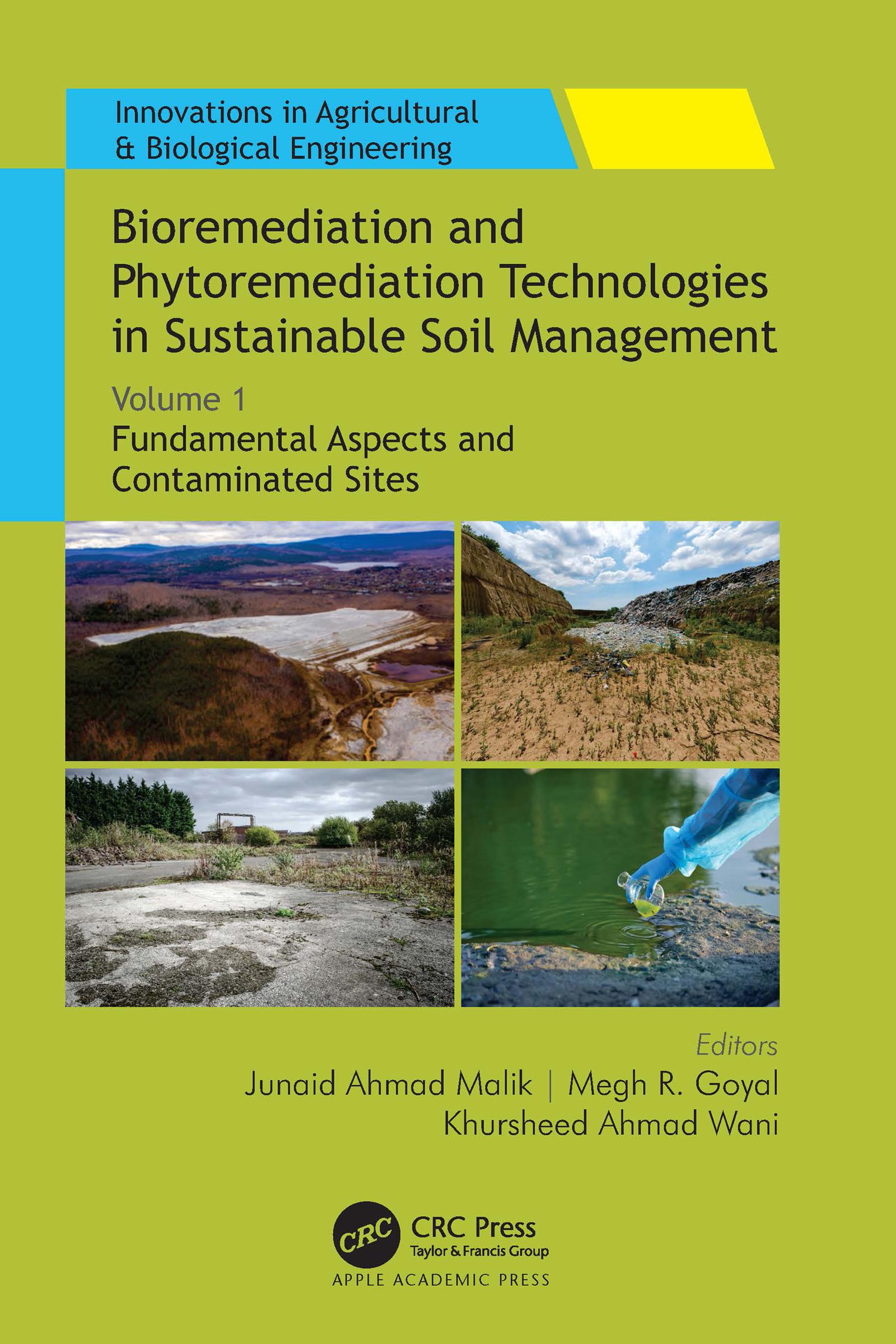
This 4-volume set focuses on the use of microbial bioremediation and phytoremediation to clean up pollutants in soil, such as pesticides, petroleum hydrocarbons, metals, and chlorinated solvents, which reduce the soil's fertility and renders it unfit for plant growth.
Volume 1: Fundamental Aspects and Contaminated Sites begins with an overview of phytoremediation and the role of environmental factors. It goes on to introduce soil assessment techniques and offers methods of remediation designed to combat soil and agricultural degradation. It discusses soils contaminated by heavy metals; microbial and phytoremediation-based removal of polycyclic aromatic hydrocarbons (PAHs) from coal, crude oil, and gasoline; microbial bioremediation and amelioration of pesticide-contaminated soils; phytoremediation techniques for biomedical waste contaminated sites; as well as biomediation processes for human waste sites. Biopesticides are also explained as an alternative to conventional pesticides.
Other volumes in the 4-volume set:
• Volume 2: Microbial Approaches and Recent Trends
• Volume 3: Inventive Techniques, Research Methods, and Case Studies
• Volume 4: Degradation of Pesticides and Polychlorinated Biphenyls
Together, these four volumes provide in-depth coverage of the mechanisms, advantages, and disadvantages of the bioremediation and phytoremediation technologies for safe and sustainable soil management.
Pay easily by card, Klarna, Apple Pay or Google Pay. Not happy? You always have a 14-day money-back guarantee. Read more in our terms. If you have any questions, email us at hello@memmo.org.
Memmo makes studying easier – wherever you are in the world. We bring your course books and smart study tools together in one place: summaries, quizzes, podcasts and flashcards. Plus Ted, your study buddy who answers anything you wonder. Over 50,000 students already study here – built to help you learn faster and stress less.