
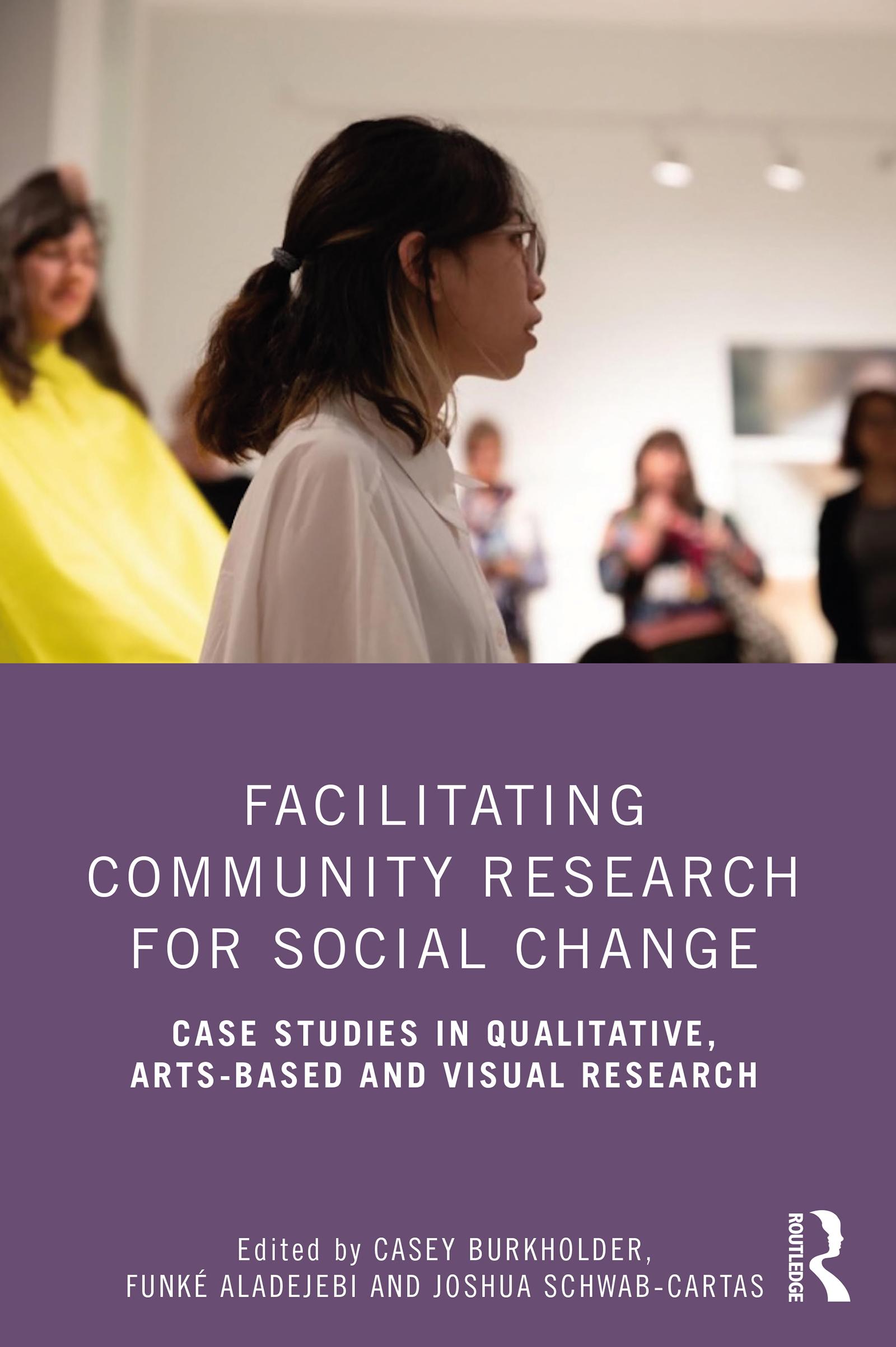
Facilitating Community Research for Social Change asks: what does ethical research facilitation look like in projects that seek to move toward social change? How can scholars weave political and social justice through multiple levels of the research process?
This edited collection presents chapters that investigate research facilitation in ways that specifically attempt to disrupt and challenge anti-Indigenous and anti-Black racism, ableism, homophobia, transphobia, patriarchy, and sexism to work toward social change. It also explores what it means to develop facilitation practices across multiple contexts and research settings, including specific facilitation methods considered by researchers working with visual and community-based methods with Black, Indigenous, and racialized communities. The complexities of how scholars negotiate decisions within their research with people and communities have an effect not only on how researchers construct their participants and communities, but also on the overall purpose of projects, the ways their projects are shared and disseminated, and what is learned in the doing of facilitation.
This book will be of great interest to both emerging and established researchers working within the social sciences. It specifically attends to diverse fields within the social sciences that include health, media studies, environmental studies, social work, sociology, education, participatory visual research methodologies, as well as the evolving field of digital humanities.
Pay easily by card, Klarna, Apple Pay or Google Pay. Not happy? You always have a 14-day money-back guarantee. Read more in our terms. If you have any questions, email us at hello@memmo.org.
Memmo makes studying easier – wherever you are in the world. We bring your course books and smart study tools together in one place: summaries, quizzes, podcasts and flashcards. Plus Ted, your study buddy who answers anything you wonder. Over 50,000 students already study here – built to help you learn faster and stress less.