
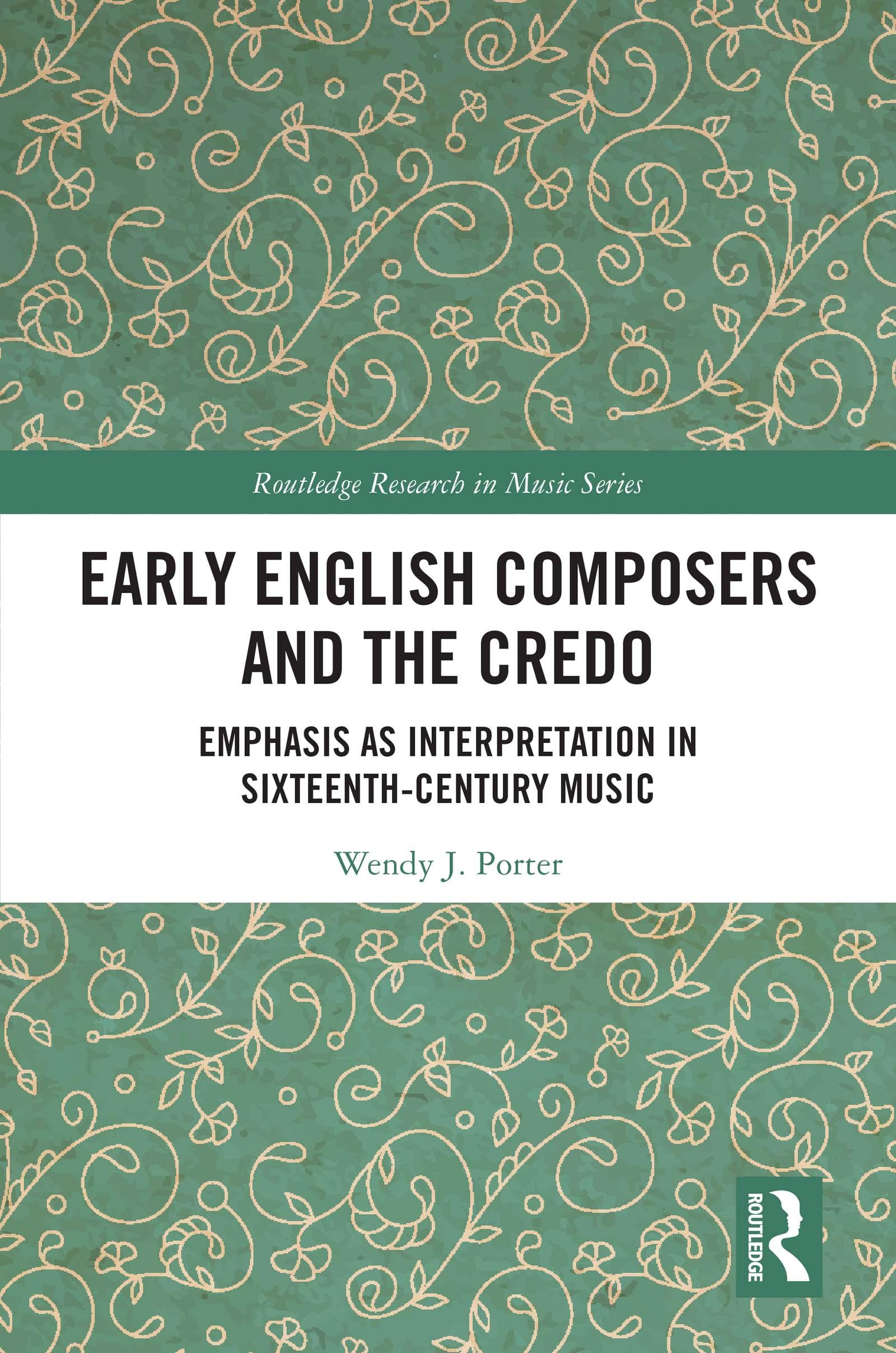
This book develops an innovative approach for understanding the relationship between music and words in the works of five major composers of the English Renaissance: John Taverner, Christopher Tye, John Sheppard, Thomas Tallis, and William Byrd. Focusing on these composers’ settings of the Latin Credo, the author shows how musical and linguistic emphasis can be used to understand the composers’ theological interpretations of the text. By combining markedness theory with style analysis, this study demonstrates that the composers used their musical skills to not only create beautiful music but also raise certain elements of the text to the foreground of perception and relegate others to supporting roles, inviting listeners to experience the familiar words of the liturgy in unique ways.
Providing new insights into the changing musical and religious world of the sixteenth century, this book is relevant to anyone researching music or religion in early modern England, while offering a flexible and widely adaptable tool for the analysis of musical-textual relationships.
Pay easily by card, Klarna, Apple Pay or Google Pay. Not happy? You always have a 14-day money-back guarantee. Read more in our terms. If you have any questions, email us at hello@memmo.org.
Memmo makes studying easier – wherever you are in the world. We bring your course books and smart study tools together in one place: summaries, quizzes, podcasts and flashcards. Plus Ted, your study buddy who answers anything you wonder. Over 50,000 students already study here – built to help you learn faster and stress less.