
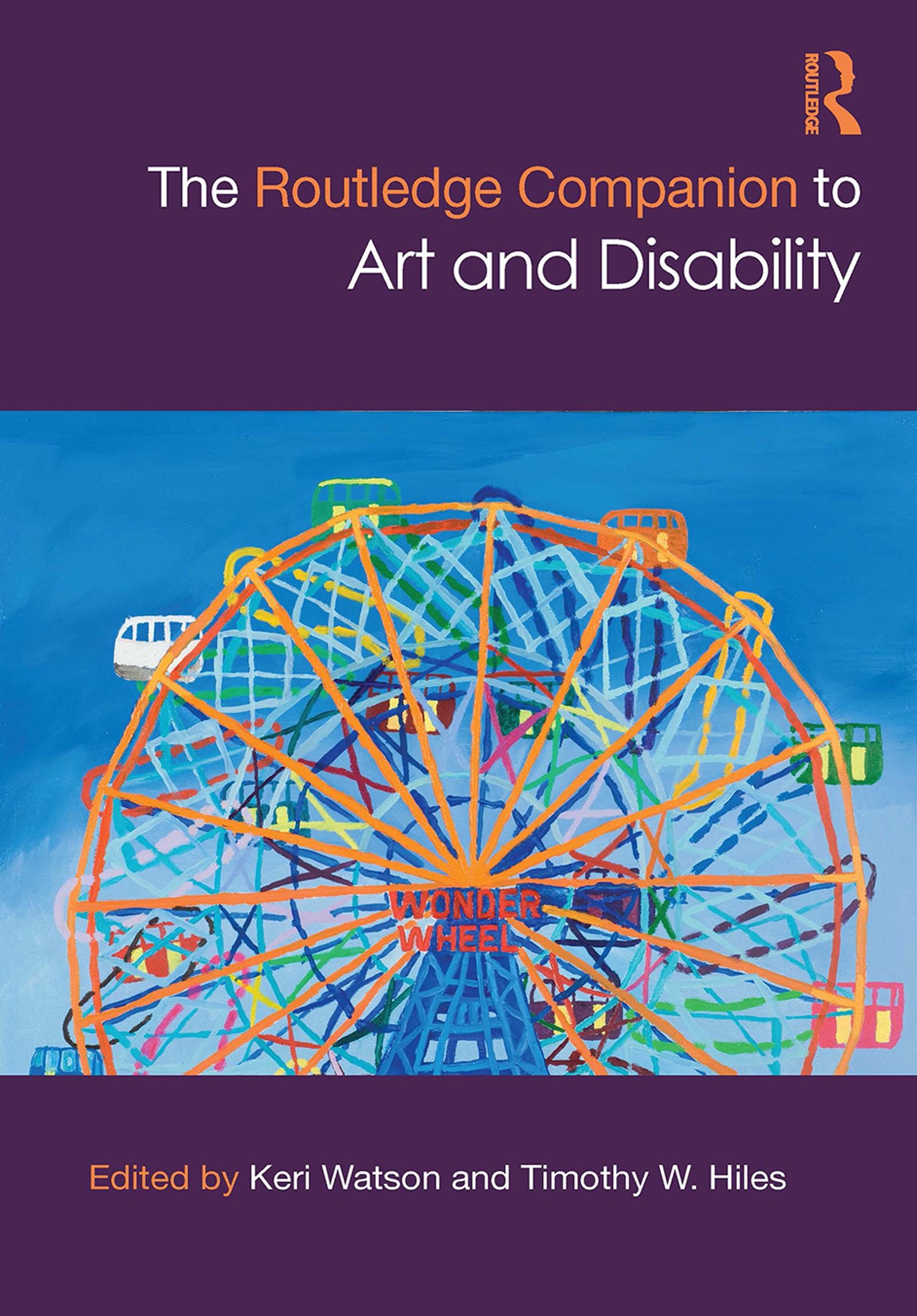
The Routledge Companion to Art and Disability explores disability in visual culture to uncover the ways in which bodily and cognitive differences are articulated physically and theoretically, and to demonstrate the ways in which disability is culturally constructed.
This companion is organized thematically and includes artists from across historical periods and cultures in order to demonstrate the ways in which disability is historically and culturally contingent. The book engages with questions such as: How are people with disabilities represented in art? How are notions of disability articulated in relation to ideas of normality, hybridity, and anomaly? How do artists use visual culture to affirm or subvert notions of the normative body? Contributors consider the changing role of disability in visual culture, the place of representations in society, and the ways in which disability studies engages with and critiques intersectional notions of gender, race, ethnicity, class, and sexuality.
This book will be particularly useful for scholars in art history, disability studies, visual culture, and museum studies.
Pay easily by card, Klarna, Apple Pay or Google Pay. Not happy? You always have a 14-day money-back guarantee. Read more in our terms. If you have any questions, email us at hello@memmo.org.
Memmo makes studying easier – wherever you are in the world. We bring your course books and smart study tools together in one place: summaries, quizzes, podcasts and flashcards. Plus Ted, your study buddy who answers anything you wonder. Over 50,000 students already study here – built to help you learn faster and stress less.