
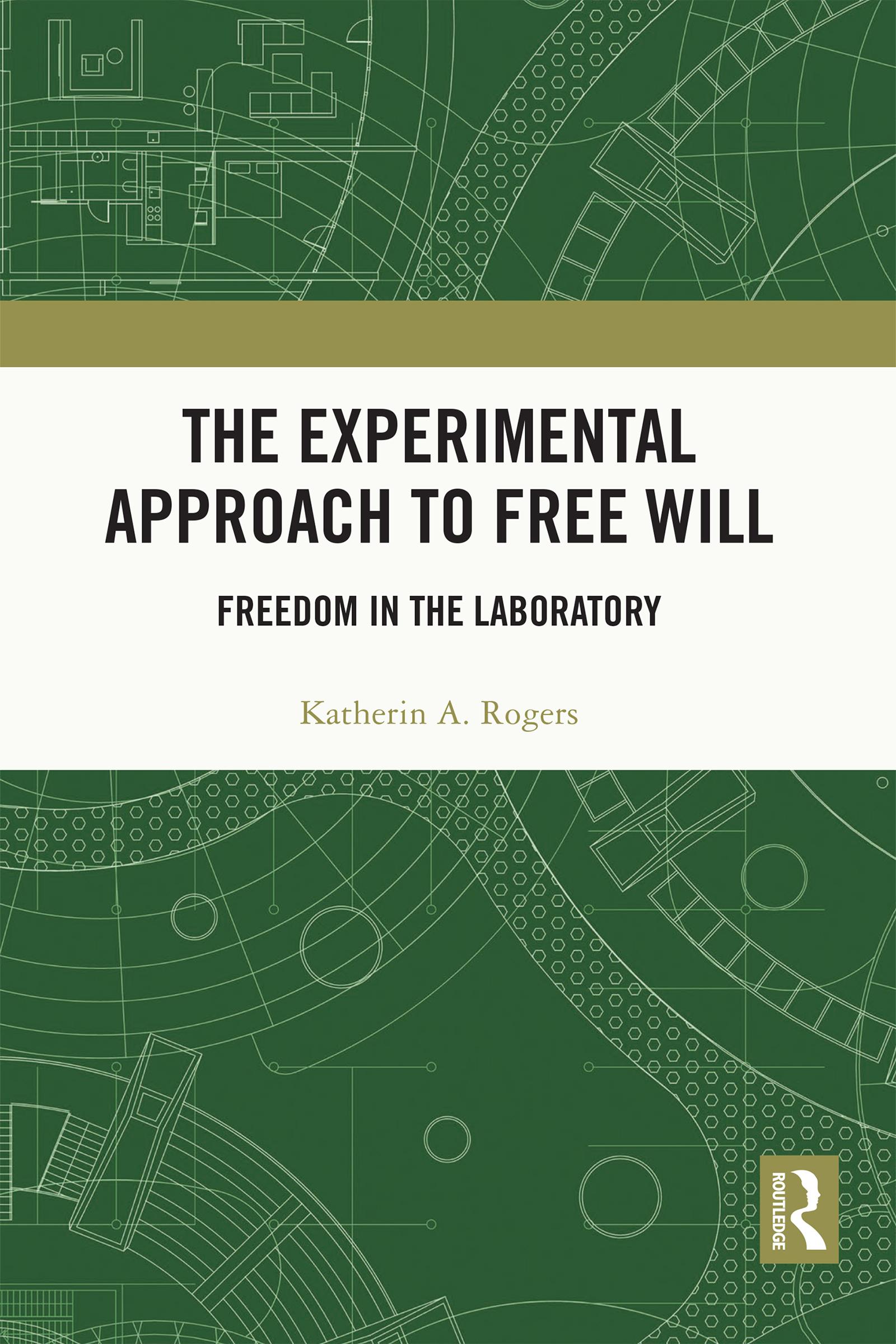
Recently, psychologists and neurobiologists have conducted experiments taken to show that human beings do not have free will. Many, including a number of philosophers, assume that, even if science has not decided the free will question yet, it is just a matter of time. In The Experimental Approach to Free Will, Katherin A. Rogers accomplishes several tasks. First, canvasing the literature critical of these recent experiments (or of conclusions drawn from them) and adding new criticisms of her own, she shows why these experiments should not undermine belief in human freedom – even robust, libertarian freedom. Indeed, many of the experiments do not even connect with any philosophical understanding of free will. Through this discussion, she generates a long list of problems – ethical as well as practical – facing the attempt to study free will experimentally. With these problems highlighted, she shows that even in the distant future, supposing the brain sciences to have advanced far beyond where they are today, it will likely be impossible to settle the question of free will experimentally. She concludes that, since philosophy has not, and science cannot, settle the question of free will, it is more reasonable to suppose that humans do indeed have freedom.
- Brings together, and adds to, criticisms of recent experiments (or conclusions drawn from them) which supposedly show that human beings do not have free will
- Analyzes recent experiments supposedly related to human freedom through the lens of a philosophically informed portrait of a robust, libertarian free choice
- Develops a long list of problems – both practical and ethical – facing the experimental study of human freedom
- Proposes a thought experiment set in a distant future of advanced brain science to show that it is likely impossible for science ever to settle the question of free will.
Pay easily by card, Klarna, Apple Pay or Google Pay. Not happy? You always have a 14-day money-back guarantee. Read more in our terms. If you have any questions, email us at hello@memmo.org.
Memmo makes studying easier – wherever you are in the world. We bring your course books and smart study tools together in one place: summaries, quizzes, podcasts and flashcards. Plus Ted, your study buddy who answers anything you wonder. Over 50,000 students already study here – built to help you learn faster and stress less.