
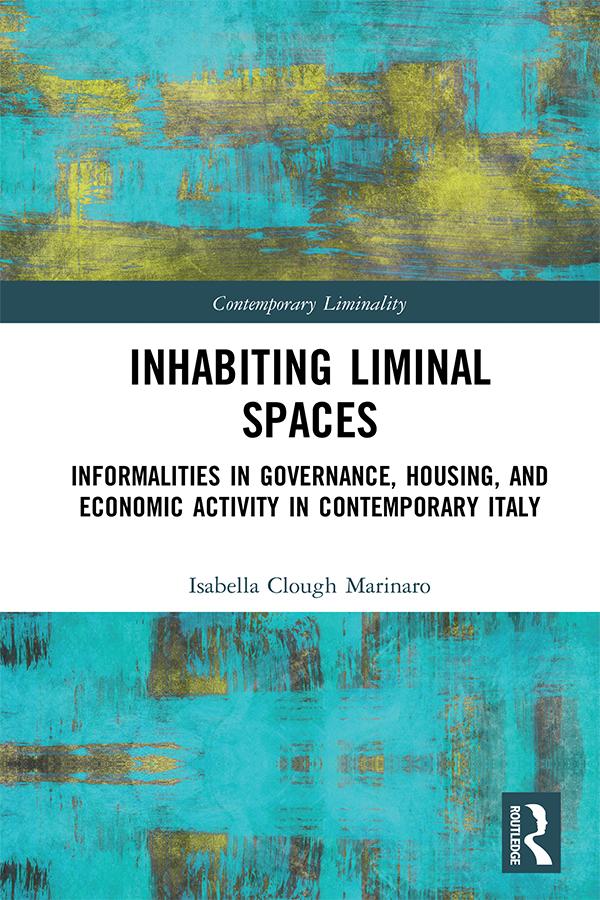
This book draws together debates from two burgeoning fields, liminality and informality studies, to analyze how dynamics of rule-bending take shape in Rome today. Adopting a multiscalar and transdisciplinary approach, it unpacks how gaps and contradictions in institutional rulemaking and application force many residents into protracted liminal states marked by intense vulnerability. By merging a political economy lens with ethnographic research in informal housing, illegal moneylending, unauthorized street-vending and waste collection, the author shows that informalities are not marginal or anomalous conditions, but an integral element of the city’s governance logics. Multiple actors together construct the local cultural norms, conventions and moral economies through which rule-negotiation occurs. However, these practices are ultimately unable to reconfigure historically rooted power dynamics and hierarchies. In fact, they often aggravate weak urbanites’ difficulties in accessing rights and services. A study that challenges assumptions that informalities are predominantly features of developing economies or limited to specific groups and sectors, this volume’s critical approach and innovative methodology will appeal to scholars of sociology and anthropology interested in social theory, urban studies and liminality.
Pay easily by card, Klarna, Apple Pay or Google Pay. Not happy? You always have a 14-day money-back guarantee. Read more in our terms. If you have any questions, email us at hello@memmo.org.
Memmo makes studying easier – wherever you are in the world. We bring your course books and smart study tools together in one place: summaries, quizzes, podcasts and flashcards. Plus Ted, your study buddy who answers anything you wonder. Over 75,000 students already study here – built to help you learn faster and stress less.