
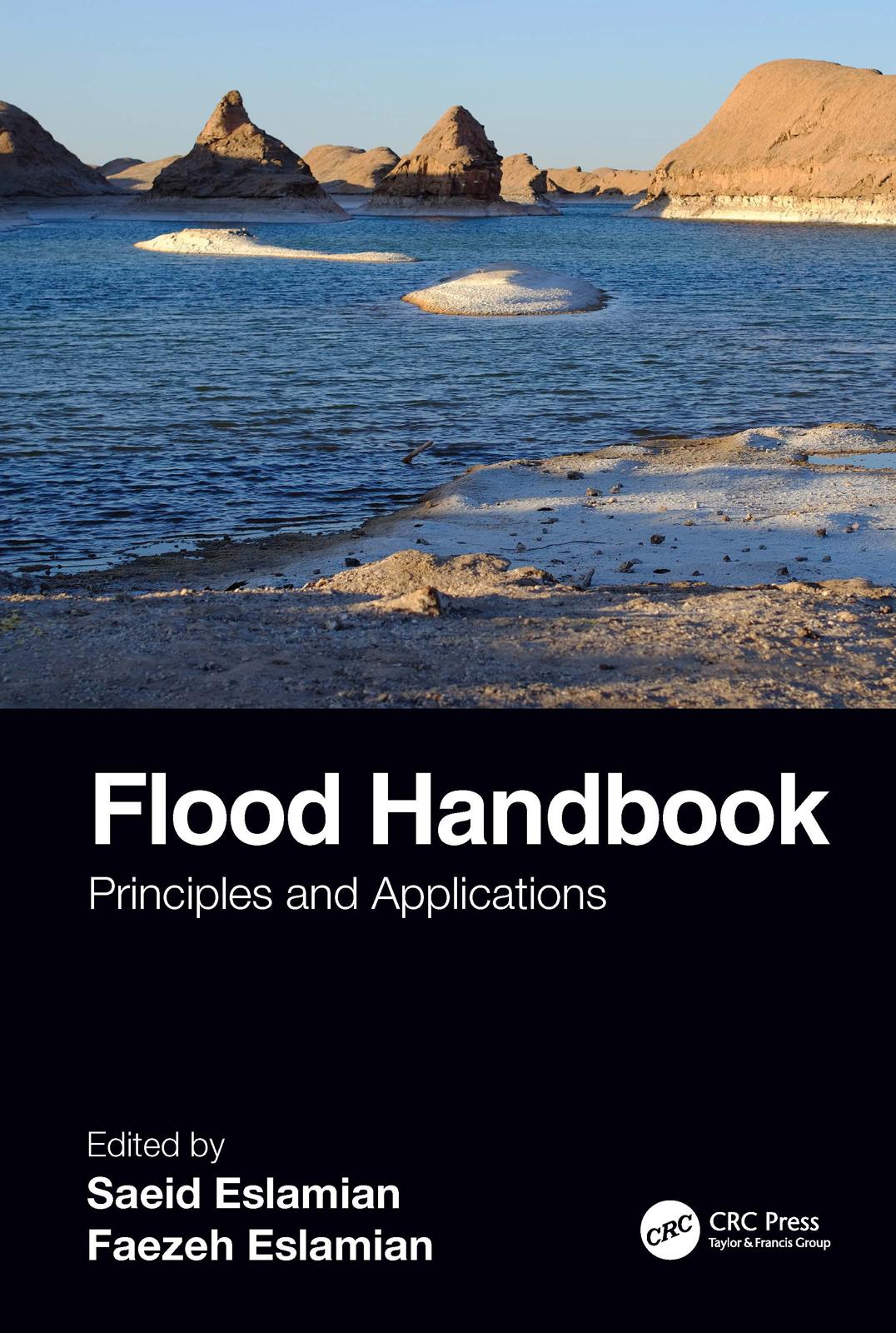
Floods are difficult to prevent but can be managed in order to reduce their environmental, social, cultural, and economic impacts. Flooding poses a serious threat to life and property, and therefore it’s very important that flood risks be taken into account during any planning process. This handbook presents different aspects of flooding in the context of a changing climate and across various geographical locations. Written by experts from around the world, it examines flooding in various climates and landscapes, taking into account environmental, ecological, hydrological, and geomorphic factors, and considers urban, agriculture, rangeland, forest, coastal, and desert areas.
Features
- Presents the main principles and applications of the science of floods, including engineering and technology, natural science, as well as sociological implications.
- Examines flooding in various climates and diverse landscapes, taking into account environmental, ecological, hydrological, and geomorphic factors.
- Considers floods in urban, agriculture, rangeland, forest, coastal, and desert areas
- Covers flood control structures as well as preparedness and response methods.
- Written in a global context, by contributors from around the world.
Pay easily by card, Klarna, Apple Pay or Google Pay. Not happy? You always have a 14-day money-back guarantee. Read more in our terms. If you have any questions, email us at hello@memmo.org.
Memmo makes studying easier – wherever you are in the world. We bring your course books and smart study tools together in one place: summaries, quizzes, podcasts and flashcards. Plus Ted, your study buddy who answers anything you wonder. Over 50,000 students already study here – built to help you learn faster and stress less.