
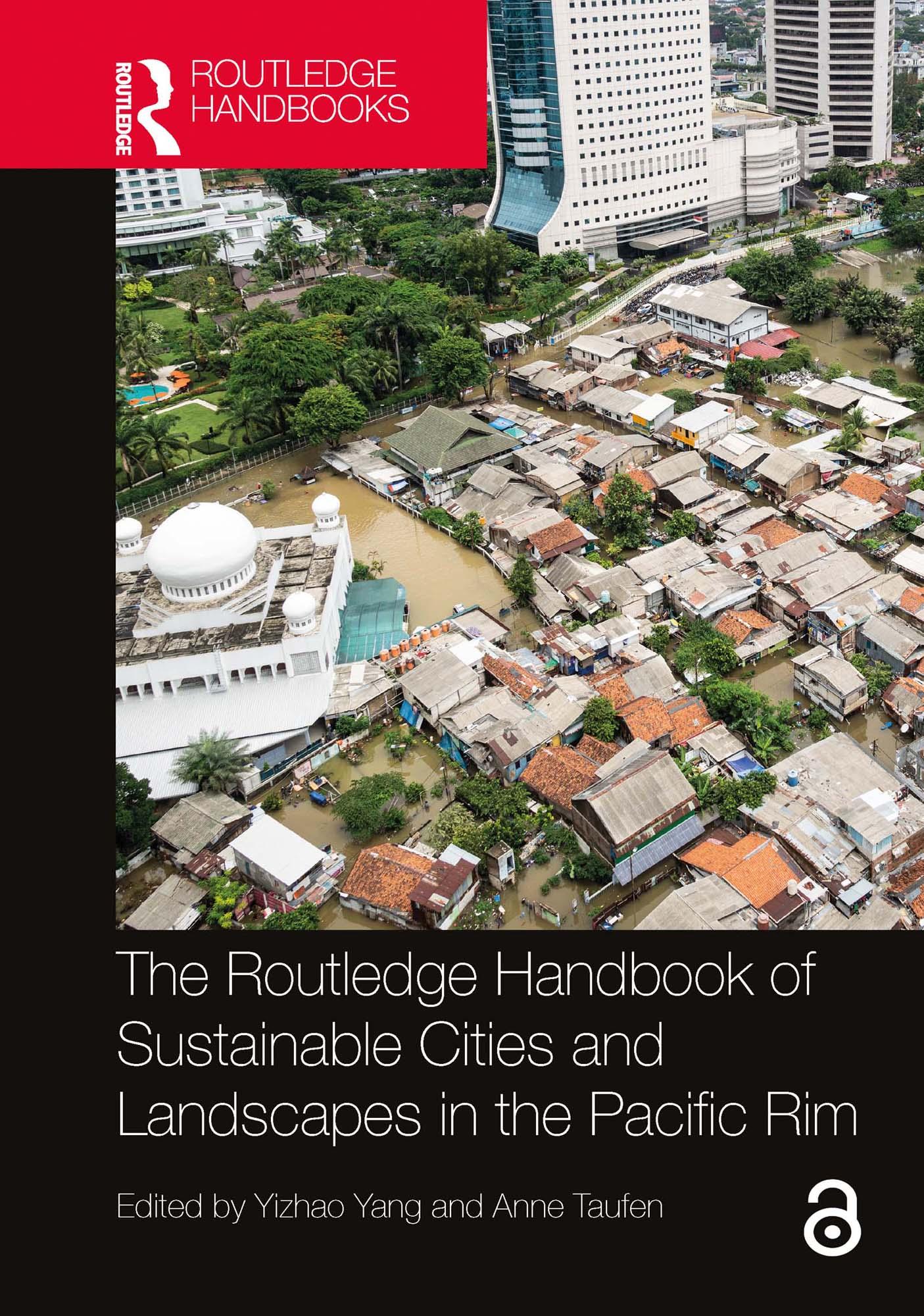
This handbook addresses a growing list of challenges faced by regions and cities in the Pacific Rim, drawing connections around the what, why, and how questions that are fundamental to sustainable development policies and planning practices. These include the connection between cities and surrounding landscapes, across different boundaries and scales; the persistence of environmental and development inequities; and the growing impacts of global climate change, including how physical conditions and social implications are being anticipated and addressed. Building upon localized knowledge and contextualized experiences, this edited collection brings attention to place-based approaches across the Pacific Rim and makes an important contribution to the scholarly and practical understanding of sustainable urban development models that have mostly emerged out of the Western experiences. Nine sections, each grounded in research, dialogue, and collaboration with practical examples and analysis, focus on a theme or dimension that carries critical impacts on a holistic vision of city-landscape development, such as resilient communities, ecosystem services and biodiversity, energy, water, health, and planning and engagement.
This international edited collection will appeal to academics and students engaged in research involving landscape architecture, architecture, planning, public policy, law, urban studies, geography, environmental science, and area studies. It also informs policy makers, professionals, and advocates of actionable knowledge and adoptable ideas by connecting those issues with the Sustainable Development Goals (SDGs) of the United Nations. The collection of writings presented in this book speaks to multiyear collaboration of scholars through the APRU Sustainable Cities and Landscapes (SCL) Program and its global network, facilitated by SCL Annual Conferences and involving more than 100 contributors from more than 30 institutions.
The Open Access version of chapters 1, 2, 4, 11, 17, 23, 30, 37, 42, 49, and 56 of this book, available at http://www.taylorfrancis.com/books/e/9781003033530, have been made available under a Creative Commons Attribution-Non Commercial-No Derivatives 4.0 license.
Pay easily by card, Klarna, Apple Pay or Google Pay. Not happy? You always have a 14-day money-back guarantee. Read more in our terms. If you have any questions, email us at hello@memmo.org.
Memmo makes studying easier – wherever you are in the world. We bring your course books and smart study tools together in one place: summaries, quizzes, podcasts and flashcards. Plus Ted, your study buddy who answers anything you wonder. Over 75,000 students already study here – built to help you learn faster and stress less.