
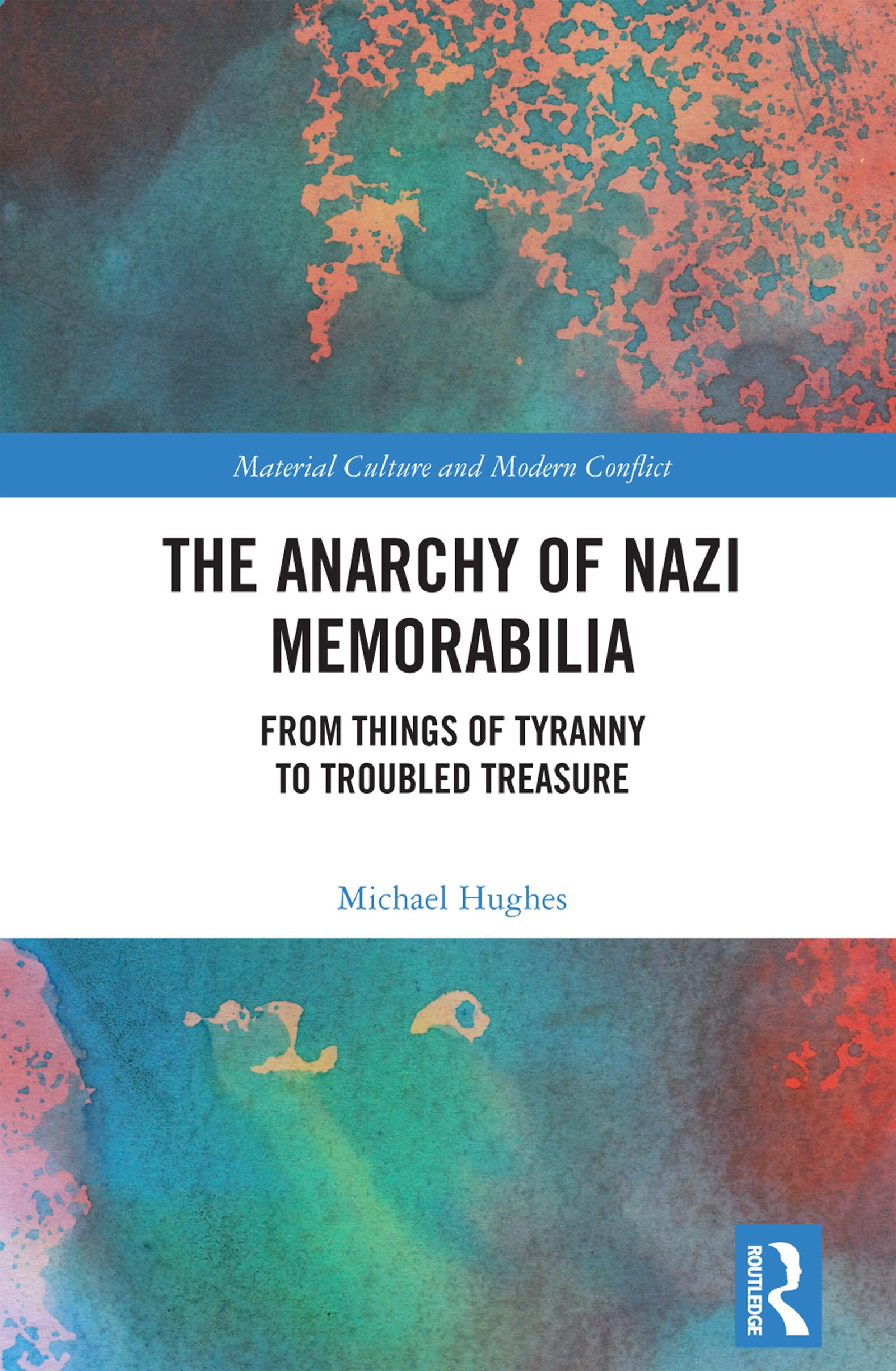
Out of the numerous books and articles on the Third Reich, few address its material culture, and fewer still discuss the phenomenon of Nazi memorabilia. This is all the more surprising given that Nazi symbols, so central to sustaining Hitler’s movement, continue to live long after the collapse of his 12-year Reich. Neither did Nazi ideology die; far-right populists would like to see the swastika flown over the White House or Buckingham Palace. Against a backdrop of right-wing extremism, military re-enactors think nothing of dressing up in Waffen-SS uniforms and romanticising the Third Reich in the name of living history. Auctioneers are prepared to hammer down Nazi artefacts to the highest bidder, but who is buying them, and why do they do so? Should collectors be allowed to decorate their homes with Nazi flags?
The Anarchy of Nazi Memorabilia begins by examining the creation and context of Nazi artefacts and symbols during the volatile Weimar Republic to their wider distribution during the Third Reich. There were few people in Nazi Germany who did not wear a badge or uniform of some sort. Whether it be mothers, soldiers or concentration camp inmates, they were all branded. The chapter on the Second World War demonstrates that although German soldiers were cynical about being given medals in exchange for freezing in Russia. They still continued to fight, for which more decorations were awarded. A large proportion of this book is therefore given to the meaning that Nazi symbols had before Nazi Germany was eventually defeated in May 1945. Equally important, however, and one of the characteristics of this book, is the analysis of the meaning and value of Nazi material culture over time. The interpreters of Nazi symbols that this book focuses on are internationally based private collectors and traders. Sustained attention is given in a chapter outlining the development of the collectors’ market for Nazi memorabilia from 1945 onwards. No matter how much collectors go out of their way to paint the hobby in a positive light, their activities do not fully escape the troubled past of the material that they desire. So contested are Nazi symbols that another chapter is devoted to the ethics and morals of destroying or preserving them. The issues surrounding private versus public custody and ownership of Nazi artefacts are also discussed. So far, in this book, the examination of Nazi artefacts has been restricted to physical objects within societies that are generally aware of the consequences of Hitlerism. As we increasingly move into the digital age, however, and there are few survivors of the Second World War left to relay their horrific experiences, the final chapter contemplates the future of Nazi symbols both digitally and physically, fake or real.
This book will appeal to all those interested in the Third Reich, Nazi ideology, Neo-Nazism, perceptions of the Nazis post-1945, modern European history and political symbolism. It will also hold particular appeal to those interested in the collecting and trading of contested and highly emotive artefacts. It considers aesthetics, authenticity, commodification, gift exchange, life histories of people and objects, materiality and value theory.
Pay easily by card, Klarna, Apple Pay or Google Pay. Not happy? You always have a 14-day money-back guarantee. Read more in our terms. If you have any questions, email us at hello@memmo.org.
Memmo makes studying easier – wherever you are in the world. We bring your course books and smart study tools together in one place: summaries, quizzes, podcasts and flashcards. Plus Ted, your study buddy who answers anything you wonder. Over 50,000 students already study here – built to help you learn faster and stress less.