
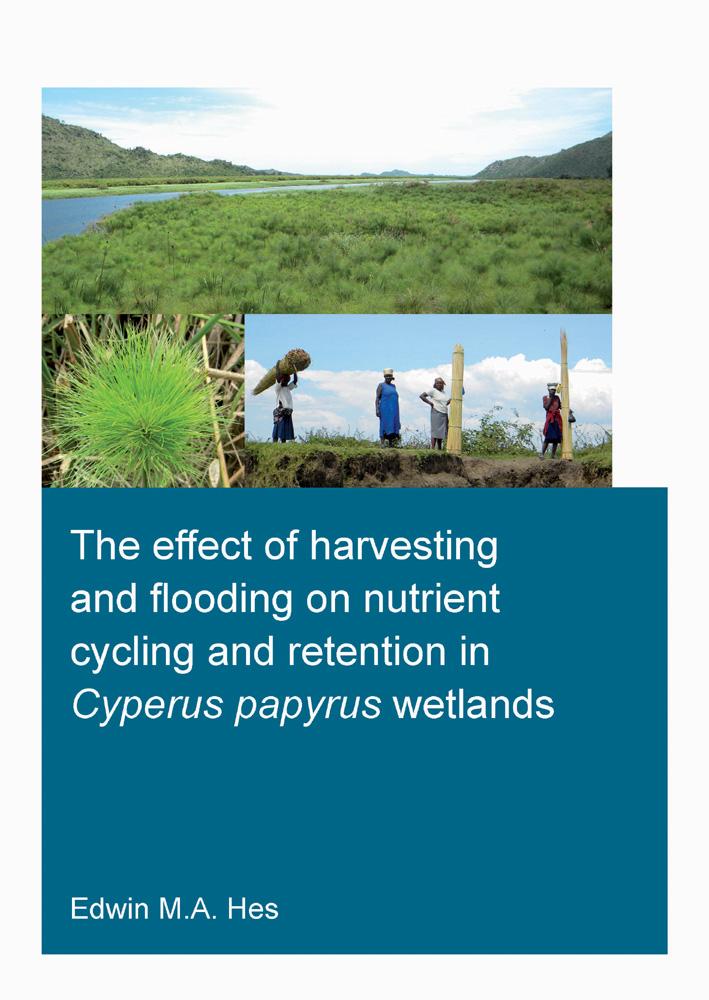
African papyrus (Cyperus papyrus L.) wetlands provide water, food and materials to millions of people, and perform important landscape functions such as water and nutrient storage, habitat provision for fish, birds and other wildlife. They are also an integral part of the culture of African wetland communities. With an increasing demand for food, papyrus wetlands are at risk of conversion to agriculture and losing these ecosystem services. Combining increased agricultural production with wetland conservation is urgently needed. The research presented in this book consisted of two parts. First, field experiments investigated nitrogen and phosphorus retention, showing that papyrus grows faster with disturbance from human activities or flooding, but produces less biomass and stores less nutrients. Then, a dynamic simulation model (Papyrus Simulator) based on the hydrological and ecological wetland processes showed that assimilation, mortality, decay, re-translocation, nutrient inflow and soil porosity were the most influential factors. The model demonstrated that controlled harvesting can increase nutrient retention by up to 40%, but overharvesting leads to the release of nutrients. These findings can help determining optimum harvesting strategies for constructed and natural wetlands, and contribute to the quantification of ecosystem services and an evidence-based adaptive management approach for African wetland landscapes.
Pay easily by card, Klarna, Apple Pay or Google Pay. Not happy? You always have a 14-day money-back guarantee. Read more in our terms. If you have any questions, email us at hello@memmo.org.
Memmo makes studying easier – wherever you are in the world. We bring your course books and smart study tools together in one place: summaries, quizzes, podcasts and flashcards. Plus Ted, your study buddy who answers anything you wonder. Over 50,000 students already study here – built to help you learn faster and stress less.