
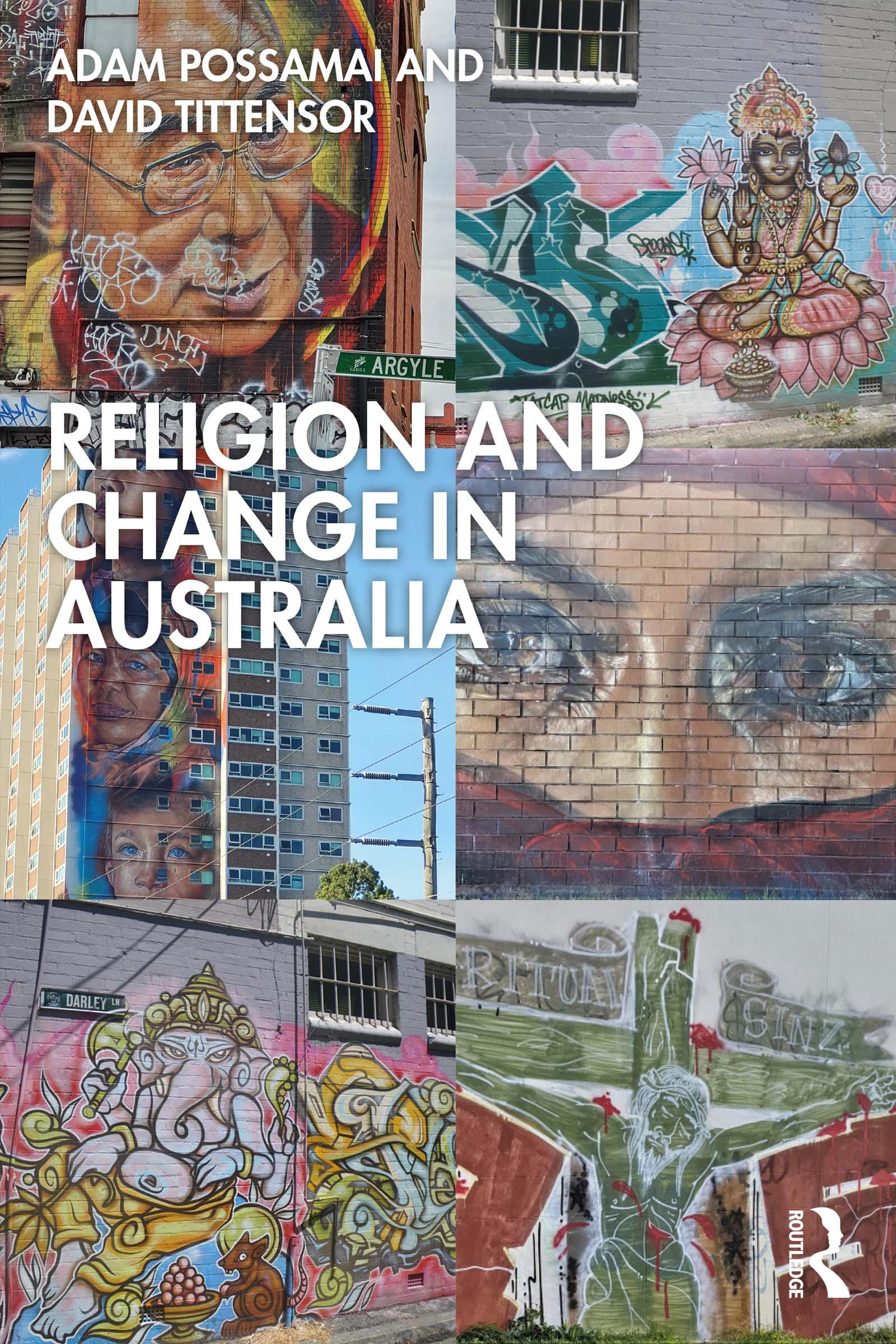
This timely book offers a panoramic overview of the enduring significance of religion in modern Australian society. Applying sociological perspectives and contemporary theories of religion in society, it challenges conventional assumptions around the extent of secularisation in Australia and instead argues that religious institutions, groups, and individuals have proved remarkably adaptable to social change and continue to play a major role in Australian life. In doing so, it explores how religion intersects with a wide range of other contemporary issues, including politics, race, migration, gender, and new media.
Religion and Change in Australia explores Australia’s unique history regarding religion. Christianity was originally imported as a tool of social control to keep convicts, settlers, and Australian Aboriginal peoples in check. This had a profound impact on the social memory of the nation, and lingering resentment towards the "excessive" presence of religion continues to be felt today. Freedom of religion was enshrined in Section 116 of the Australian Constitution in 1901. Nevertheless, the White Australia Policy effectively prevented adherents of non-Christian faiths from migrating to Australia and the nation remained overwhelmingly Christian. However, after WWII, Australia, in common with other western societies, appears to have become increasingly secularised, as religious observance declined dramatically.
However, Religion and Change in Australia employs a range of social theories to challenge this securalist view and argues that Australia is a post-secular society. The 2016 census revealed that over half of the population still identify as Christian. In politics, the socially conservative religious right has come to exert considerable influence on the ruling Liberal-National Coalition, particularly under John Howard and Scott Morrison. New technologies, such as the Internet and social media, have provided new avenues for religious expression and proselytisation whilst so-called "megachurches" have been built to cater to their increasing congregations. The adoption of multiculturalism and increased immigration from Asia has led to a religiously pluralist society, though this has often been controversial. In particular, the position of Islam in Australia has been the subject of fierce debate, and Islamophobic attitudes remain common. Atheism, non-belief, and alternative spiritualities have also become increasingly widespread, especially amongst the young.
Religion and Change in Australia analyses these developments to offer new perspectives on religion and its continued relevance within Australian society. This book is therefore a vital resource for students, academics, and general readers seeking to understand contemporary debates surrounding religion and secularisation in Australia.
Pay easily by card, Klarna, Apple Pay or Google Pay. Not happy? You always have a 14-day money-back guarantee. Read more in our terms. If you have any questions, email us at hello@memmo.org.
Memmo makes studying easier – wherever you are in the world. We bring your course books and smart study tools together in one place: summaries, quizzes, podcasts and flashcards. Plus Ted, your study buddy who answers anything you wonder. Over 50,000 students already study here – built to help you learn faster and stress less.