
An overcurrent is caused by a short-circuit, ground-fault, or an overload.
A short-circuit may be hundreds or even thousands of times above the normal operating current. This type of fault may be an arcing fault between ungrounded conductors or between an ungrounded conductor and a grounded (usually, a neutral) conductor, a line-to-line arcing fault may produce a current of 74% of a 3-phase bolted fault. A line-to-neutral arcing fault will be somewhat less.
A line-to-line bolted fault, the equivalent, of the conductors bolted together, may be up to 100% of the available short-circuit current.
A line-to-neutral bolted fault may be in excess of 100% of the 3-phase bolted fault at the source, but considerably less downstream.
A ground-fault, that is, the equivalent of a connection between an ungrounded conductor and the equipment grounding system, will produce a current that may be 38% or higher of the 3-phase bolted fault current. These types of faults are typically arcing faults which normally are intermittent in nature. That is, they strike and restrike over time and may produce a short-circuit fault due to insulation damage.
Once again, a line-to-equipment ground fault near the source may produce a fault current of over 100% of the 3-phase bolted fault, but considerably less downstream.
An overload typically ranges from one to six times the normal current, and are normally caused by motor starting currents or transformer magnetizing currents. These conditions are of such short duration that the circuit components are not damaged.
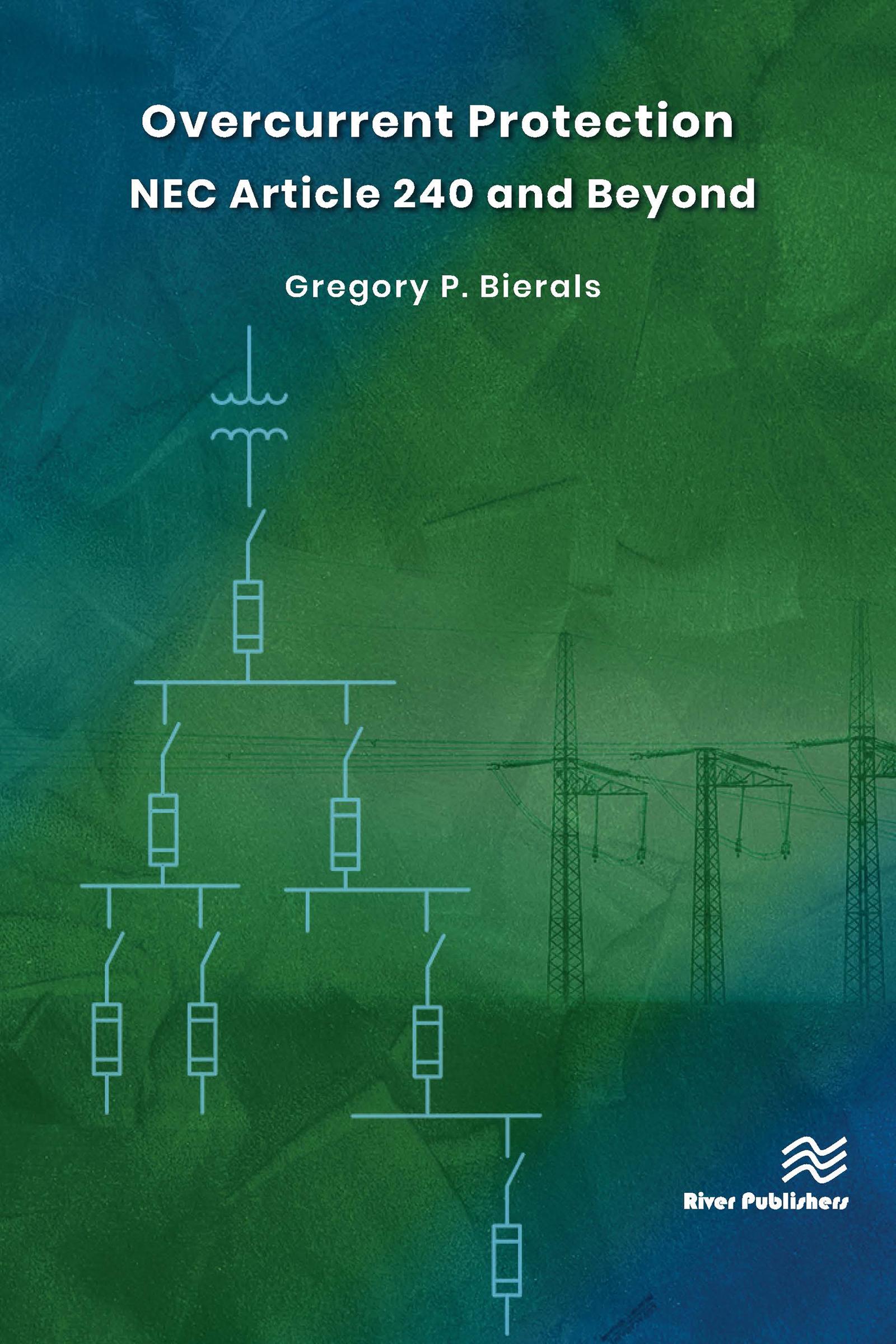
This book has a detailed analysis of these types of faults, along with explanations and examples of the various types of overcurrent protective devices to assure proper protection.
This volume has extensive information on the application of overcurrent protection for conductors and equipment. The reader will be able to calculate fault currents as well as establishing the short-circuit withstand rating of conductor insulation and to determine the appropriate type of overcurrent devices based on circuit conditions.
In addition, determining ground-fault currents for the purpose of selecting the proper size of equipment grounding conductors to establish an effective ground-fault current path is discussed in detail.
Readership - Anyone involved with the design of overcurrent protection for electrical distribution systems from the system source to the electrical utilization equipment. The emphasis is placed on the design of the overcurrent protection for specific installations to assure proper protection for the circuit components regardless of the type of fault encountered.
Pay easily by card, Klarna, Apple Pay or Google Pay. Not happy? You always have a 14-day money-back guarantee. Read more in our terms. If you have any questions, email us at hello@memmo.org.
Memmo makes studying easier – wherever you are in the world. We bring your course books and smart study tools together in one place: summaries, quizzes, podcasts and flashcards. Plus Ted, your study buddy who answers anything you wonder. Over 50,000 students already study here – built to help you learn faster and stress less.