
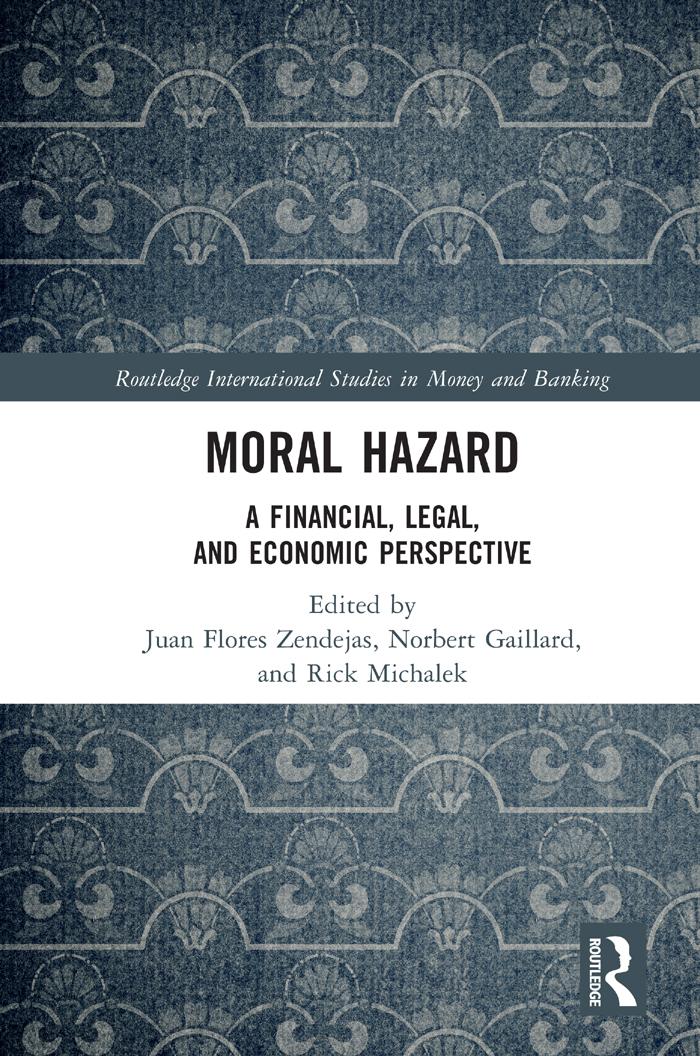
Moral Hazard is a core concept in economics. In a nutshell, moral hazard reflects the reduced incentive to protect against risk where an entity is (or believes it will be) protected from its consequences, whether through an insurance arrangement or an implicit or explicit guarantee system. It is fundamentally driven by information asymmetry, arises in all sectors of the economy, including banking, medical insurance, financial insurance, and governmental support, undermines the stability of our economic systems and has burdened taxpayers in all developed countries, resulting in significant costs to the community. Despite the seriousness and pervasiveness of moral hazard, policymakers and scholars have failed to address this issue. This book fills this gap.
It covers 200 years of moral hazard: from its origins in the 19th century to the bailouts announced in the aftermath of the COVID-19 outbreak. The book is divided into three parts. Part I deals with the ethics and other fundamental issues connected to moral hazard. Part II provides historical and empirical evidence on moral hazard in international finance. It examines in turn the role of the export credit industry, the international lender of last resort, and the IMF. Finally, Part III examines specific sectors such as automobile, banking, and the US industry at large.
This is the first book to provide an interdisciplinary analysis of moral hazard and explain why addressing this issue has become crucial today. As such, it will attract interest from scholars across different fields, including economists, political scientists and lawyers.
Pay easily by card, Klarna, Apple Pay or Google Pay. Not happy? You always have a 14-day money-back guarantee. Read more in our terms. If you have any questions, email us at hello@memmo.org.
Memmo makes studying easier – wherever you are in the world. We bring your course books and smart study tools together in one place: summaries, quizzes, podcasts and flashcards. Plus Ted, your study buddy who answers anything you wonder. Over 50,000 students already study here – built to help you learn faster and stress less.