
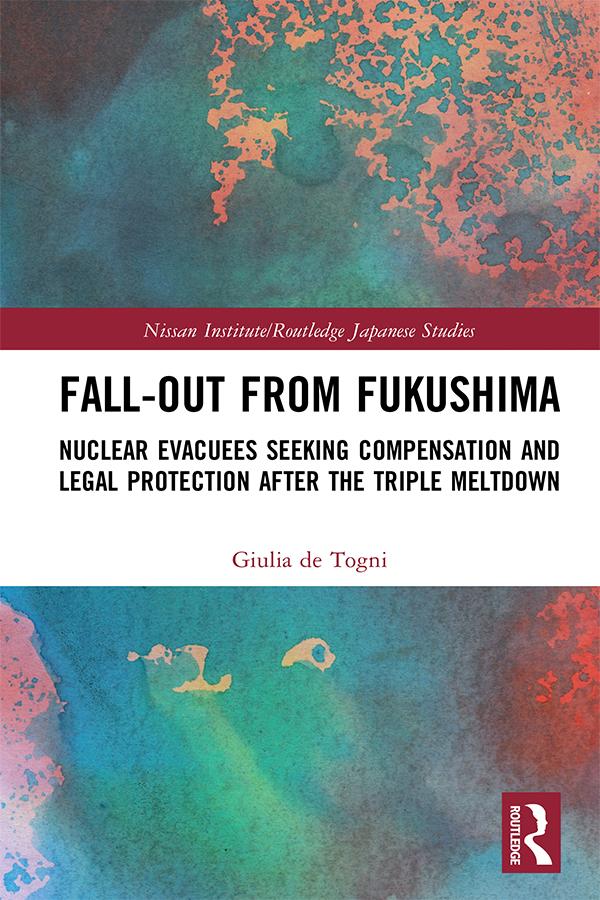
This book shows how the Fukushima plaintiffs have challenged narratives of safety and risk containment produced by TEPCO and the Japanese government through offering new empirical data on risk perceptions and life choices of some nuclear evacuees.
Considering the Fukushima evacuees’ disappearance from public discourse in Japan, the book engages with theoretical writings on risk, neoliberal governmentality and citizen science. Chapters draw on a wide range of anthropologically-related methodologies including socio-linguistics, participant observation, and qualitative interviews. Themes of self-governance, resistance, gender, kinship, class and social change surface throughout, setting the Fukushima experience in a broad historical, social, and comparative context. This is the first ethnographic account of the Fukushima litigation and the first extensive qualitative study documenting the worldviews and living conditions of nuclear evacuees who moved outside Fukushima Prefecture, with a particular focus on underrepresented groups (single mothers, elderly and disabled evacuees). The history of industrial disasters and the role of citizens in shaping environmental policy in Japan is also evaluated.
Fall-out from Fukushima sets out to be a manifesto for understanding and supporting post-nuclear disaster societies, and will appeal to students and scholars of social, legal, and linguistic anthropology, science and technology studies, as well as Japanese studies.
Pay easily by card, Klarna, Apple Pay or Google Pay. Not happy? You always have a 14-day money-back guarantee. Read more in our terms. If you have any questions, email us at hello@memmo.org.
Memmo makes studying easier – wherever you are in the world. We bring your course books and smart study tools together in one place: summaries, quizzes, podcasts and flashcards. Plus Ted, your study buddy who answers anything you wonder. Over 50,000 students already study here – built to help you learn faster and stress less.