
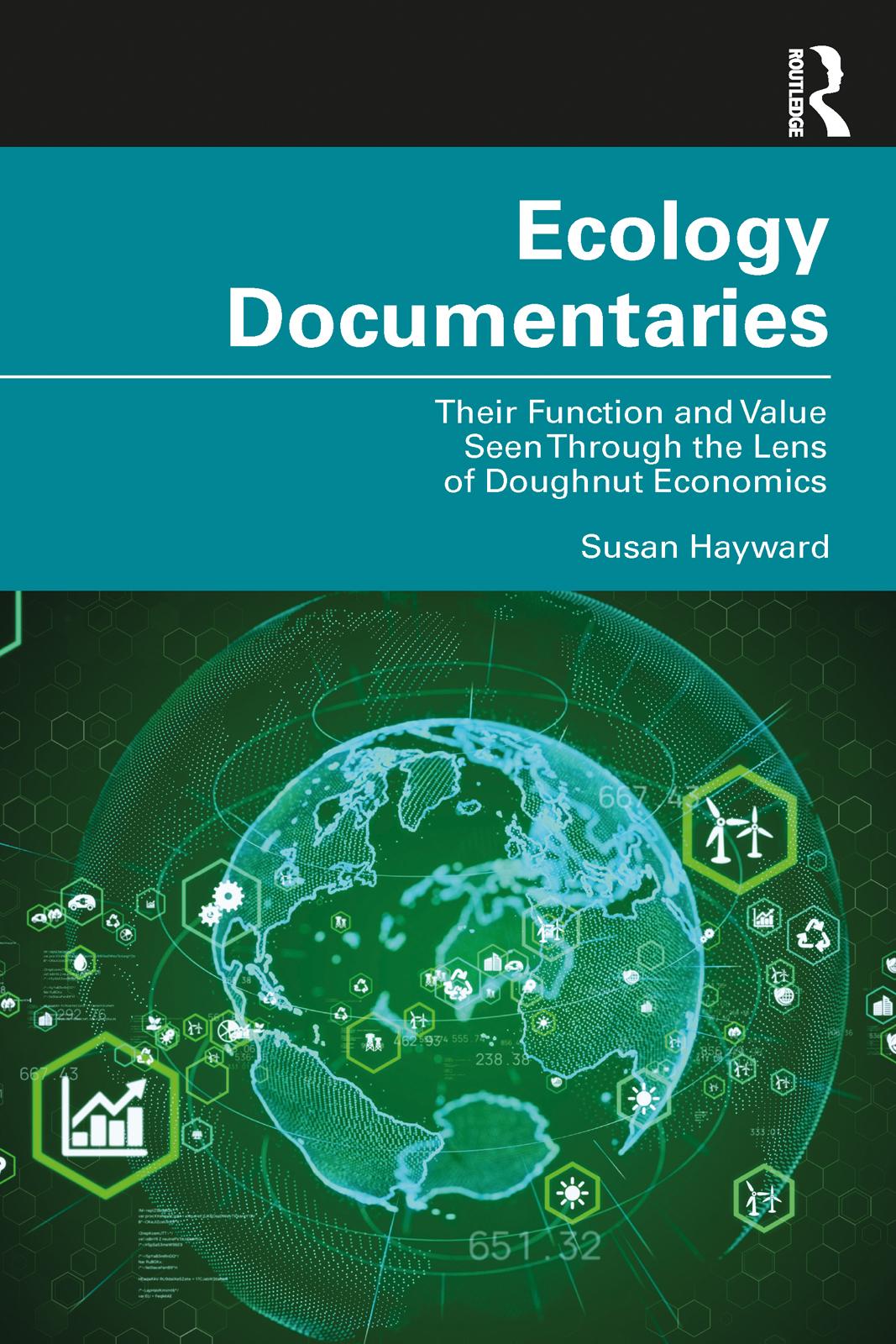
This companion piece to Susan Hayward’s Film Ecology focuses on ecology documentaries produced in the first 20 years of the new millennium (2000–19).
Using Kate Raworth’s regenerative economic theoretical model as set out in Doughnut Economics, this book examines 57 films emanating from Europe and the 4 areas of concern they raise about energy production, pollution and waste
management, agribusiness, disrupted ecosystems and the migratory f low. These ecology documentaries make explicit the damage done to our planet thanks to growth capitalism and neoliberal globalisation. But they also provide the evidence that solutions to this planetary abuse exist. The book demonstrates how these documentaries reveal the process of humankind’s planetary plundering and explores the structuring of the eco-doc as a new generic type in the domain of documentary practice. Using Raworth’s model allows us to measure the tentacular extent of the planetary harm growth economics induces and, too, by way of contrast, perceive how regenerative economics can work to redress this harm, heal the Earth and make it a safe place for humanity.
This book is ideal for film studies scholars and students, including those teaching or studying film practice, documentary film, European cinema and environmental studies, as well as economists interested in regenerative economic models. It also has general appeal to all who are concerned about some of the major causes of planetary degradation and its impact on humanity and Earth.
Pay easily by card, Klarna, Apple Pay or Google Pay. Not happy? You always have a 14-day money-back guarantee. Read more in our terms. If you have any questions, email us at hello@memmo.org.
Memmo makes studying easier – wherever you are in the world. We bring your course books and smart study tools together in one place: summaries, quizzes, podcasts and flashcards. Plus Ted, your study buddy who answers anything you wonder. Over 50,000 students already study here – built to help you learn faster and stress less.