
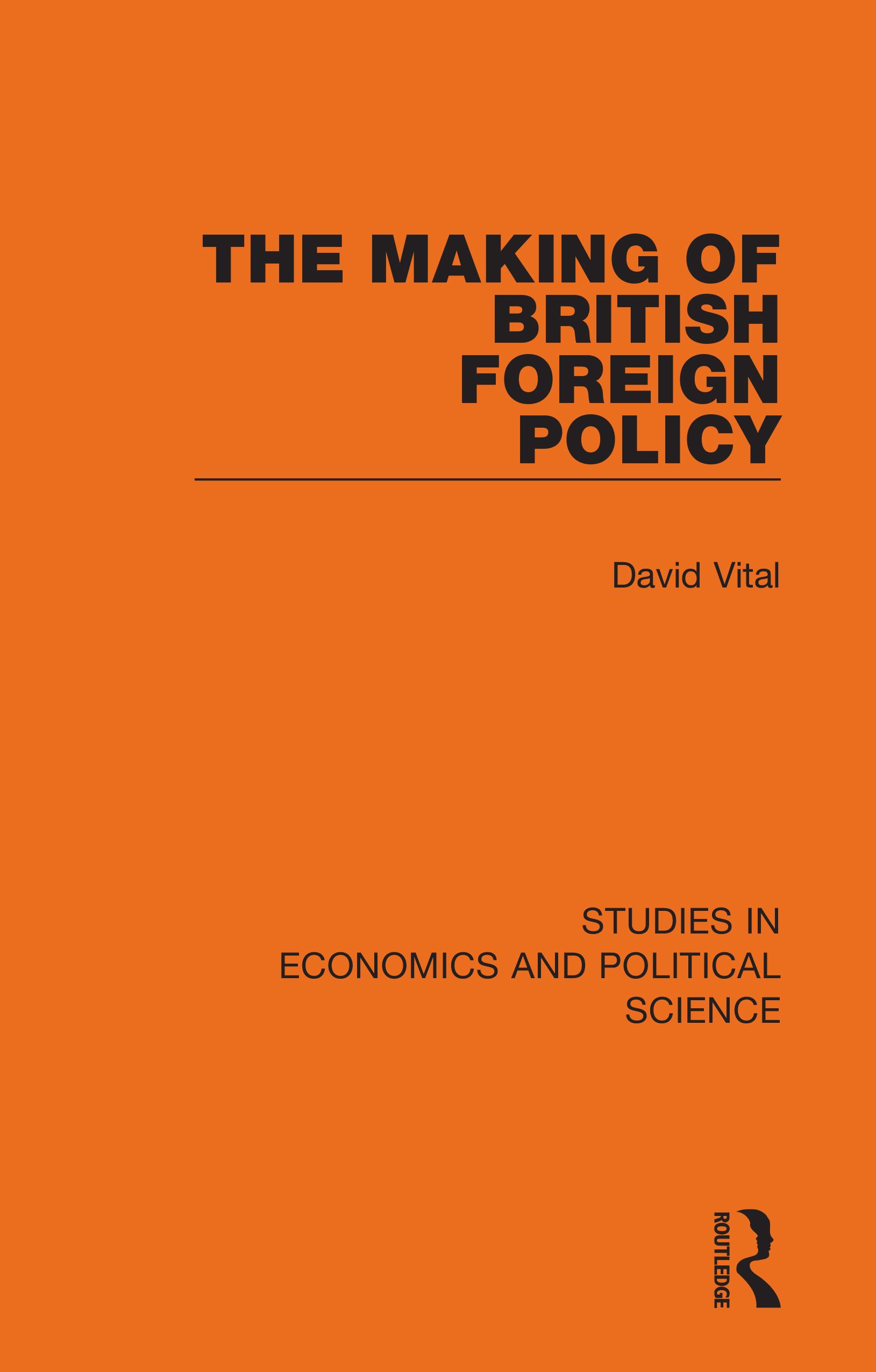
How is foreign policy made? Who makes it? To what conscious and unconscious influences are policy-makers subject? What is distinctive about the immensely complex process as it unfolds in Britain? And what, therefore, is distinctive and characteristic about Britain’s foreign policy today? Who in Britain, has the decisive word? Why is the Foreign Office the king-pin of the system? Why does Parliament count for so little? Does public opinion count at all? Originally published in 1968, these are some of the questions which this book considers in the course of a tightly argued but very readable analysis. Some had been considered on their own elsewhere, but this study represented the first attempt by a contemporary political scientist to pull together, in brief compass, all the relevant threads – including the constitutional, the political, the institutional and the sociological. It is done, moreover, on the basis of a sharp assessment of the type of foreign policy problem that most notably confronted Britain at the time.
The author has been successively journalist, official of the Israel Government, and university lecturer in politics. Throughout, his special interests and activities have been in the sphere of international affairs and it was while teaching International Relations at the University of Sussex that he wrote this book. He combines the experience of one who has seen the policy being made from the inside with the theoretical insight of the political scientist; he assesses with a sympathetic but unemotional detachment the constraints on the formation of British foreign policy.
Pay easily by card, Klarna, Apple Pay or Google Pay. Not happy? You always have a 14-day money-back guarantee. Read more in our terms. If you have any questions, email us at hello@memmo.org.
Memmo makes studying easier – wherever you are in the world. We bring your course books and smart study tools together in one place: summaries, quizzes, podcasts and flashcards. Plus Ted, your study buddy who answers anything you wonder. Over 50,000 students already study here – built to help you learn faster and stress less.