
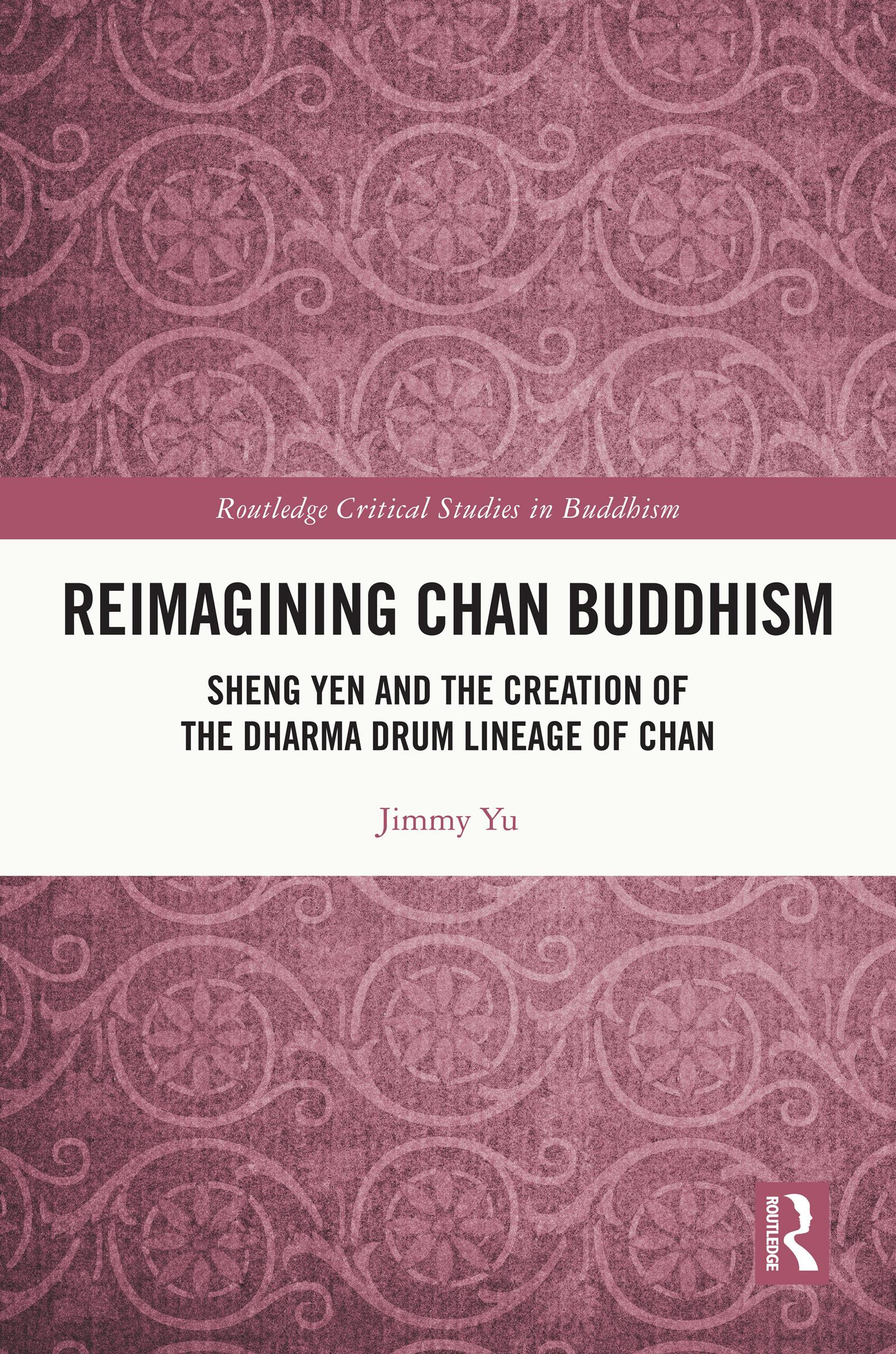
This book is the first socio-intellectual history of the Dharma Drum Lineage of Chan (Zen), a new lineage of Buddhism founded by the late Chinese Buddhist cleric, Sheng Yen (1931–2009)—arguably one of the most influential Chan masters in contemporary times.
The book challenges the received academic and popular image of Chan Buddhism as a meditation school that bypasses scriptural learning. Using Sheng Yen’s doctrinal classification (Chn. panjiao) chart as an example, the book shows Sheng Yen’s Chan as a synthesis of both Indian and Chinese premodern forms of Buddhism, and as the summum bonum of Han transmission of Chinese Buddhism (Chn. Hanchuan fojiao). The book demonstrates how Sheng Yen’s presentation of Chan was intimately related to the volatile social and political realities of his life—the Communist takeover of China and the subsequent industrial boom that impacted Taiwanese society. In short, this book presents a historically and culturally embodied approach to the formation of Buddhist doctrine and practice. Drawing on the works of postcolonial theories that integrate the role of the researcher into the research, the book also offers a more integrated approach between emic and etic, insider and outsider perspectives to research.
Advancing the field of Buddhist studies, the book will be of interest to scholars of Buddhism in the modern period, twentieth-century religious history of China and Taiwan, Chan/Zen studies, World Religions, Asian civilizations, and Modern Biographies.
Pay easily by card, Klarna, Apple Pay or Google Pay. Not happy? You always have a 14-day money-back guarantee. Read more in our terms. If you have any questions, email us at hello@memmo.org.
Memmo makes studying easier – wherever you are in the world. We bring your course books and smart study tools together in one place: summaries, quizzes, podcasts and flashcards. Plus Ted, your study buddy who answers anything you wonder. Over 50,000 students already study here – built to help you learn faster and stress less.