
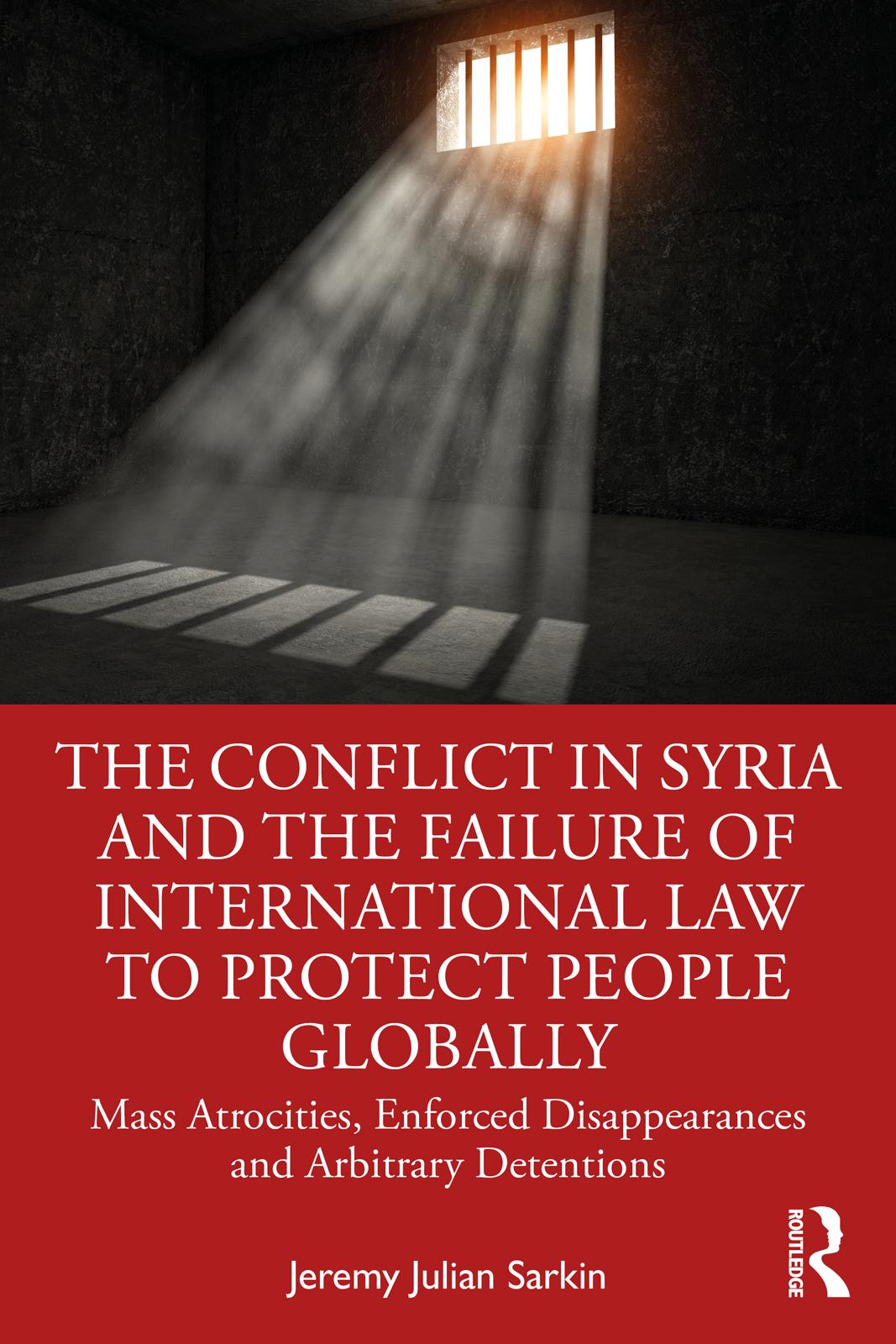
This book explores, through the lens of the conflict in Syria, why international law and the United Nations have failed to halt conflict and massive human rights violations in many places around the world which has allowed tens of millions of people to be killed and hundreds of millions more to be harmed.
The work presents a critical socio-legal analysis of the failures of international law and the United Nations (UN) to deal with mass atrocities and conflict. It argues that international law, in the way it is set up and operates, falls short in dealing with these issues in many respects. The argument is that international law is state-centred rather than victim-friendly, is, to some extent, outdated, is vague and often difficult to understand and, therefore, at times, hard to apply. While various accountability processes have come to the fore recently, processes do not exist to assist individual victims while the conflict occurs or the abuses are being perpetrated. The book focuses on the problems of international law and the UN and, in the context of the many enforced disappearances and arbitrary detentions in Syria, why nothing has been done to deal with a rogue state that has regularly violated international law. It examines why the responsibility to protect (R2P) has not been applied and why it ought to be used, generally, and in Syria. It uses the Syrian context to evaluate the weaknesses of the system and why reform is needed. It examines the UN institutional mechanisms, the role they play and why a civilian protection system is needed. It examines what mechanism ought to be set up to deal with the possible one million people who have been disappeared and detained in Syria.
The book will be a valuable resource for students, academics and policy-makers working in the areas of public international law, international human rights law, political science and peace and security studies.
Pay easily by card, Klarna, Apple Pay or Google Pay. Not happy? You always have a 14-day money-back guarantee. Read more in our terms. If you have any questions, email us at hello@memmo.org.
Memmo makes studying easier – wherever you are in the world. We bring your course books and smart study tools together in one place: summaries, quizzes, podcasts and flashcards. Plus Ted, your study buddy who answers anything you wonder. Over 50,000 students already study here – built to help you learn faster and stress less.