
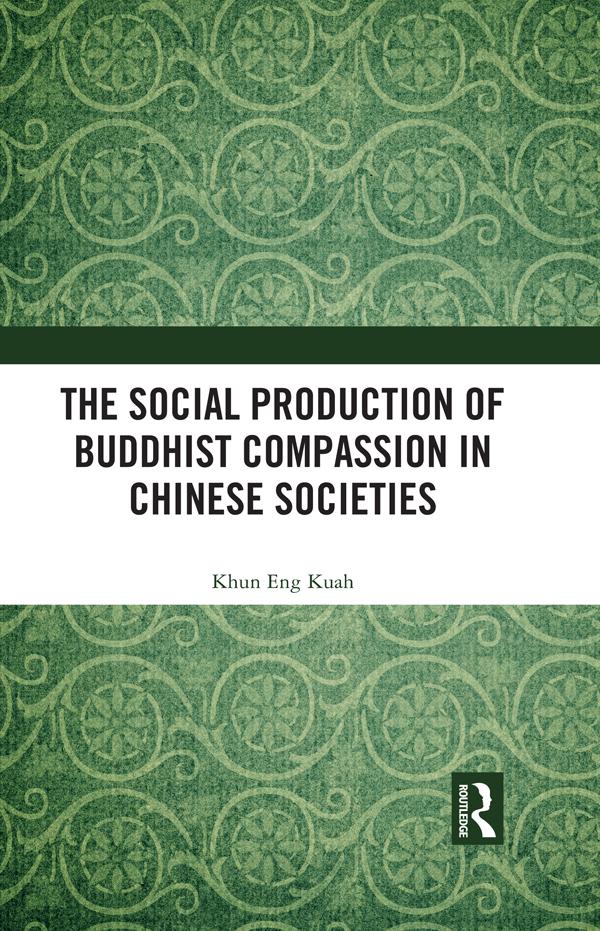
This book investigates and establishes a theoretical framework for the study of the social production of religious compassion in the era of shale modernity among Chinese communities in Hong Kong, Singapore and Taiwan. It argues that the production of Buddhist compassionate fields in the 21st century is a response to the rising social inequality and social needs of modern society. Religious compassion serves as an emotive force that propels the religious self and socio-religious groups to commit to the performance of acts of philanthropy that includes the delivery of welfare and care services, medical care, education and humanitarian aid. Through a combination of documentation analysis and anthropological research, the book examines the interconnectivity of reformist Buddhist teachings of compassion, charisma, gender and state in influencing the attitudes and actions of the sangha and Buddhist individuals in the production of Buddhist compassionate fields in a changing socio-economic landscape. It will be of interest to scholars from anthropology, sociology, religious studies and Asian studies.
Pay easily by card, Klarna, Apple Pay or Google Pay. Not happy? You always have a 14-day money-back guarantee. Read more in our terms. If you have any questions, email us at hello@memmo.org.
Memmo makes studying easier – wherever you are in the world. We bring your course books and smart study tools together in one place: summaries, quizzes, podcasts and flashcards. Plus Ted, your study buddy who answers anything you wonder. Over 50,000 students already study here – built to help you learn faster and stress less.