
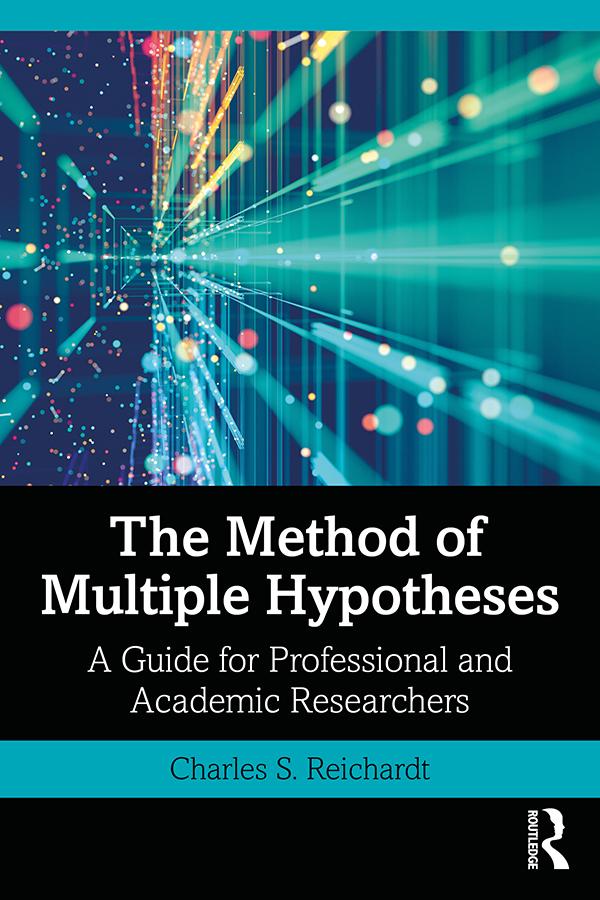
This book illustrates the method of multiple hypotheses with detailed examples and describes the limitations facing all methods (including the method of multiple hypotheses) as the means for constructing knowledge about nature.
Author Charles Reichardt explains the method of multiple hypotheses using a range of real-world applications involving the causes of crime, traffic fatalities, and home field advantage in sports. The book describes the benefits of utilizing multiple hypotheses and the inherent limitations within which all methods must operate because all conclusions about nature must remain tentative and forever subject to revision. Nonetheless, the book reveals how the method of multiple hypotheses can produce strong inferences even in the face of the inevitable uncertainties of knowledge. The author also explicates some of the most foundational ideas in philosophy of science including the notions of the underdetermination of theory by data, the Duhem-Quine thesis, and the theory-ladenness of observation.
This book will be important reading for advanced undergraduates, graduates, and professional researchers across the social, behavioral, and natural sciences wanting to understand this method and how to apply it to their field of interest.
Pay easily by card, Klarna, Apple Pay or Google Pay. Not happy? You always have a 14-day money-back guarantee. Read more in our terms. If you have any questions, email us at hello@memmo.org.
Memmo makes studying easier – wherever you are in the world. We bring your course books and smart study tools together in one place: summaries, quizzes, podcasts and flashcards. Plus Ted, your study buddy who answers anything you wonder. Over 50,000 students already study here – built to help you learn faster and stress less.