
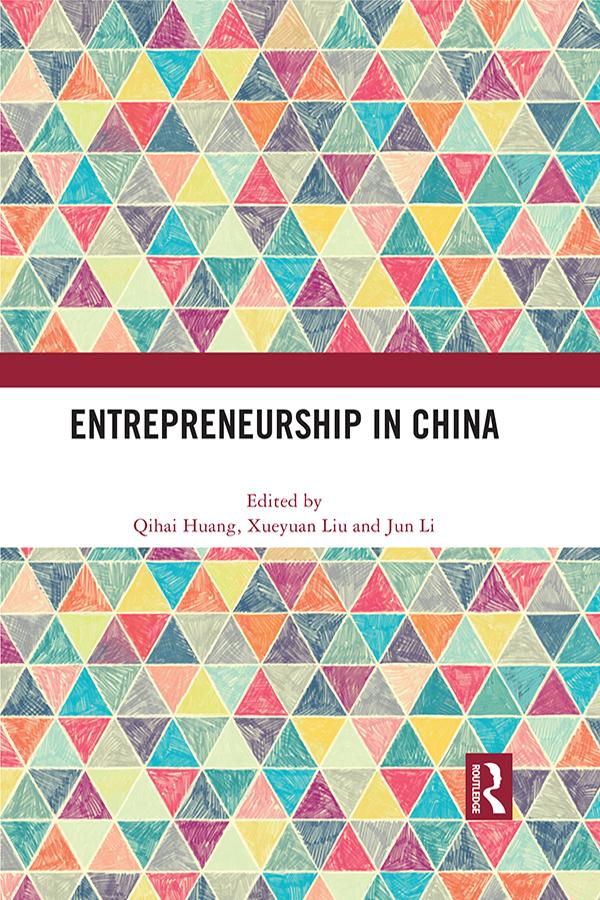
China has grown to become the world’s second largest economy in merely three decades and entrepreneurship has been identified as a key driver of China’s fast growth. Since the mid-2000s, the country has transitioned from a predominance of necessity-based entrepreneurship to that of an opportunity-based entrepreneurship.
The China Surveys of Global Entrepreneurship Monitor in the last fifteen years consistently indicate the country’s high rate of entrepreneurship. Furthermore, more Chinese entrepreneurs have started setting their sights on business internationalisation. Against this backdrop of a thriving entrepreneurial economy, institutions and business environment are, however, not often viewed as "friendly" to private entrepreneurs and businesses. The "re-emergence" of entrepreneurship suggests a history of struggle to overcome opposition and obstruction, to survive and grow, including "rule ambiguities", rent-seeking, subsidies, and institutional constraints, such as industrial barriers, difficulties in getting access to critical resources, and weak property rights. China has also been experiencing economic slowdown, increase in inequality and worsening environmental problems since the turn of the century, clearly indicating that the rapid development of entrepreneurship in China presents a lot of puzzling questions.
Entrepreneurship in China attempts to deal with these unanswered queries as well as provide an insightful and updated understanding of entrepreneurship development in China.
The chapters in this book were originally published as a special issue of the journal, Entrepreneurship & Regional Development.
Pay easily by card, Klarna, Apple Pay or Google Pay. Not happy? You always have a 14-day money-back guarantee. Read more in our terms. If you have any questions, email us at hello@memmo.org.
Memmo makes studying easier – wherever you are in the world. We bring your course books and smart study tools together in one place: summaries, quizzes, podcasts and flashcards. Plus Ted, your study buddy who answers anything you wonder. Over 50,000 students already study here – built to help you learn faster and stress less.