
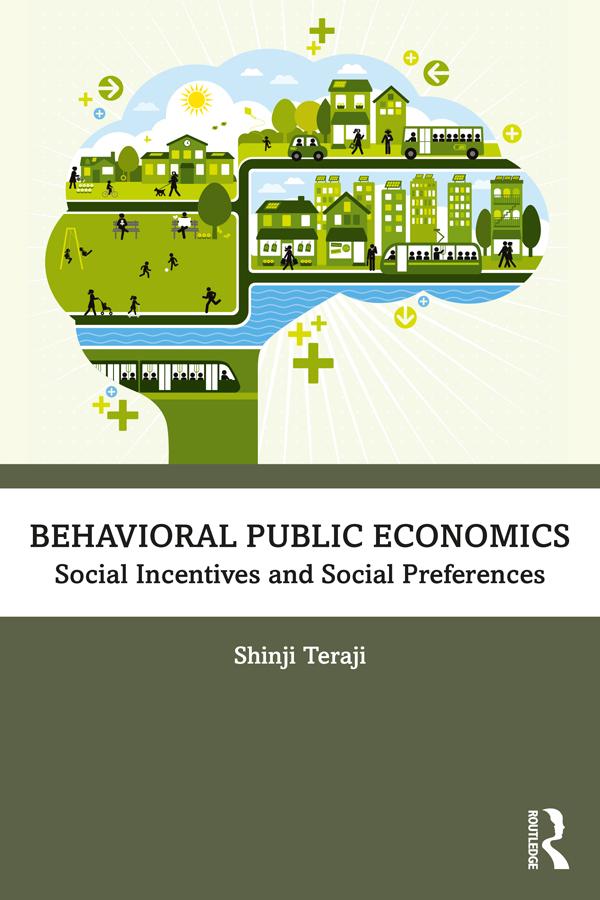
Behavioral Public Economics shows how standard public economics can be improved using insights from behavioral economics. Public economics typically lists four market failures that may justify government intervention in markets—imperfect competition (or natural monopoly), externalities, public goods, and asymmetric information. Under the rational choice paradigm (‘agents choose what is best for them’), public economics has examined the welfare effects of policy. Recent research in behavioral economics highlights a fifth market failure—individuals may make mistakes in pursuing their own well-being. This book calls for a rethinking of assumptions of individual behavior and provides a good foundation for public economic theory.
Key features:
- Introduces behavioral perspectives into public economics.
- Explains why economic incentives often undermine social preferences.
- Reveals that social incentives matter for public policy.
This book will be an invaluable resource for researchers and postgraduate students in public economics, behavioral economics, and public policy.
Pay easily by card, Klarna, Apple Pay or Google Pay. Not happy? You always have a 14-day money-back guarantee. Read more in our terms. If you have any questions, email us at hello@memmo.org.
Memmo makes studying easier – wherever you are in the world. We bring your course books and smart study tools together in one place: summaries, quizzes, podcasts and flashcards. Plus Ted, your study buddy who answers anything you wonder. Over 50,000 students already study here – built to help you learn faster and stress less.