
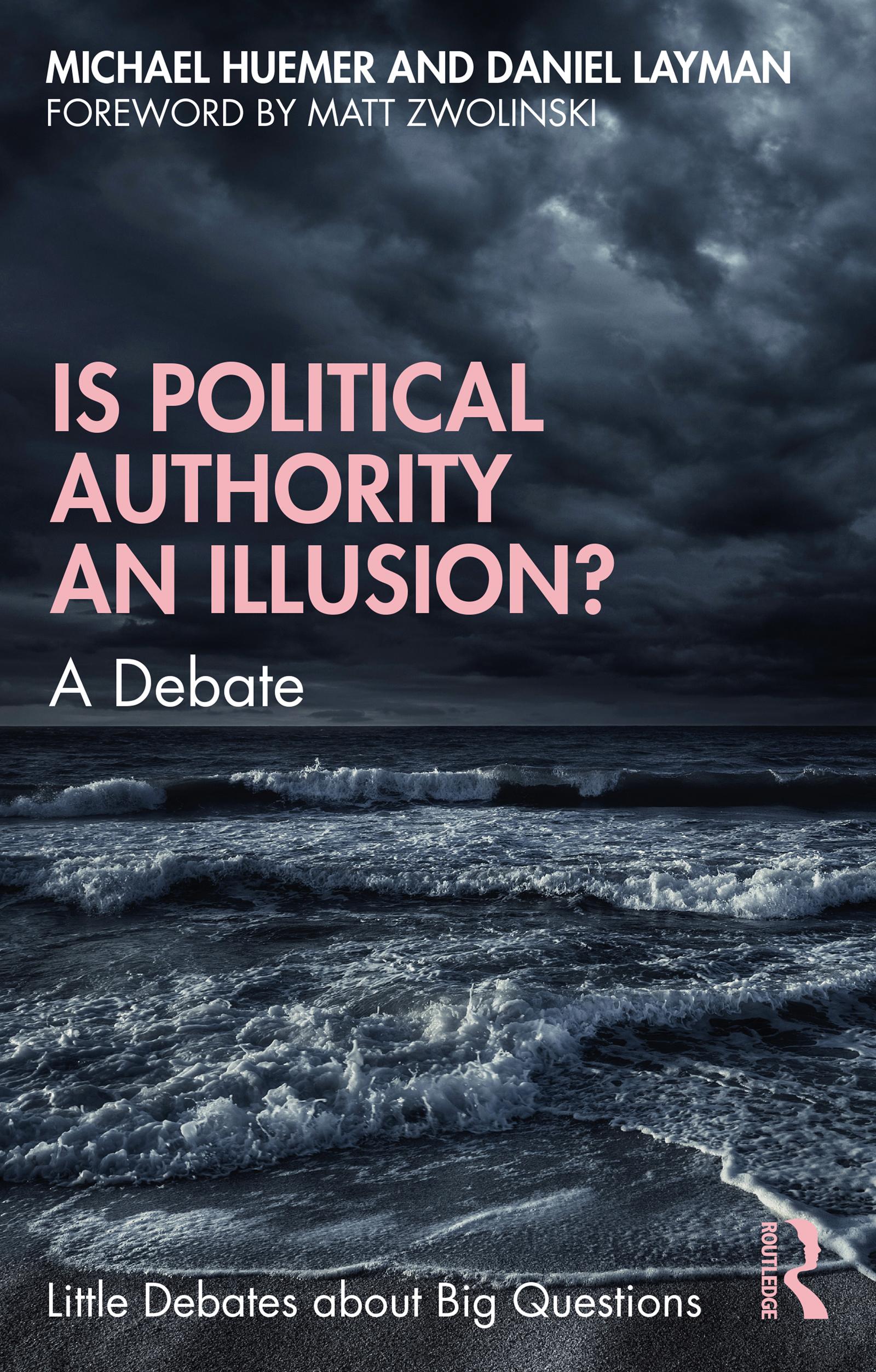
What gives some people the right to issue commands to everyone else and force everyone else to obey them? And why should people obey the commands of those with political power? These two key questions are the heart of the issue of political authority, and, in this volume, two philosophers debate the answers.
Michael Huemer argues that political authority is an illusion and that no one is entitled to rule over anyone. He discusses and rebuts the major theories supporting political authority’s rightfulness: implicit social contract theory, hypothetical contract theories, democratic theories of authority, and utilitarian theories. Daniel Layman argues that democratic governments have authority because they are needed to protect our rights and because they are accountable to the people. Each author writes two replies directly addressing the arguments and ideas of the other.
Key Features
- Covers a key foundational problem of political philosophy: the authority of government.
- Debate format ensures a full hearing of both sides.
- A Glossary includes key concepts in political philosophy related to the issue of authority.
- Annotated Further Reading sections point students to additional resources.
- Clear, concrete examples and arguments help students clearly see both sides of the argument.
- A Foreword by Matt Zwolinski describes a broader context for political authority and then traces the key points and turns in the authors’ debate.
Pay easily by card, Klarna, Apple Pay or Google Pay. Not happy? You always have a 14-day money-back guarantee. Read more in our terms. If you have any questions, email us at hello@memmo.org.
Memmo makes studying easier – wherever you are in the world. We bring your course books and smart study tools together in one place: summaries, quizzes, podcasts and flashcards. Plus Ted, your study buddy who answers anything you wonder. Over 50,000 students already study here – built to help you learn faster and stress less.