
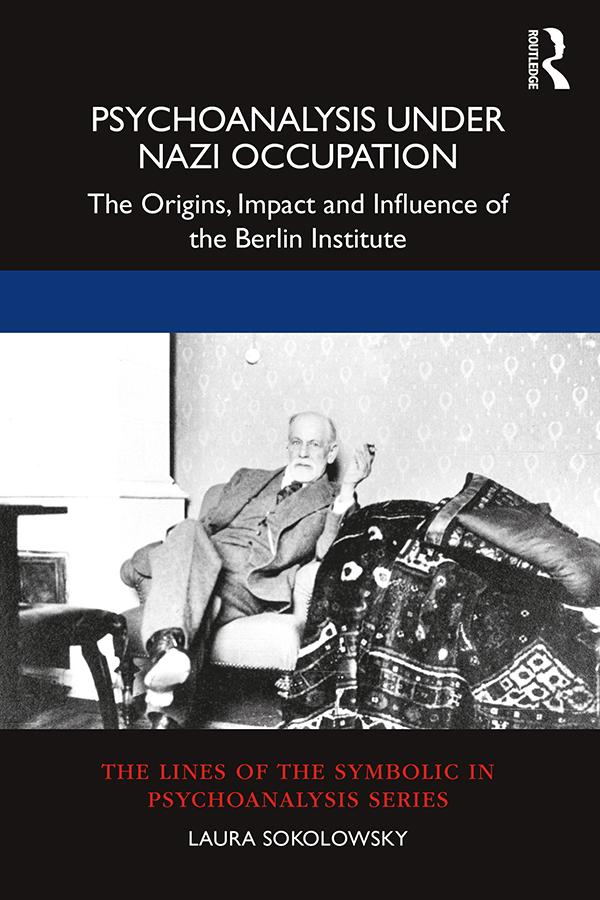
Laura Sokolowsky’s survey of psychoanalysis under Weimar and Nazism explores how the paradigm of a ‘psychoanalysis for all’ became untenable as the Nazis rose to power.
Mainly discussing the evolution of the Berlin Institute during the period between Freud’s creation of free psychoanalytic centres after the founding of the Weimar Republic and the Nazi seizure of power in 1933, the book explores the ideal of making psychoanalysis available to the population of a shattered country after World War I, and charts how the Institute later came under Nazi control following the segregation and dismissal of Jewish colleagues in the late 1930s. The book shows how Freudian standards resisted the medicalisation of psychoanalysis for purposes of adaptation and normalisation, but also follows Freud’s distinction between sacrifice (where you know what you have given up) and concession (an abandonment of position through compromise) to demonstrate how German psychoanalysts put themselves at the service of the fascist master, in the hope of obtaining official recognition and material rewards.
Discussing the relations of psychoanalysis with politics and ethics, as well as the origin of the Lacanian movement as a response to the institutionalisation of psychoanalysis during the Nazi occupation, this book is fascinating reading for scholars and practitioners of psychoanalysis working today.
Pay easily by card, Klarna, Apple Pay or Google Pay. Not happy? You always have a 14-day money-back guarantee. Read more in our terms. If you have any questions, email us at hello@memmo.org.
Memmo makes studying easier – wherever you are in the world. We bring your course books and smart study tools together in one place: summaries, quizzes, podcasts and flashcards. Plus Ted, your study buddy who answers anything you wonder. Over 50,000 students already study here – built to help you learn faster and stress less.