
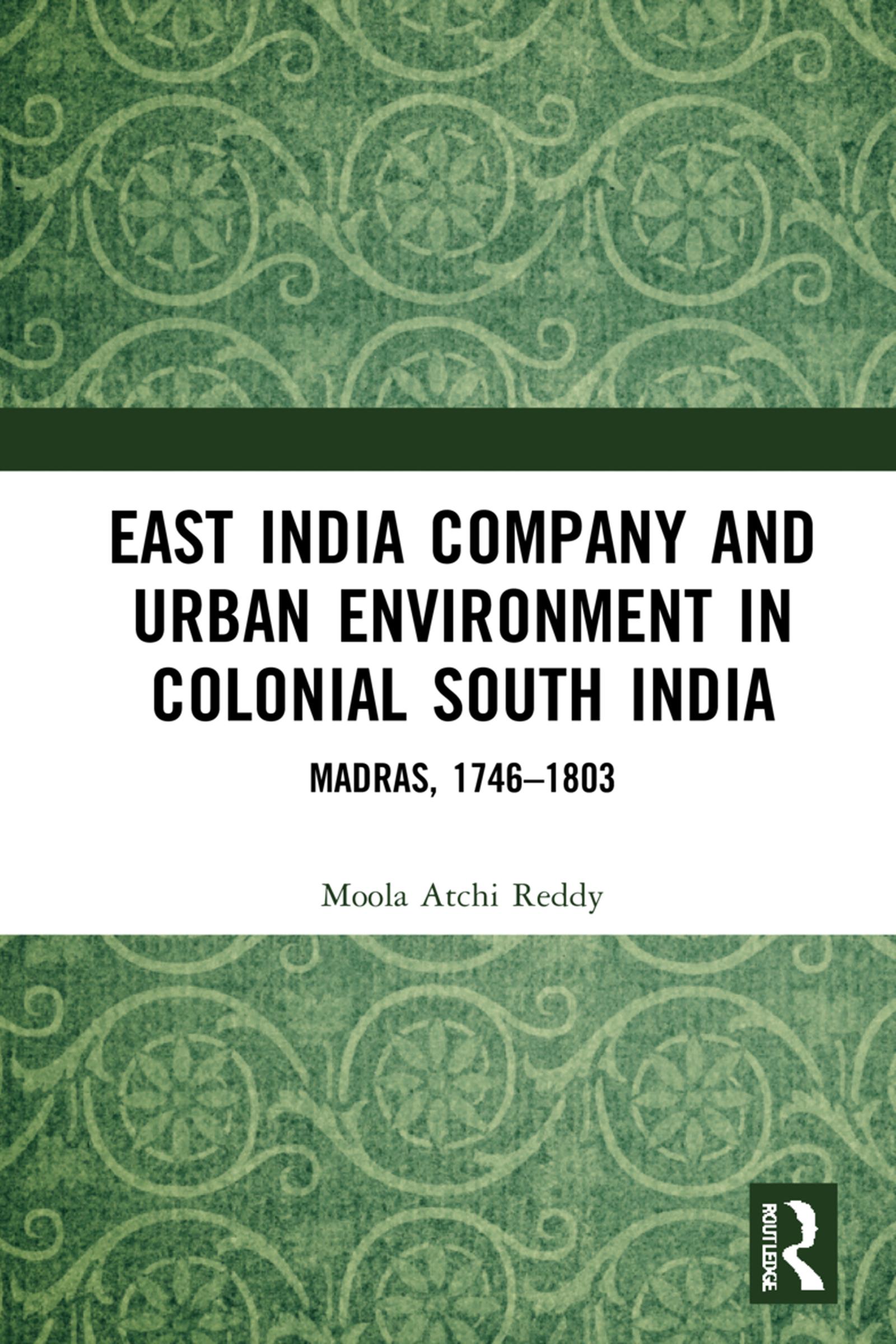
This book makes a pioneering attempt to analyse the linkages between the rule of East India Company and urban environment in colonial India over more than a half-century - from 1746 to 1803 - through a study of the city of Madras (present Chennai).
The book traces urban development in colonial South India from a broad economic history point of view and with a focus on its environmental dimension, covering the period from the First Carnatic War until the 18th century by which time the English East India Company had consolidated its power. It discusses themes such as urban development; infrastructural development; housing and buildings, city and suburbs; and development of land and roads in the colonial period. Using extensive archival resources, it offers new insights on the various aspects of the shifting urban physical environment and captures the development of Madras city limits; road infrastructure, building of paved streets, whitewashed walls and compounded houses; establishment of garden houses; use of land resources; development of masonry bridges by merchants; housing problems; and the building of Fort House, Garden House, Admiralty House, Pantheon House, Custom House, etc. in Madras, to describe the impact of colonialism on urban environment.
An important contribution to the history of urban economics and environment, this book with its lucid style and rich illustrations will be an essential read for scholars and researchers of colonial history, modern Indian history, environmental history, urban environment, urban history, political economy, urban economic history, Indian history, and South Asian studies.
Pay easily by card, Klarna, Apple Pay or Google Pay. Not happy? You always have a 14-day money-back guarantee. Read more in our terms. If you have any questions, email us at hello@memmo.org.
Memmo makes studying easier – wherever you are in the world. We bring your course books and smart study tools together in one place: summaries, quizzes, podcasts and flashcards. Plus Ted, your study buddy who answers anything you wonder. Over 50,000 students already study here – built to help you learn faster and stress less.