
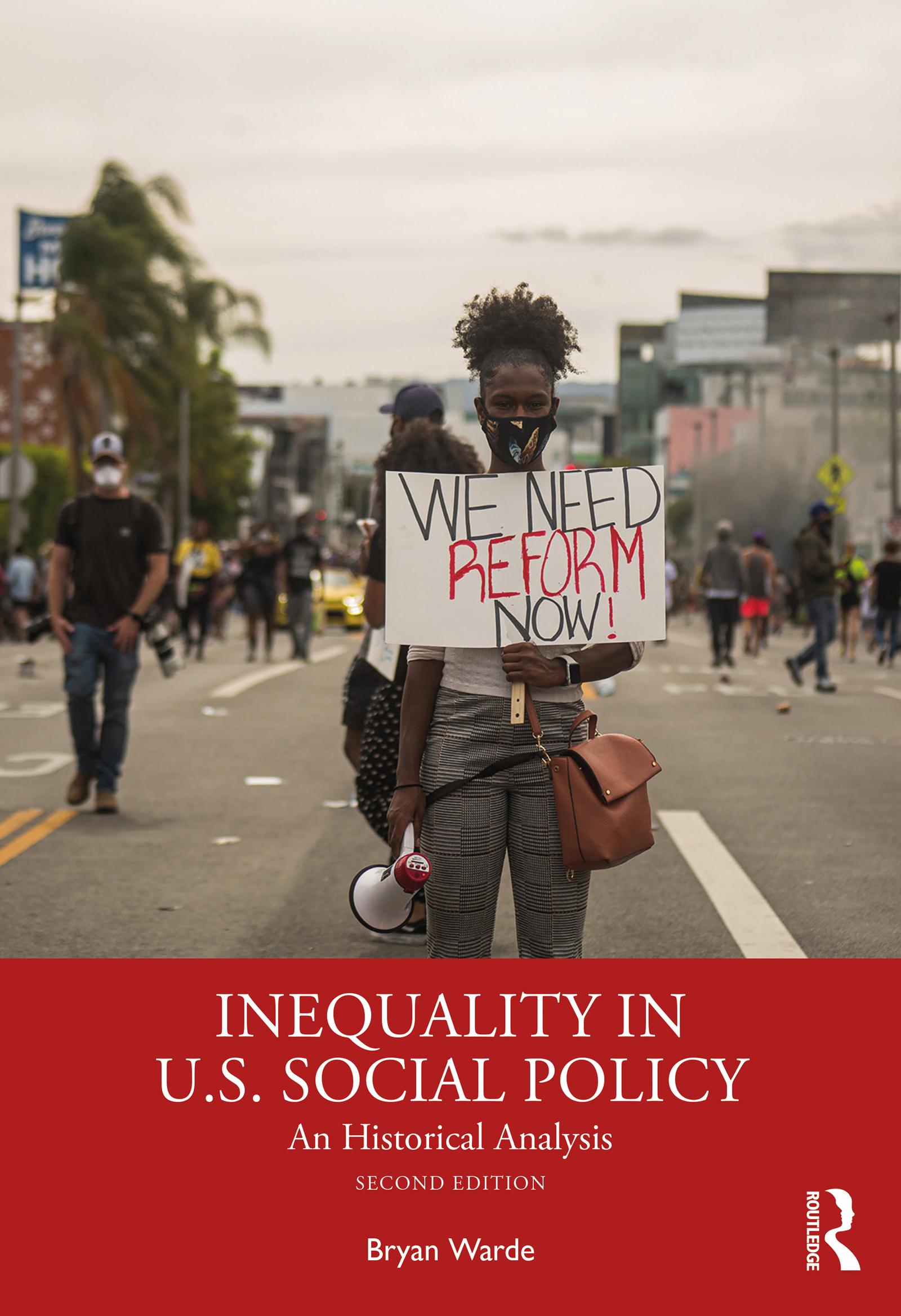
In the second edition of Inequality in U.S. Social Policy: An Historic Analysis, Bryan Warde illuminates the pervasive and powerful role that social inequality based on race and ethnicity, gender, immigration status, sexual orientation, class, and disability plays and has historically played in informing social policy.
Using critical race theory and other structural oppression theoretical frameworks, this book examines social inequalities as they relate to social welfare, education, housing, employment, health care, and child welfare, immigration, and criminal justice. With fully updated statistics throughout, and an examination of the impact of the COVID-19 pandemic on the United States, this new edition addresses the mammoth political and social changes which have affected inequality in the past few years.
Inequality in U.S. Social Policy will help social work students better understand the origins of inequalities that their clients face, as well as providing an introduction for other social science students.
Pay easily by card, Klarna, Apple Pay or Google Pay. Not happy? You always have a 14-day money-back guarantee. Read more in our terms. If you have any questions, email us at hello@memmo.org.
Memmo makes studying easier – wherever you are in the world. We bring your course books and smart study tools together in one place: summaries, quizzes, podcasts and flashcards. Plus Ted, your study buddy who answers anything you wonder. Over 50,000 students already study here – built to help you learn faster and stress less.