
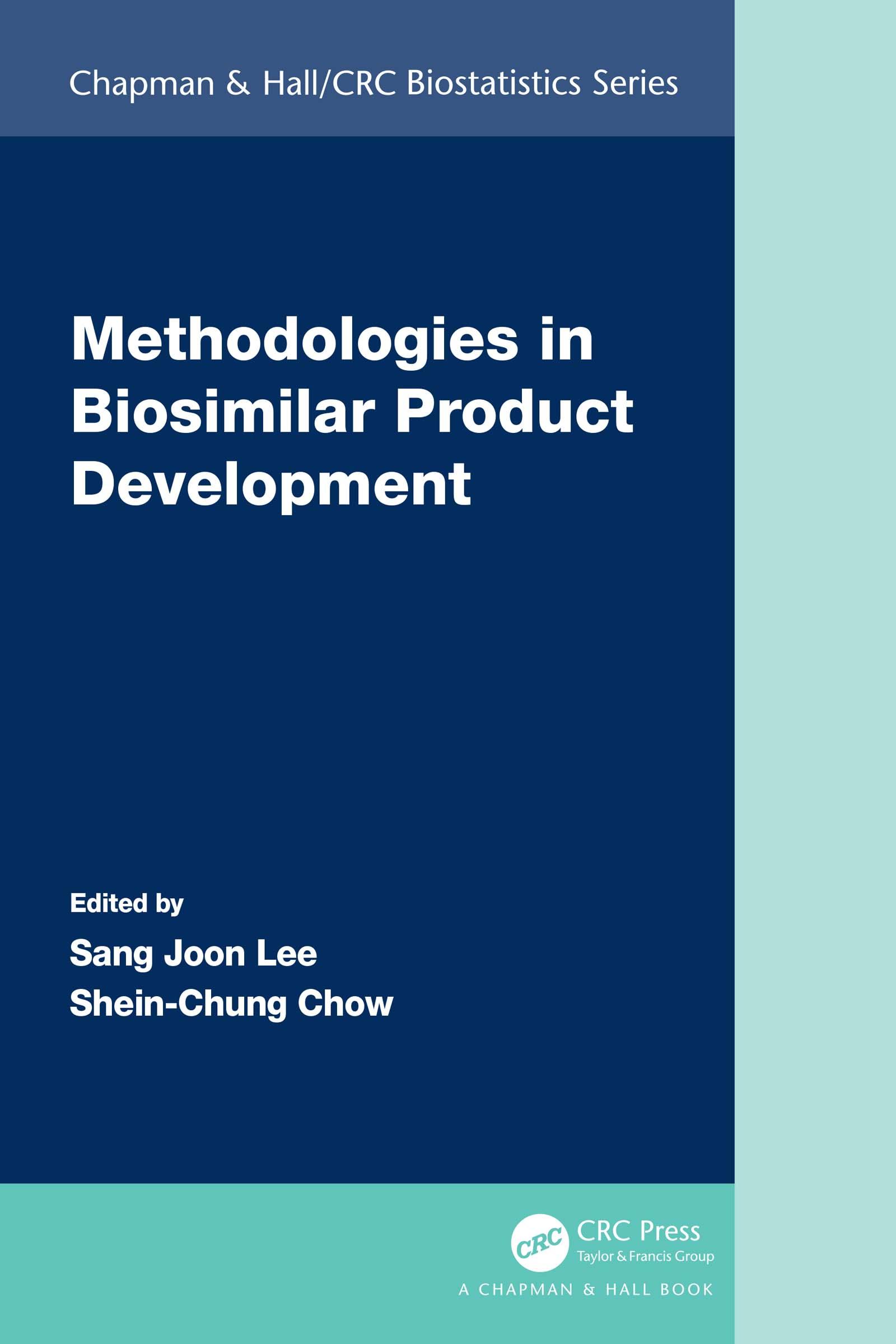
Methodologies for Biosimilar Product Development covers the practical and challenging issues that are commonly encountered during the development, review, and approval of a proposed biosimilar product. These practical and challenging issues include, but are not limited to the mix-up use of interval hypotheses testing (i.e., the use of TOST) and confidence interval approach, a risk/benefit assessment for non-inferiority/similarity margin, PK/PD bridging studies with multiple references, the detection of possible reference product change over time, design and analysis of biosimilar switching studies, the assessment of sensitivity index for assessment of extrapolation across indications without collecting data from those indications not under study, and the feasibility and validation of non-medical switch post-approval.
Key Features:
- Reviews withdrawn draft guidance on analytical similarity assessment.
- Evaluates various methods for analytical similarity evaluation based on FDA’s current guidelines.
- Provides a general approach for the use of n-of-1 trial design for assessment of interchangeability.
- Discusses the feasibility and validity of the non-medical switch studies.
- Provides innovative thinking for detection of possible reference product change over time.
This book embraces innovative thinking of design and analysis for biosimilar studies, which are required for review and approval of biosimilar regulatory submissions.
Pay easily by card, Klarna, Apple Pay or Google Pay. Not happy? You always have a 14-day money-back guarantee. Read more in our terms. If you have any questions, email us at hello@memmo.org.
Memmo makes studying easier – wherever you are in the world. We bring your course books and smart study tools together in one place: summaries, quizzes, podcasts and flashcards. Plus Ted, your study buddy who answers anything you wonder. Over 75,000 students already study here – built to help you learn faster and stress less.