
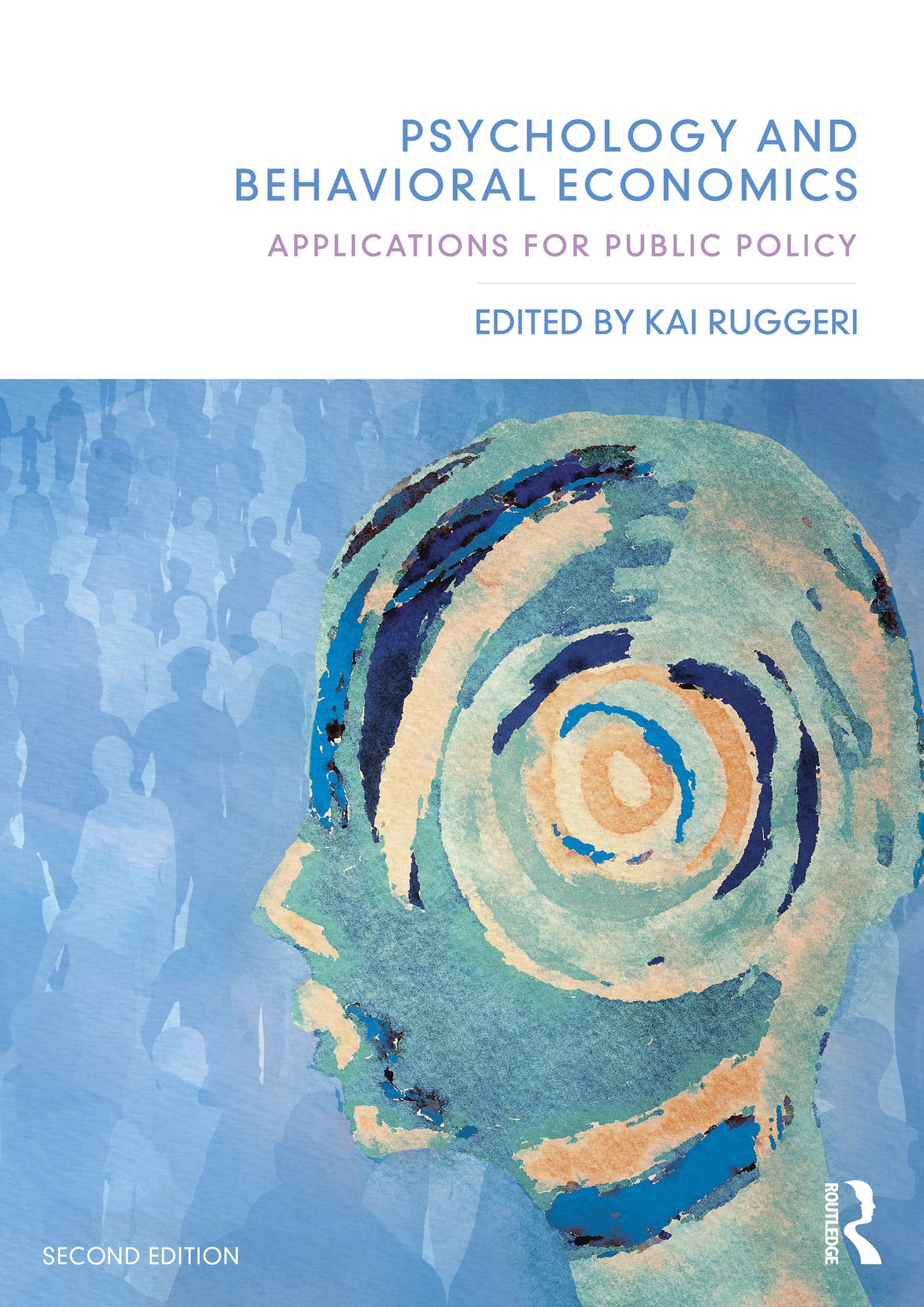
Psychology and Behavioral Economics offers an expert introduction to how psychology can be applied to a range of public policy areas. It examines the impact of psychological research for public policymaking in economic, financial, and consumer sectors; in education, healthcare, and the workplace; for energy and the environment; and in communications.
Your energy bills show you how much you use compared to the average household in your area. Your doctor sends you a text message reminder when your appointment is coming up. Your bank gives you three choices for how much to pay off on your credit card each month. Wherever you look, there has been a rapid increase in the importance we place on understanding real human behaviors in everyday decisions, and these behavioral insights are now regularly used to influence everything from how companies recruit employees through to large-scale public policy and government regulation. But what is the actual evidence behind these tactics, and how did psychology become such a major player in economics? Answering these questions and more, this team of authors, working across both academia and government, present this fully revised and updated reworking of Behavioral Insights for Public Policy.
This update covers everything from how policy was historically developed, to major research in human behavior and social psychology, to key moments that brought behavioral sciences to the forefront of public policy. Featuring over 100 empirical examples of how behavioral insights are being used to address some of the most critical challenges faced globally, the book covers key topics such as evidence-based policy, a brief history of behavioral and decision sciences, behavioral economics, and policy evaluation, all illustrated throughout with lively case studies.
Including end-of-chapter questions, a glossary, and key concept boxes to aid retention, as well as a new chapter revealing the work of the Canadian government’s behavioral insights unit, this is the perfect textbook for students of psychology, economics, public health, education, and organizational sciences, as well as public policy professionals looking for fresh insight into the underlying theory and practical applications in a range of public policy areas.
Pay easily by card, Klarna, Apple Pay or Google Pay. Not happy? You always have a 14-day money-back guarantee. Read more in our terms. If you have any questions, email us at hello@memmo.org.
Memmo makes studying easier – wherever you are in the world. We bring your course books and smart study tools together in one place: summaries, quizzes, podcasts and flashcards. Plus Ted, your study buddy who answers anything you wonder. Over 50,000 students already study here – built to help you learn faster and stress less.