
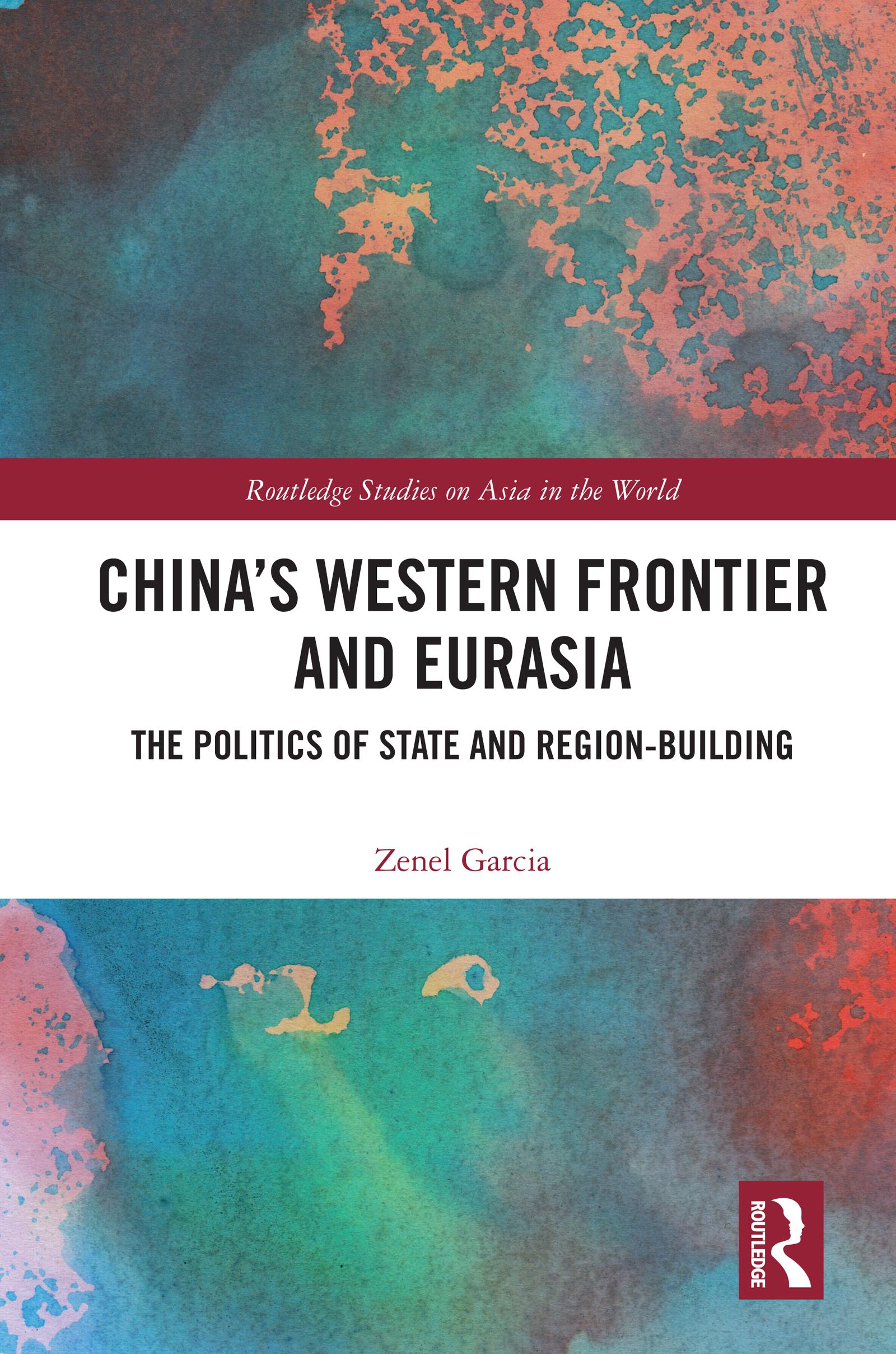
China has emerged as a dominant power in Eurasian affairs that not only exercises significant political and economic power, but increasingly, ideational power too.
Since the founding of the People’s Republic, Chinese Communist Party leaders have sought to increase state capacity and exercise more effective control over their western frontier through a series of state-building initiatives. Although these initiatives have always incorporated an international component, the collapse of the USSR, increasing globalization, and the party’s professed concerns about terrorism, separatism, and extremism have led to a region-building project in Eurasia. Garcia traces how domestic elite-led narratives about security and development generate state-building initiatives, and then region-building projects. He also assesses how region-building projects are promoted through narratives of the historicity of China’s engagement in Eurasia, the promotion of norms of non-interference, and appeals to mutual development. Finally, he traces the construction of regions through formal and informal institutions as well as integrative infrastructure. By presenting three phases of Chinese domestic state-building and region-building from 1988-present, Garcia shows how region-building projects have enabled China to increase state capacity, control, and development in its western frontier.
Recommended for scholars of China’s international relations and development policy.
Pay easily by card, Klarna, Apple Pay or Google Pay. Not happy? You always have a 14-day money-back guarantee. Read more in our terms. If you have any questions, email us at hello@memmo.org.
Memmo makes studying easier – wherever you are in the world. We bring your course books and smart study tools together in one place: summaries, quizzes, podcasts and flashcards. Plus Ted, your study buddy who answers anything you wonder. Over 50,000 students already study here – built to help you learn faster and stress less.