
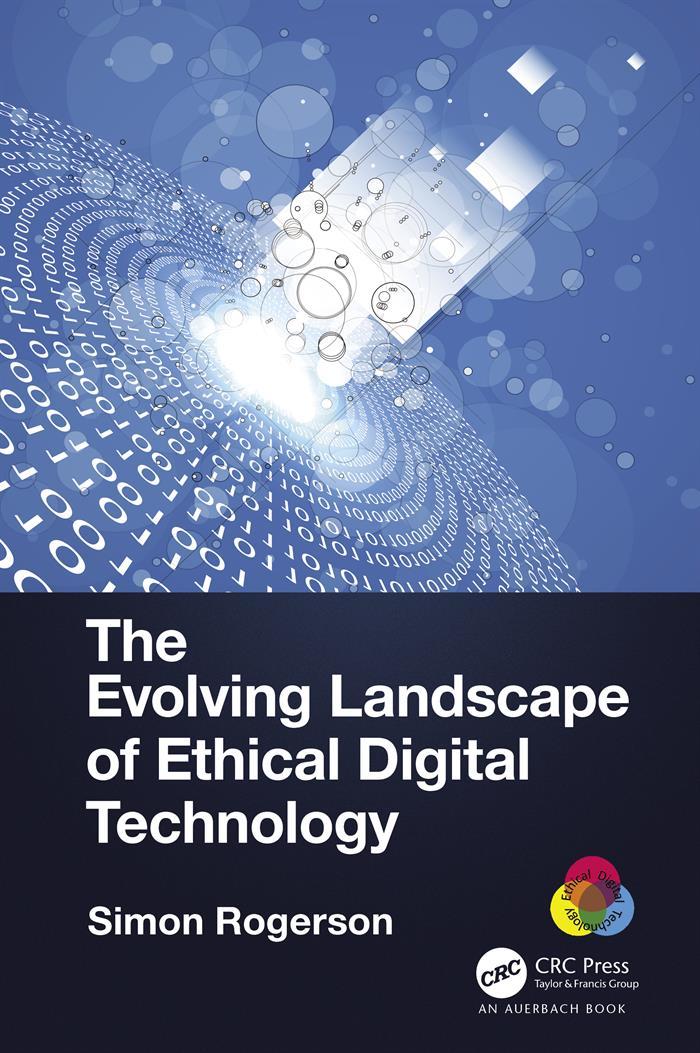
In a world that is awash in ubiquitous technology, even the least tech-savvy know that we must take care how that technology affects individuals and society. That governments and organizations around the world now focus on these issues, that universities and research institutes in many different languages dedicate significant resources to study the issues, and that international professional organizations have adopted standards and directed resources toward ethical issues in technology is in no small part the result of the work of Simon Rogerson.
– Chuck Huff, Professor of Social Psychology at Saint Olaf College, Northfield, Minnesota
In 1995, Apple launched its first WWW server, Quick Time On-line. It was the year Microsoft released Internet Explorer and sold 7 million copies of Windows 95 in just 2 months. In March 1995, the author Simon Rogerson opened the first ETHICOMP conference with these words:
We live in a turbulent society where there is social, political, economic and technological turbulence … it is causing a vast amount of restructuring within all these organisations which impacts on individuals, which impacts on the way departments are set up, organisational hierarchies, job content, span of control, social interaction and so on and so forth. … Information is very much the fuel of modern technological change. Almost anything now can be represented by the technology and transported to somewhere else. It's a situation where the more information a computer can process, the more of the world it can actually turn into information. That may well be very exciting, but it is also very concerning.
That could be describing today. More than 25 years later, these issues are still at the forefront of how ethical digital technology can be developed and utilised.
This book is an anthology of the author’s work over the past 25 years of pioneering research in digital ethics. It is structured into five themes: Journey, Process, Product, Future and Education. Each theme commences with an introductory explanation of the papers, their relevance and their interrelationship. The anthology finishes with a concluding chapter which summarises the key messages and suggests what might happen in the future. Included in this chapter are insights from some younger leading academics who are part of the community charged with ensuring that ethical digital technology is realised.
Pay easily by card, Klarna, Apple Pay or Google Pay. Not happy? You always have a 14-day money-back guarantee. Read more in our terms. If you have any questions, email us at hello@memmo.org.
Memmo makes studying easier – wherever you are in the world. We bring your course books and smart study tools together in one place: summaries, quizzes, podcasts and flashcards. Plus Ted, your study buddy who answers anything you wonder. Over 50,000 students already study here – built to help you learn faster and stress less.