
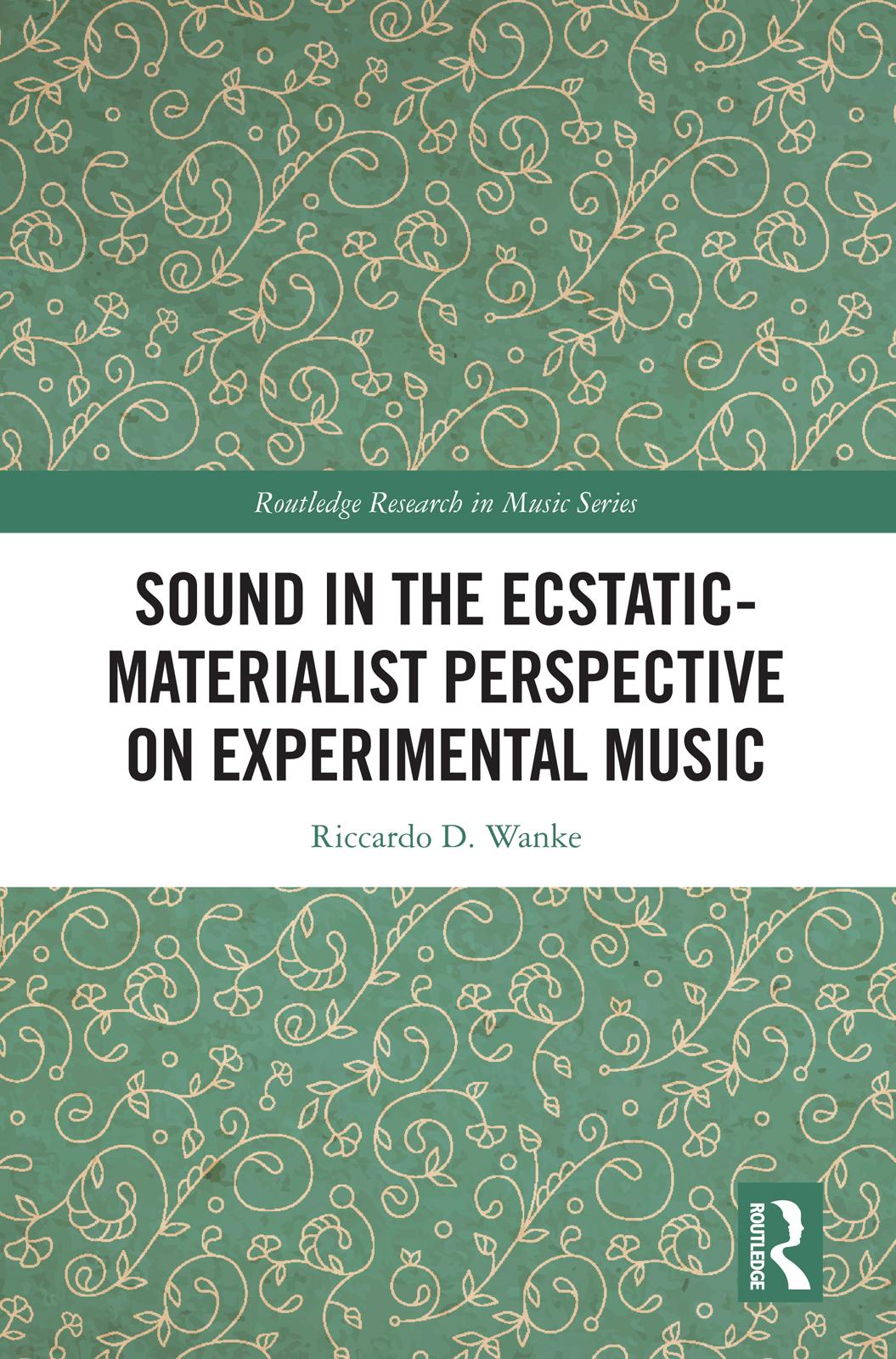
What does a one hour contemporary orchestral piece by Georg Friedrich Haas have in common with a series of glitch-noise electronic tracks by Pan Sonic? This book proposes that, despite their differences, they share a particular understanding of sound that is found across several quite distinct genres of contemporary art music: the ecstatic-materialist perspective. Sound in the ecstatic-materialist perspective is considered as a material mass or element, unfolding in time, encountered by a listener, for whom the experience of that sound exceeds the purely sonic without becoming entirely divorced from its materiality. It is "material" by virtue of the focus on the texture, consistency, and density of sound; it is "ecstatic" in the etymological sense, that is to say that the experience of this sound involves an instability; an inclination to depart from material appearance, an ephemeral and transitory impulse in the very perception of sound to something beyond – but still related to – it. By examining musical pieces from spectralism to electroacoustic domains, from minimalism to glitch electronica and dubstep, this book identifies the key intrinsic characteristics of this musical perspective. To fully account for this perspective on sonic experience, listener feedback and interviews with composers and performers are also incorporated. Sound in the ecstatic-materialist perspective is the common territory where composers, sound artists, performers, and listeners converge.
Pay easily by card, Klarna, Apple Pay or Google Pay. Not happy? You always have a 14-day money-back guarantee. Read more in our terms. If you have any questions, email us at hello@memmo.org.
Memmo makes studying easier – wherever you are in the world. We bring your course books and smart study tools together in one place: summaries, quizzes, podcasts and flashcards. Plus Ted, your study buddy who answers anything you wonder. Over 50,000 students already study here – built to help you learn faster and stress less.