
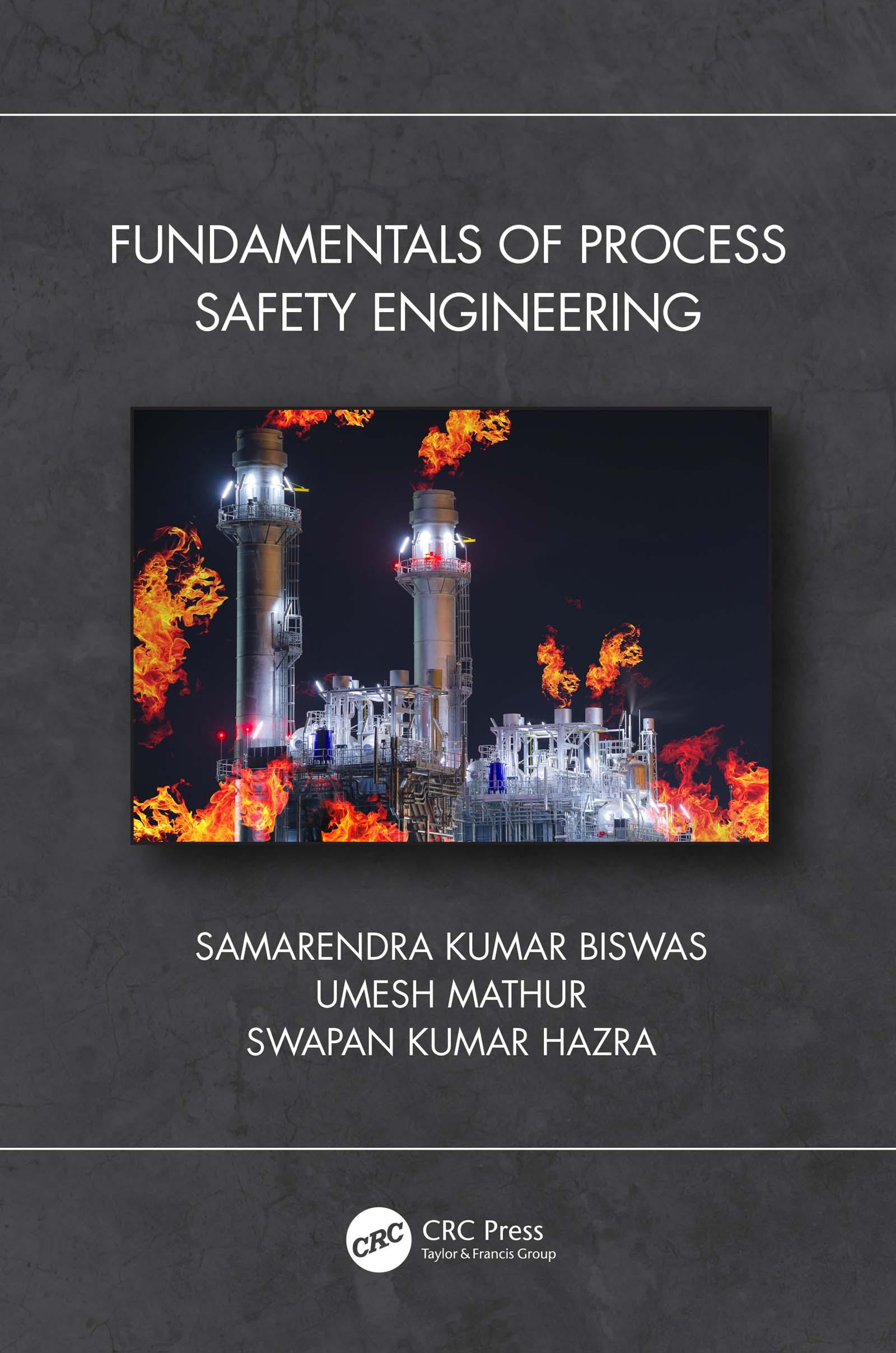
This textbook covers the essential aspects of process safety engineering in a practical and comprehensive manner.
It provides readers with an understanding of process safety hazards in the refining and petrochemical industries and how to manage them in a reliable and professional manner. It covers the most important concepts: static electricity, intensity of thermal radiation, thermodynamics of fluid phase equilibria, boiling liquid expanding vapor explosion (BLEVE), emission source models, hazard identification methods, risk control and methods for achieving manufacturing excellence while also focusing on safety. Extensive case studies are included.
Aimed at senior undergraduate and graduate chemical engineering students and practicing engineers, this book covers process safety principles and engineering practice authoritatively, with comprehensive examples:
• Fundamentals, methods, and procedures for the industrial practice of process safety engineering.
• The thermodynamic fundamentals and computational methods for release rates from ruptures in pipelines, vessels, and relief valves.
• Fundamentals of static electricity hazards and their mitigation.
• Quantitative assessment of fires and explosions.
• Principles of dispersion calculations for toxic or flammable gases and vapors.
• Methods of qualitative and quantitative risk assessment and control.
Pay easily by card, Klarna, Apple Pay or Google Pay. Not happy? You always have a 14-day money-back guarantee. Read more in our terms. If you have any questions, email us at hello@memmo.org.
Memmo makes studying easier – wherever you are in the world. We bring your course books and smart study tools together in one place: summaries, quizzes, podcasts and flashcards. Plus Ted, your study buddy who answers anything you wonder. Over 50,000 students already study here – built to help you learn faster and stress less.