
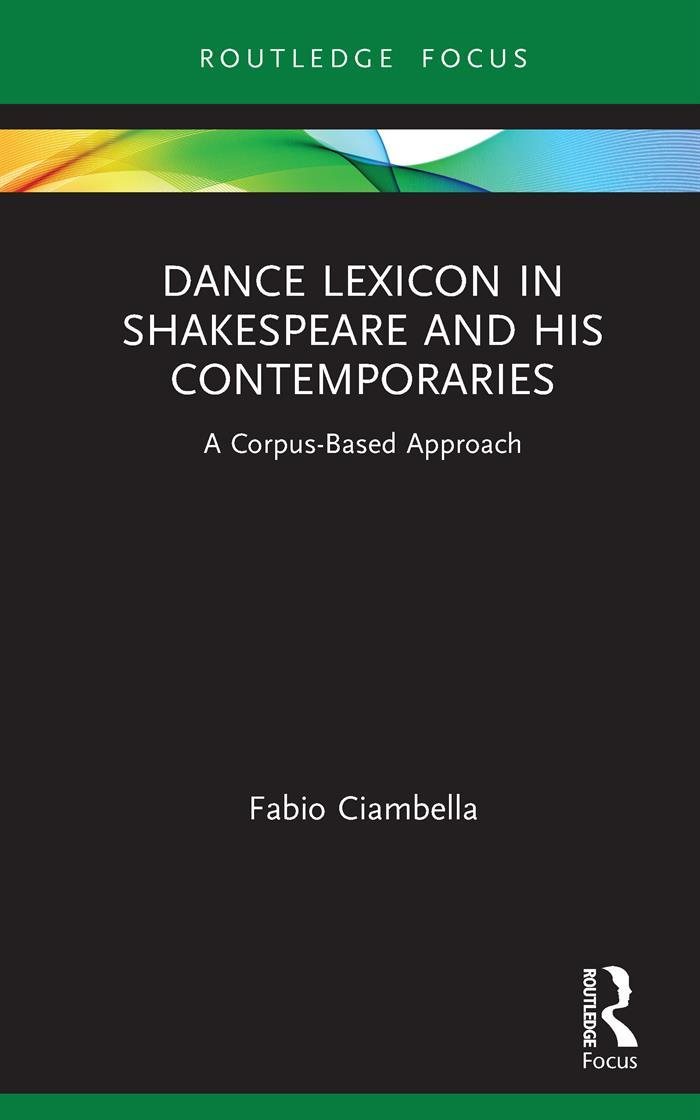
This book provides a thorough analysis of terpsichorean lexis in Renaissance drama. Besides considering not only the Shakespearean canon but also the Bard’s contemporaries (e.g., dramatists as John Marston and Ben Jonson among the most refined Renaissance dance aficionados), the originality of this volume is highlighted in both its methodology and structure.
As far as methods of analysis are concerned, corpora such as the VEP Early Modern Drama collection and EEBO, and corpus analysis tools such as #LancsBox are used in order to offer the widest range of examples possible from early modern plays and provide co-textual references for each dance. Examples from Renaissance playwrights are fundamental for the analysis of connotative meanings of the dances listed and their performative, poetic and metaphoric role in sixteenth- and seventeenth-century drama.
This study will be of great interest to Renaissance researchers, lexicographers and dance historians.
Pay easily by card, Klarna, Apple Pay or Google Pay. Not happy? You always have a 14-day money-back guarantee. Read more in our terms. If you have any questions, email us at hello@memmo.org.
Memmo makes studying easier – wherever you are in the world. We bring your course books and smart study tools together in one place: summaries, quizzes, podcasts and flashcards. Plus Ted, your study buddy who answers anything you wonder. Over 75,000 students already study here – built to help you learn faster and stress less.