
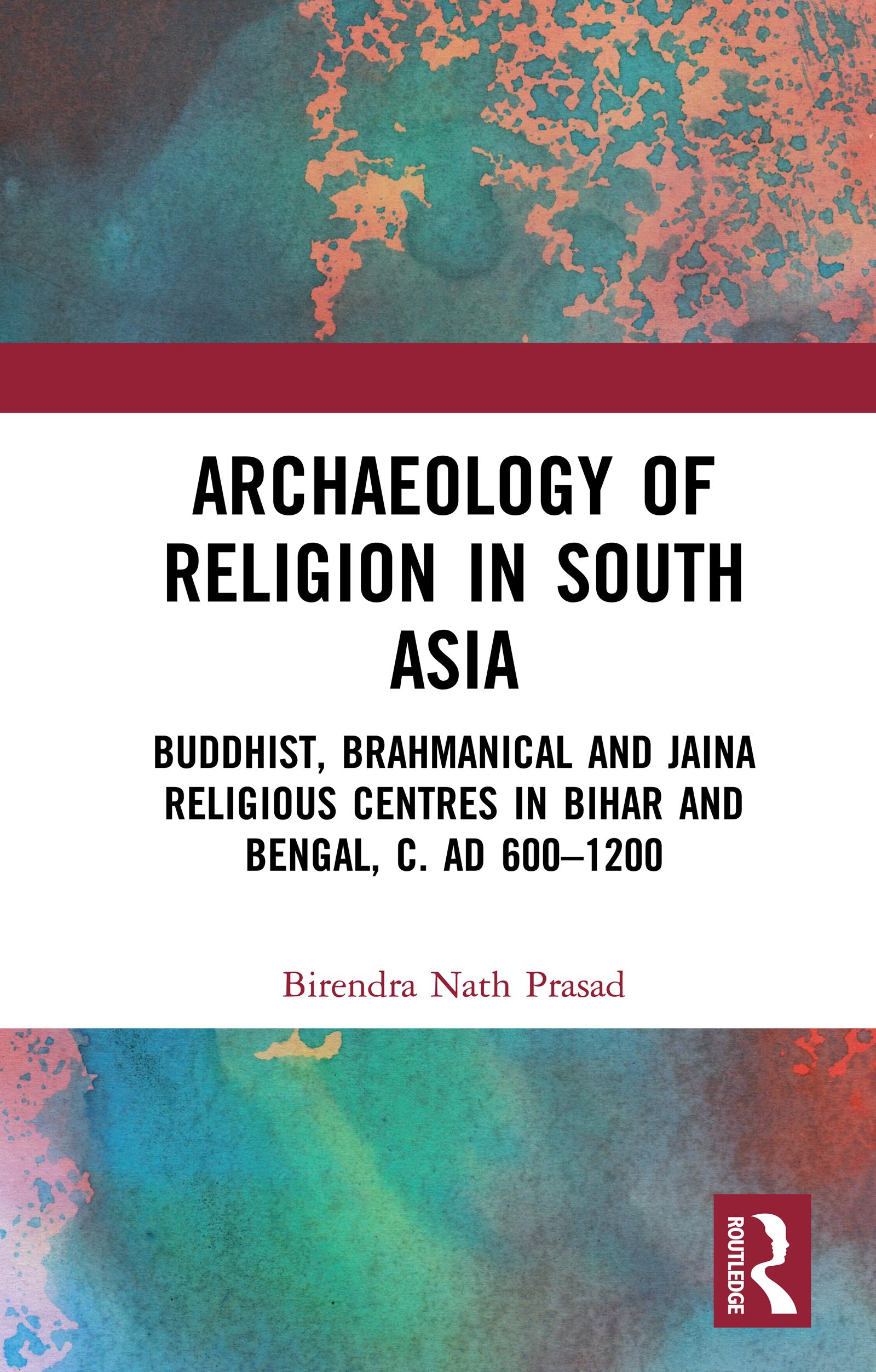
In the religious landscape of early medieval (c. AD 600-1200) Bihar and Bengal, poly-religiosity was generally the norm than an exception, which entailed the evolution of complex patterns of inter-religious equations. Buddhism, Brahmanism and Jainism not only coexisted but also competed for social patronage, forcing them to enter into complex interactions with social institutions and processes. Through an analysis of the published archaeological data, this work explores some aspects of the social history of Buddhist, Brahmanical and Jaina temples and shrines, and Buddhist stūpas and monasteries in early medieval Bihar and Bengal. This archaeological history of religions questions many ‘established’ textual reconstructions, and enriches our understanding of the complex issue of the decline of Buddhism in this area.
Please note: Taylor & Francis does not sell or distribute the Hardback in India, Pakistan, Nepal, Bhutan, Bangladesh and Sri Lanka.
Pay easily by card, Klarna, Apple Pay or Google Pay. Not happy? You always have a 14-day money-back guarantee. Read more in our terms. If you have any questions, email us at hello@memmo.org.
Memmo makes studying easier – wherever you are in the world. We bring your course books and smart study tools together in one place: summaries, quizzes, podcasts and flashcards. Plus Ted, your study buddy who answers anything you wonder. Over 75,000 students already study here – built to help you learn faster and stress less.