
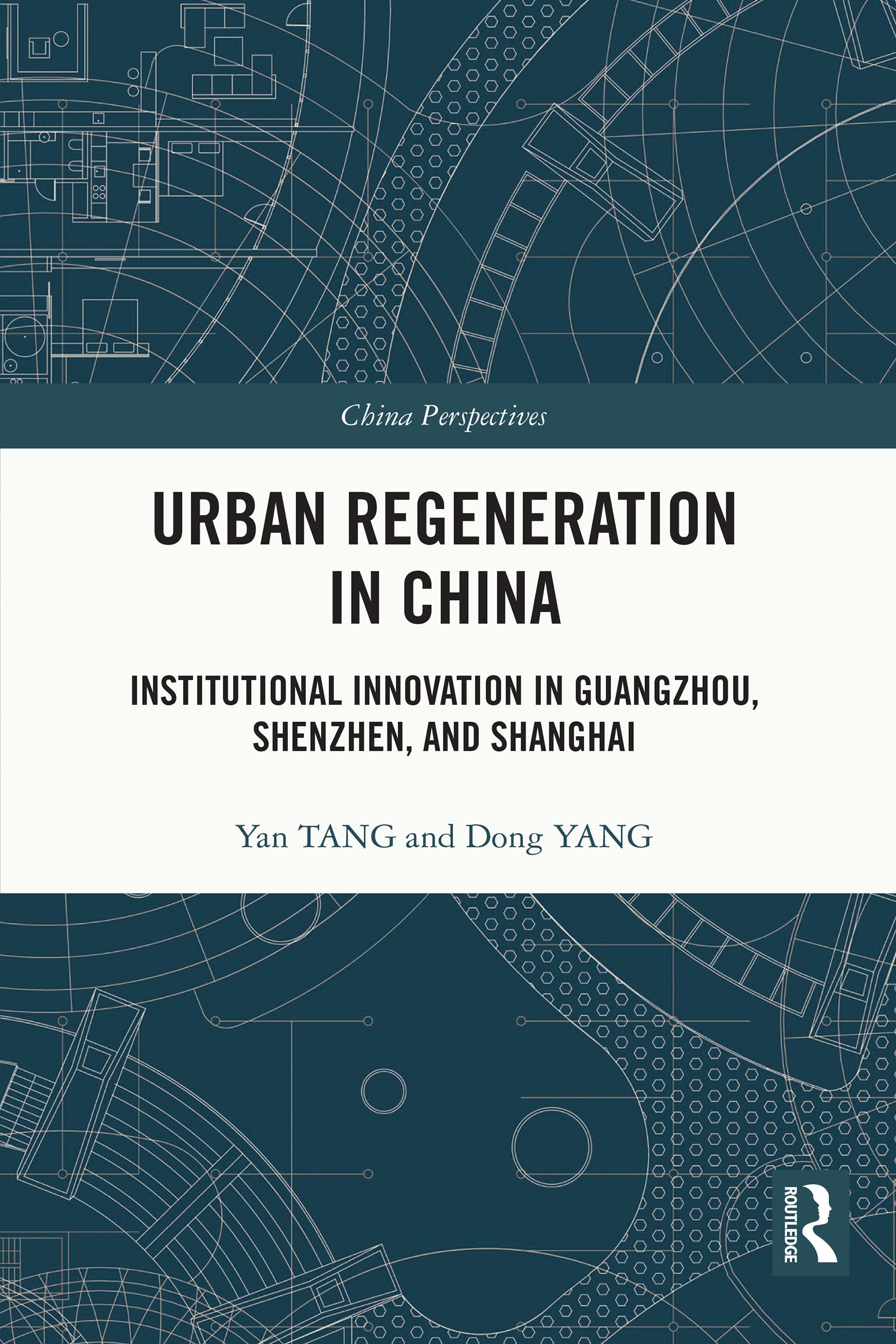
The book examines institutional innovation in urban regeneration in Guangzhou, Shenzhen, and Shanghai, three Chinese cities that have experienced sweeping changes in recent years, providing an ideal guide to the development of urban regeneration practices in China.
As a starting point, the book revisits relevant theoretical developments and the institutional experiences of urban regeneration in some Asian pioneer cities and regions, such as Hong Kong, Taipei, Tokyo, and Singapore. Moving on to the Chinese mainland cities themselves, the core comparative study investigates the institutional systems, key policies, planning formulations, and implementation paths in the urban regeneration process of the three cities. Gains and losses that have resulted from each city's institutional construction and reformation are discussed, as well as the underlying reasons for these. Drawing on these case studies and comparisons, the book puts forward some generic rules for urban regeneration institutional innovation, offering a valuable frame of reference for other cities and regions.
The book will appeal to scholars interested in urban regeneration and renewal, as well as urban planners, architects, policymakers, and urban development administrators.
Pay easily by card, Klarna, Apple Pay or Google Pay. Not happy? You always have a 14-day money-back guarantee. Read more in our terms. If you have any questions, email us at hello@memmo.org.
Memmo makes studying easier – wherever you are in the world. We bring your course books and smart study tools together in one place: summaries, quizzes, podcasts and flashcards. Plus Ted, your study buddy who answers anything you wonder. Over 75,000 students already study here – built to help you learn faster and stress less.