
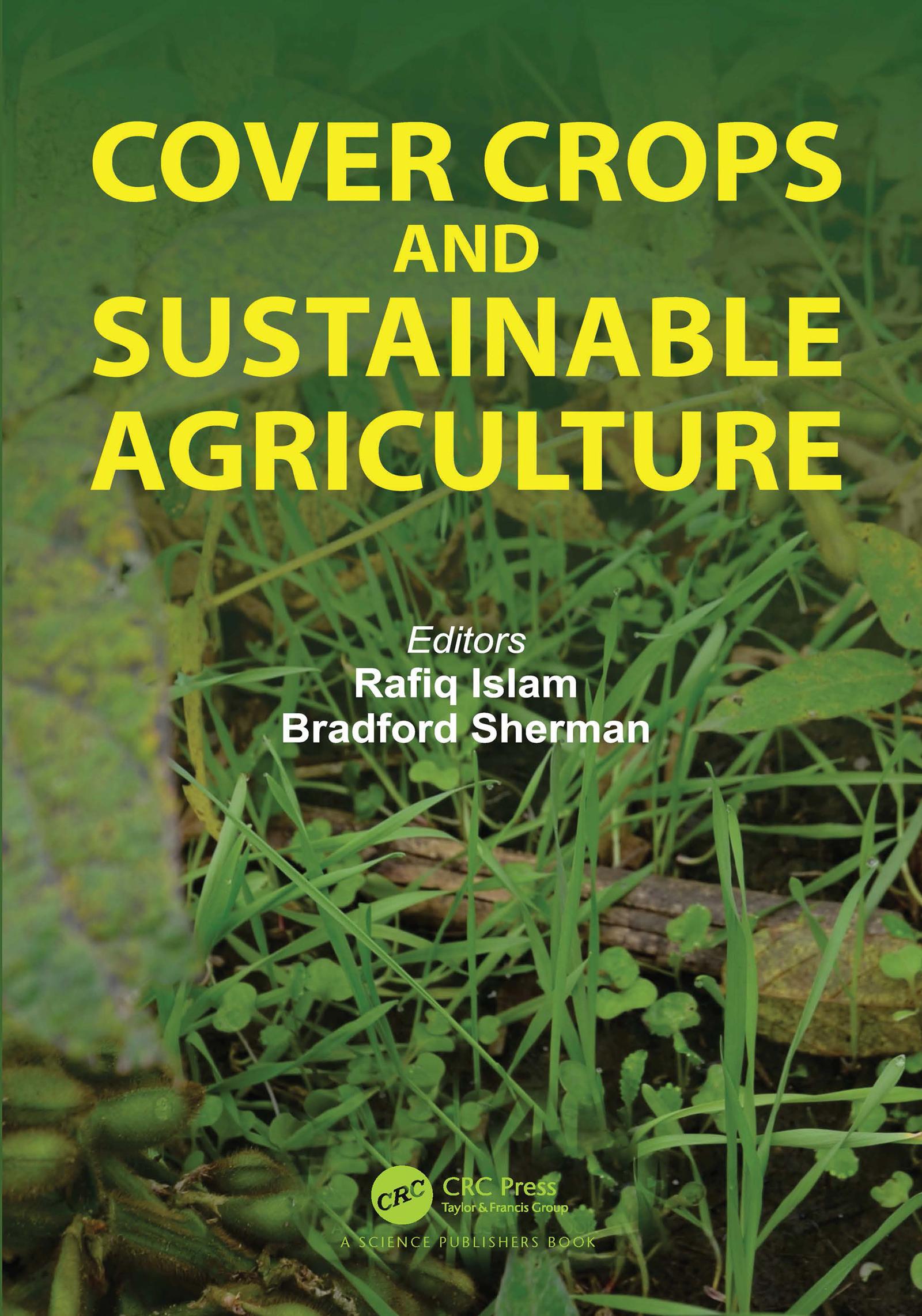
This book will not serve as the "encyclopedia of cover crop management," but it’s close. The benefits of a wide range of individual cover crops and blends/mixes for specific agronomic crop rotations and geographic locations are included. Descriptions, photographs, and illustrations show how cover crops look in the field, including plant height, leaf architecture, and rooting patterns. Long term benefits are described for soil health, soil structure, water quality, nutrient contributions, soil biodiversity, air quality and climate change.
In addition to the "whys" of cover crop use, the book includes details on the "hows:" how to choose cover crops for specific applications and locations; how (and when) to plant; how to manage and maintain the cover for maximum benefit; and how and when to terminate.
Planting options include: drilling/planting between rows of an agronomic crop at planting time, or when the crop is short (i.e. corn in early June); "aerial" seeding with an airplane or high-clearance machine shortly before the crop reaches maturity; and drilling/planting immediately after harvest of the agronomic crop. Selected cover crops (blends) can help with pest and disease management.
Cover crops are an economic input with an expected return on investment, similar to pesticides and fertilizer. As part of a continuous no-till system, cover crops provide long-term biological, chemical and structural benefits. The resulting increase in soil organic matter means the agronomic crop yields benefit from better water infiltration and water holding capacity, greater availability of nitrogen and other nutrients, deeper rooting, and increased soil microbial activity in the root zone.
Pay easily by card, Klarna, Apple Pay or Google Pay. Not happy? You always have a 14-day money-back guarantee. Read more in our terms. If you have any questions, email us at hello@memmo.org.
Memmo makes studying easier – wherever you are in the world. We bring your course books and smart study tools together in one place: summaries, quizzes, podcasts and flashcards. Plus Ted, your study buddy who answers anything you wonder. Over 50,000 students already study here – built to help you learn faster and stress less.