
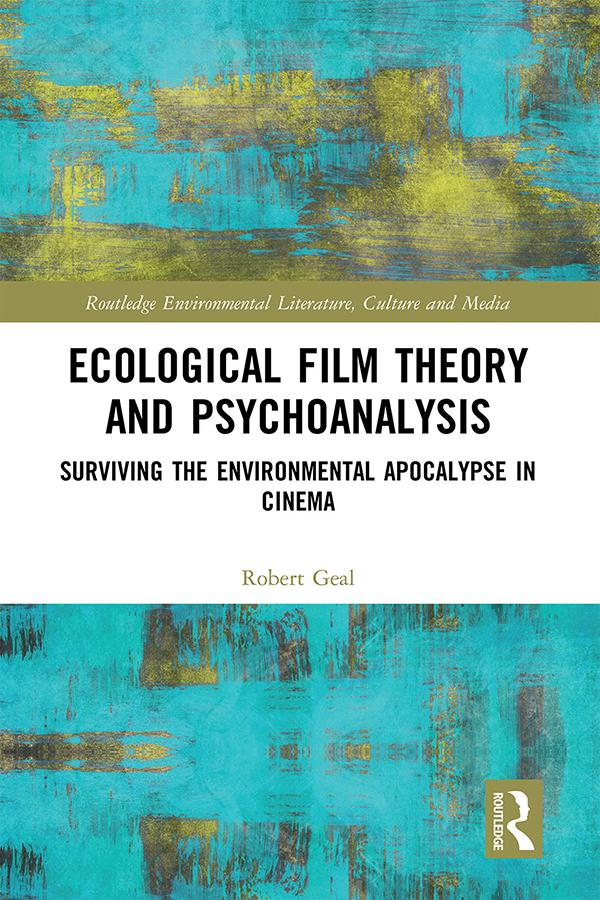
This book applies ecolinguistics and psychoanalysis to explore how films fictionalising environmental disasters provide spectacular warnings against the dangers of environmental apocalypse, while highlighting that even these apparently environmentally friendly films can still facilitate problematic real-world changes in how people treat the environment.
Ecological Film Theory and Psychoanalysis argues that these films exploit cinema’s inherent Cartesian grammar to construct texts in which not only small groups of protagonist survivors, but also vicarious spectators, pleasurably transcend the fictionalised destruction. The ideological nature of the ‘lifeboats’ on which these survivors escape, moreover, is accompanied by additional elements that constitute contemporary Cartesian subjectivity, such as class and gender binaries, restored nuclear families, individual as opposed to social responsibilities for disasters, and so on. The book conducts extensive analyses of these processes, before considering alternative forms of filmmaking that might avoid the dangers of this existing form of storytelling. The book’s new ecosophy and film theory establishes that Cartesian subjectivity is an environmentally destructive ‘symptom’ that everyday linguistic activities like watching films reinforce.
This book will be of great interest to students and scholars of film studies, literary studies (specifically ecocriticism), cultural studies, ecolinguistics, and ecosophy.
Pay easily by card, Klarna, Apple Pay or Google Pay. Not happy? You always have a 14-day money-back guarantee. Read more in our terms. If you have any questions, email us at hello@memmo.org.
Memmo makes studying easier – wherever you are in the world. We bring your course books and smart study tools together in one place: summaries, quizzes, podcasts and flashcards. Plus Ted, your study buddy who answers anything you wonder. Over 50,000 students already study here – built to help you learn faster and stress less.