
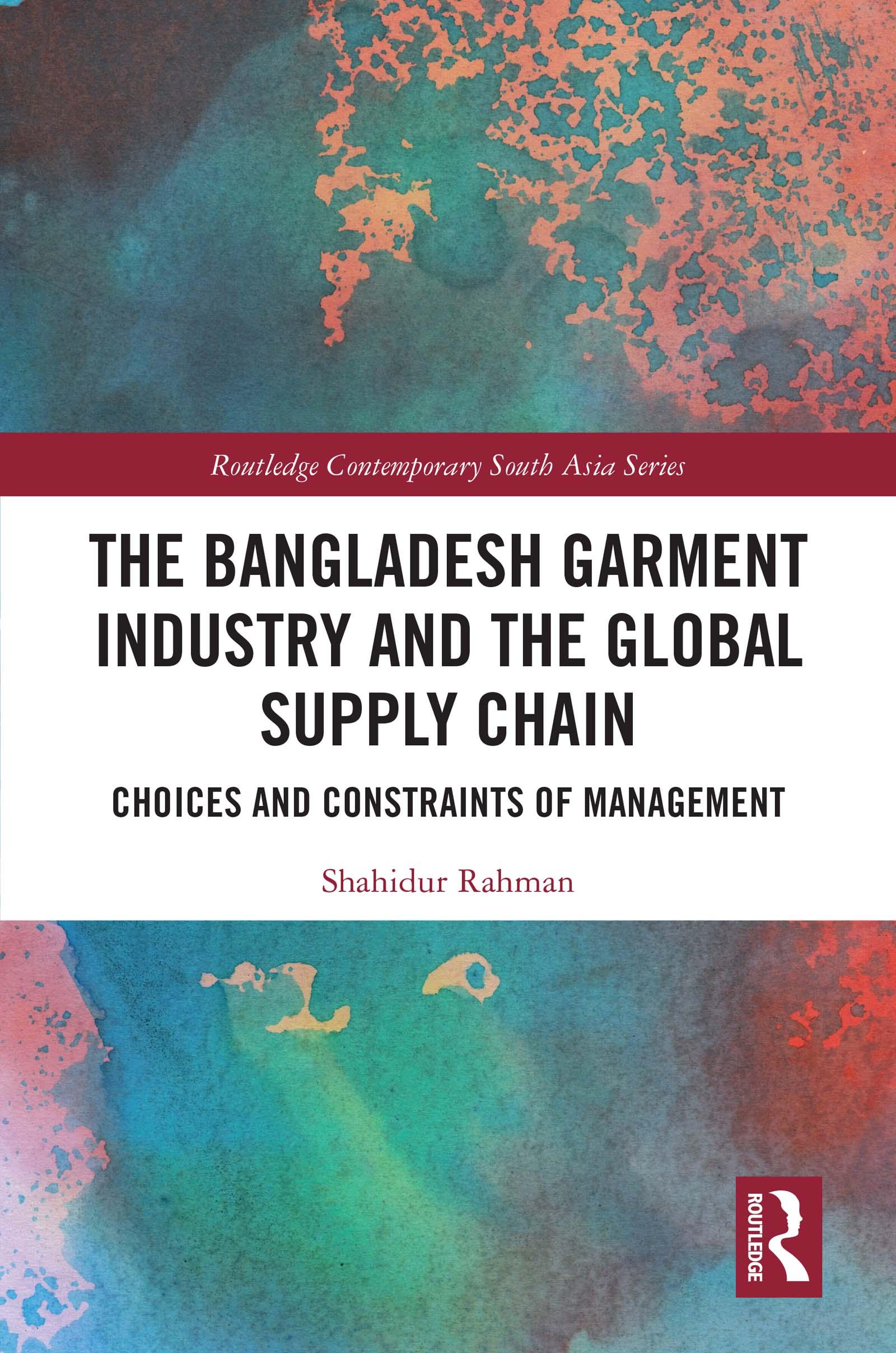
This book analyzes the choices and constraints of management within the Bangladesh garment industry and how management negotiates these challenges to ensure the global garment supply chain is sustainable.
Exploring the international South Asian garment industry and using middle management and the owners of Bangladeshi factories as a case study, the book assesses the limits and costs of globalization for Bangladesh, and outlines the challenges of the fast-fashion business model for the global market. It focusses on the changing dynamics of the entrepreneur class, how they manage factories and their experiences with Accord-Alliance, and the challenges of sustainability. Within these four broader themes, the author critically examines management strategies towards compliance and labour productivity, transnational governance, buyer–supplier relationships, and power dynamics. This book is the first to explore management’s perceptions of workers, buyers, and government through an analysis of four factories which demonstrate the role of mid-level management, how supervisors treat production workers, workers’ impact on innovation, welfare programmes as well as CSR policies, and the impact of COVID-19.
Offering new perspectives on Bangladesh’s garment export industry, this book will be of interest to researchers in the field of policy studies, labour studies, South and South-East Asian studies, development studies, international trade, and political science.
Pay easily by card, Klarna, Apple Pay or Google Pay. Not happy? You always have a 14-day money-back guarantee. Read more in our terms. If you have any questions, email us at hello@memmo.org.
Memmo makes studying easier – wherever you are in the world. We bring your course books and smart study tools together in one place: summaries, quizzes, podcasts and flashcards. Plus Ted, your study buddy who answers anything you wonder. Over 50,000 students already study here – built to help you learn faster and stress less.