
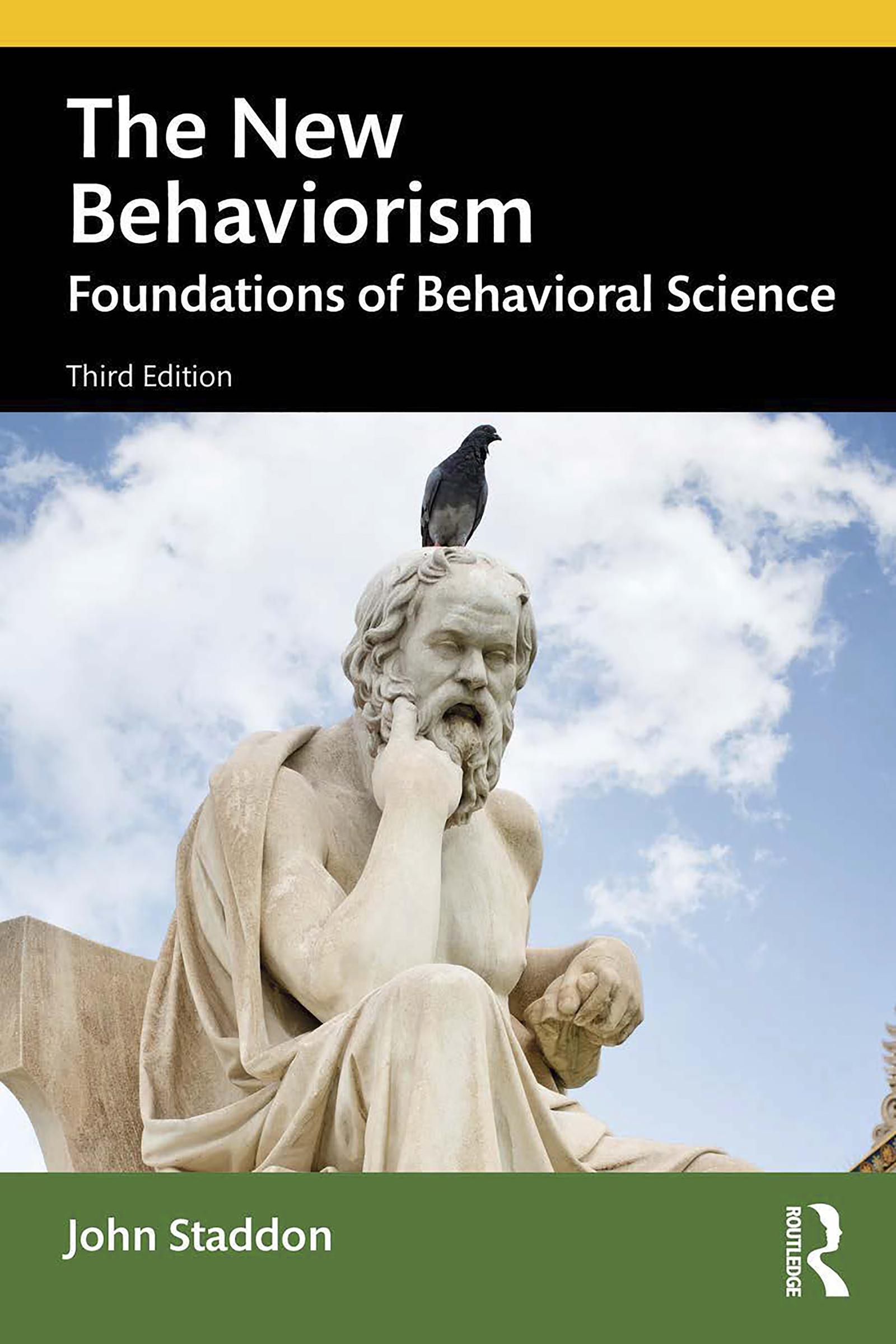
This ground-breaking book presents a brief history of behaviorism, along with a critical analysis of radical behaviorism, its philosophy and its applications to social issues.
This third edition is much expanded and includes a new chapter on experimental method as well as longer sections on the philosophy of behaviorism. It offers experimental and theoretical examples of a new approach to behavioral science. It provides an alternative philosophical and empirical foundation for a psychology that has rather lost its way.
The mission of the book is to help steer experimental psychology away from its current undisciplined indulgence in "mental life" toward the core of science, which is an economical description of nature: parsimony, explain much with little. The elementary philosophical distinction between private and public events, even biology, evolution and animal psychology are all ignored by much contemporary cognitive psychology. The failings of radical behaviorism as well as a philosophically defective cognitive psychology point to the need for a new theoretical behaviorism, which can deal with problems such as "consciousness" that have been either ignored, evaded or muddled by existing approaches.
This new behaviorism provides a unified framework for the science of behavior that can be applied both to the laboratory and to broader practical issues such as law and punishment, the health-care system, and teaching.
Pay easily by card, Klarna, Apple Pay or Google Pay. Not happy? You always have a 14-day money-back guarantee. Read more in our terms. If you have any questions, email us at hello@memmo.org.
Memmo makes studying easier – wherever you are in the world. We bring your course books and smart study tools together in one place: summaries, quizzes, podcasts and flashcards. Plus Ted, your study buddy who answers anything you wonder. Over 50,000 students already study here – built to help you learn faster and stress less.