
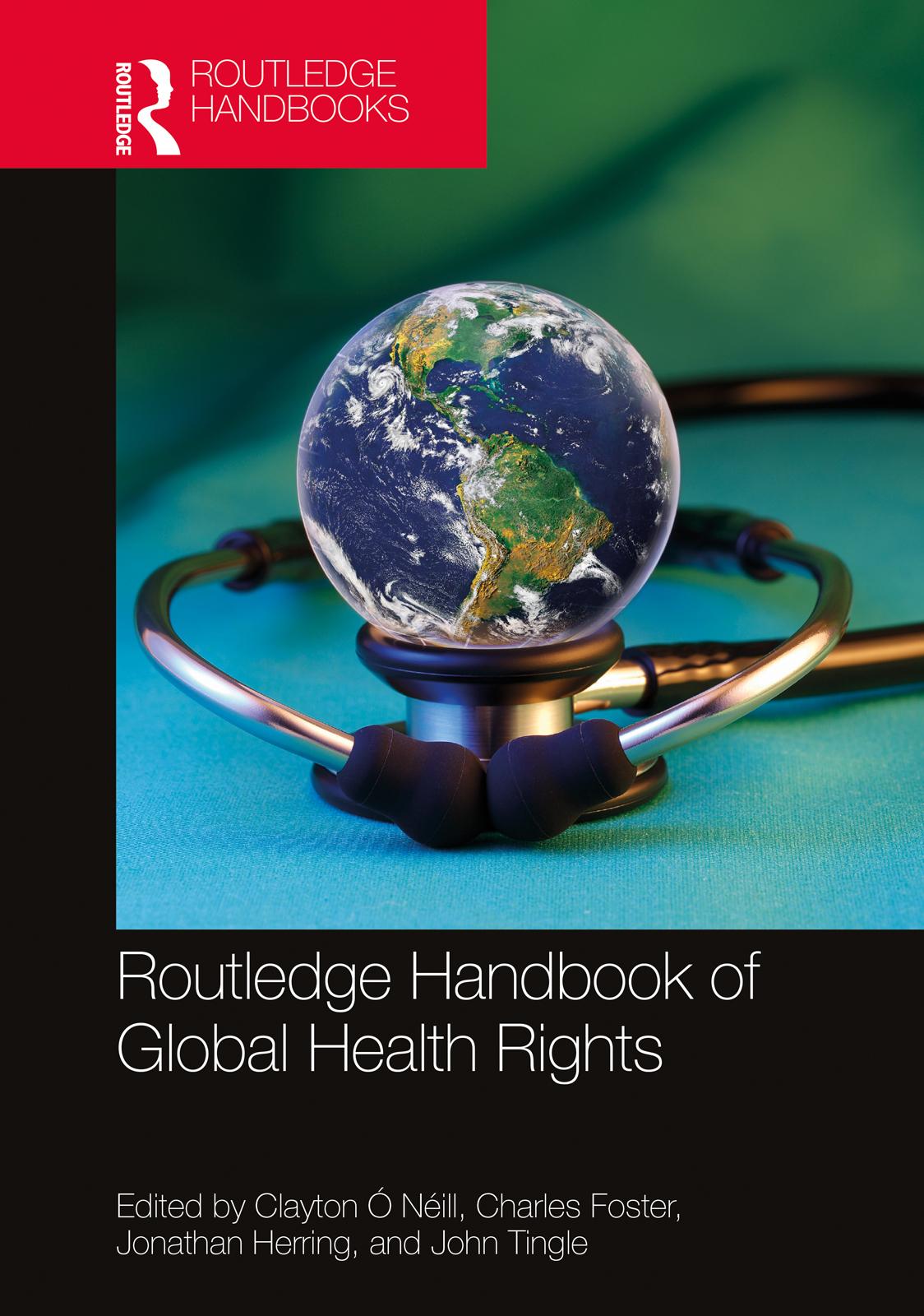
This book examines the idea of a fundamental entitlement to health and healthcare from a human rights perspective.
The volume is based on a particular conceptual reasoning that balances critical thinking and pragmatism in the context of a universal right to health. Thus, the primary focus of the book is the relationship or contrast between rights-based discourse/jurisprudential arguments and real-life healthcare contexts. The work sets out the constraints that are imposed on a universal right to health by practical realities such as economic hardship in countries, lack of appropriate governance, and lack of support for the implementation of this right through appropriate resource allocation. It queries the degree to which the existence of this legally enshrined right and its application in instruments such as the International Covenant on Economic, Social and Cultural Rights (ICESCR) and the Universal Declaration of Human Rights (UDHR) can be more than an ephemeral aspiration but can, actually, sustain, promote, and instil good practice. It further asks if social reality and the inequalities that present themselves therein impede the implementation of laudable human rights, particularly within marginalised communities and cadres of people. It deliberates on what states and global bodies do, or could do, in practical terms to ensure that such rights are moved beyond the aspirational and become attainable and implementable. Divided into three parts, the first analyses the notion of a universal inalienable right to health(care) from jurisprudential, anthropological, legal, and ethical perspectives. The second part considers the translation of international human rights norms into specific jurisdictional healthcare contexts. With a global perspective it includes countries with very different legal, economic, and social contexts. Finally, the third part summarises the lessons learnt and provides a pathway for future action.
The book will be an invaluable resource for students, academics, and policymakers working in the areas of health law and policy, and international human rights law.
Pay easily by card, Klarna, Apple Pay or Google Pay. Not happy? You always have a 14-day money-back guarantee. Read more in our terms. If you have any questions, email us at hello@memmo.org.
Memmo makes studying easier – wherever you are in the world. We bring your course books and smart study tools together in one place: summaries, quizzes, podcasts and flashcards. Plus Ted, your study buddy who answers anything you wonder. Over 50,000 students already study here – built to help you learn faster and stress less.